
Tools
Gardening in Alberta means choosing resilient plants like hardy kiwi, Siberian pea shrub, and Russian sage that thrive in Zone 3-4 climates, while protecting tender varieties with heavy mulch and frost cloths during unpredictable spring and fall freezes. Begin sowing seeds indoors 6-8 weeks before Alberta's usual last frost in late May.
Alberta's short growing season and harsh winters demand smart planning. The province's Zone 3-4 classification means only the toughest plants survive, but that doesn't limit your options. 🌱 Many cold-hardy perennials not only survive but thrive here, offering vibrant blooms and edible harvests.
For example, hardy kiwi vines produce fruit even in sub-zero conditions, while Russian sage's silvery foliage adds winter interest. The key is understanding microclimates—southern Alberta's Chinook winds can create pockets where you can push Zone 4 plants to their limits.
Timing is everything in Alberta's climate. Starting seeds indoors gives delicate plants a head start, but even then, you'll need to be ready to protect them with frost blankets when nighttime temperatures drop unexpectedly.
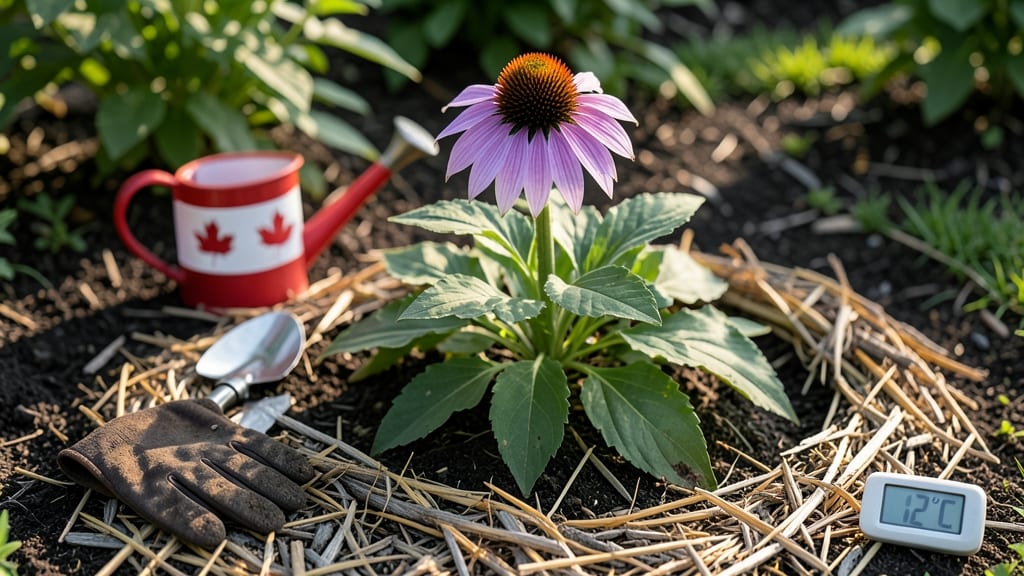
I've found that layering straw mulch around the base of plants creates an insulating barrier that can make the difference between success and failure during our famously unpredictable shoulder seasons.
💡 In This Article
- Alberta’s Unique Growing Zones and Plant Hardiness
- Step-by-Step Alberta Gardening Calendar for Beginners
Alberta’s unique growing zones and plant hardiness
Alberta's classification as USDA Zones 3-4 isn't just about cold tolerance—it's about survival in a climate where winter temperatures can plunge to -40°C (-40°F) and spring freezes often linger until mid-June.
The key difference between these zones lies in the average annual minimum temperature: Zone 3 endures -34°C to -29°C (-30°F to -20°F), while Zone 4 handles -29°C to -23°C (-20°F to -10°F).
This might seem like a small range, but in Alberta's context, it means the difference between a plant thriving or struggling.
For instance, a Zone 4 plant like the hardy kiwi (Actinidia arguta) might survive in southern Alberta's milder microclimates, while northern regions require Zone 3 varieties like the Siberian pea shrub (Caragana arborescens), which can withstand -45°C (-50°F) temperatures.
The USDA Plant Hardiness Zone Map provides a starting point, but Alberta gardeners must account for microclimates that can shift zones by up to 2-3 levels. A south-facing wall in Calgary can create a Zone 5 pocket, while a sheltered valley in Canmore might support Zone 4b plants.
Soil science plays a critical role too—Alberta's clay-heavy soils retain cold longer than sandy soils, creating "cold pockets" where roots freeze even when air temperatures are above 0°C (32°F).
This is why mulching with 10-15 cm (4-6 inches) of straw or wood chips becomes essential: it insulates roots by maintaining a 5°C (9°F) warmer soil temperature during winter.
Permafrost presents another challenge, particularly in northern Alberta. Unlike southern regions where soil thaws completely in summer, permafrost areas have permanently frozen layers just below the surface. This creates poor drainage and limits root depth for most plants.
The solution? Raised beds filled with 50% compost and 50% peat moss can create a root-friendly environment while preventing waterlogging. For edible plants, varieties like the Alaska pea (which thrives in Zone 2) or Russian kale (tolerating -37°C/-35°F) become essential choices.
These plants have developed natural antifreeze proteins that prevent ice crystal formation in their cells, a biological adaptation that makes them ideal for Alberta's extremes.
What most gardeners overlook is how wind amplifies cold stress. Alberta's Chinook winds can create windchill factors that make -20°C (-4°F) feel like -40°C (-40°F). This is why windbreaks—whether natural (evergreen hedges) or man-made (fence rows)—are crucial.
A well-placed windbreak can raise microclimate temperatures by 3-5°C (5-9°F) and extend the growing season by 2-3 weeks.
For example, Russian sage (Perovskia atriplicifolia) not only survives Zone 3 but thrives in exposed sites because its silvery foliage reflects sunlight, creating a 1-2°C (2-4°F) warmer microenvironment around its roots.
Understanding these factors helps explain why some plants that "should" survive in Zone 3 fail spectacularly in Alberta. Take the blueberry bush—while technically Zone 3 hardy, its shallow roots freeze without winter mulch.
The solution? Plant in well-draining, sandy soil and cover with 20 cm (8 inches) of mulch. This creates an insulating layer that maintains root temperatures above -15°C (5°F), preventing the cellular damage that turns blueberries into mushy pulp.
The same principle applies to fruit trees: grafting Zone 4 rootstock onto Zone 3 scions gives you the hardiness of the roots with the fruit production of the top.
For those new to Alberta gardening, the USDA Zone Map should be your first reference—but always adjust downward by 1 zone as a safety margin. Pair this with local garden center recommendations (they'll know which varieties have proven resilient in your specific region).
Start with 3-5 cold-hardy perennials like catmint (Nepeta), lavender, or yarrow, which not only survive but often multiply aggressively.
These plants have evolved to handle Alberta's climate through a combination of deep root systems, waxy leaf coatings, and early blooming cycles that take advantage of the brief summer growing window.
Remember: Alberta's growing season is short, but it's not impossible. The province's unique climate actually creates opportunities for gardeners who understand how to work with—not against—its challenges.
By selecting plants that match your microclimate, insulating roots properly, and protecting against windchill, you can create a thriving garden that outperforms expectations in even the harshest conditions. 🌿