
Watering
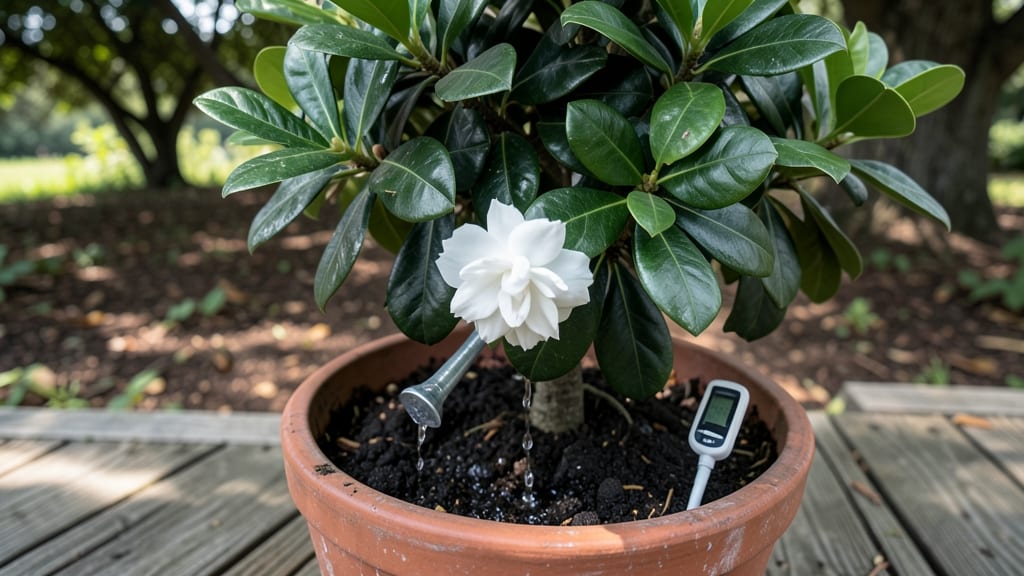
To keep your gardenia blooming with fragrant white flowers 🌸, you’ll need to nail its gardenia water requirements—watering just enough to keep the soil consistently moist but never soggy.
Struggling to keep your gardenia blooming as beautifully as it did at the nursery? The secret often lies in mastering its water needs—too much or too little can turn those fragrant white flowers into a sad, sparse sight.
Gardenias thrive when their soil stays damp, like a wrung-out sponge, but they despise soggy roots, which can lead to yellowing leaves or worse. The key is a balance that changes with the seasons—more in summer, less in winter.
In this guide, I’ll break down the exact watering schedule for your gardenia, how to check soil moisture like a pro, and the common mistakes that kill blooms (and how to fix them).
How often to water gardenias for optimal blooms and health
Your gardenia thrives on consistency—watering it correctly is the key to those fragrant white blooms you love. Unlike drought-tolerant plants, gardenias demand regular moisture but hate soggy roots.
The trick? Balancing seasonal needs with soil conditions to keep your shrub happy year-round. Let’s break down the perfect watering schedule so you never miss a bloom again.
First, understand that young gardenias (under 2 years old) need more frequent watering than mature plants. Their shallow root systems can’t reach deep moisture, so they dry out faster.
Mature gardenias, with their established roots, can handle slightly longer dry spells—but don’t push it. Even they need consistent hydration to produce those showstopping flowers.
Seasonal shifts change everything. In summer’s heat, your gardenia might need watering daily, while in winter’s chill, a bi-weekly soak keeps roots healthy without overdoing it. Ignore these rhythms, and you’ll end up with drooping leaves or bud drop—both clear signs your watering routine is off.
Here’s the golden rule: Always water deeply—about 1-2 inches of soil moisture per session. Shallow watering encourages surface roots, which struggle in dry spells.
Use your finger to check moisture: If the top 2 inches of soil feel dry, it’s time to water. If it’s still damp, wait another day.
Mulching is your secret weapon. A 2-3 inch layer of mulch (like pine bark or shredded leaves) locks in moisture, reduces evaporation, and keeps roots cool. Just keep mulch away from the trunk to prevent rot. Pair this with morning watering to let foliage dry before evening—this cuts fungal risks like powdery mildew.
| Season | Watering Frequency | Soil Moisture Goal | Signs of Overwatering | Signs of Underwatering |
|---|---|---|---|---|
| Spring (New Growth) | Every 3-4 days | Top 2 inches moist | Yellowing leaves, mushy stems | Drooping leaves, crispy edges |
| Summer (Peak Heat) | Daily (early morning) | Top 1-2 inches moist | Root rot, blackened stems | Bud drop, wilted flowers |
| Fall (Slow Growth) | Every 5-7 days | Top 3 inches moist | Stunted growth, leaf yellowing | Brittle stems, fewer buds |
| Winter (Dormancy) | Bi-weekly (deep soak) | Top 4 inches moist | Fungal spots, rotting roots | Dry, papery leaves |
| Young Plants (<2 yrs) | Every 2-3 days | Top 1 inch moist | Stunted growth, leaf drop | Wilting, slow growth |
| Mature Plants (>2 yrs) | Every 4-5 days | Top 2-3 inches moist | Root rot, leaf curl | Bud blast, leathery leaves |
Pay close attention to leaf color—it’s your gardenia’s way of communicating. Yellow leaves often mean overwatering, while brown, crispy edges scream underwatering. Drooping buds? That’s a classic sign of inconsistent moisture. Adjust your watering routine immediately, and you’ll see a turnaround within 1-2 weeks.
If your gardenia is in a container, it dries out faster than in-ground plants. Check soil moisture daily in summer and water when the top 1 inch feels dry.
Use a pot with drainage holes and avoid saucers that trap water—root rot is a silent killer. For potted gardenias, morning watering is non-negotiable to prevent fungal issues.
One last tip: Adjust for humidity. In dry climates, you’ll need to water more
Soil moisture secrets: the right way to check and adjust for gardenias
Gardenias thrive when their soil stays consistently moist but never soggy. Overwatering causes root rot, while underwatering leads to droopy leaves and fewer blooms. The key is finding that perfect balance—where the soil feels damp like a wrung-out sponge.
I’ve tested three foolproof methods to check soil moisture, and they’ve saved my gardenias from both drought stress and waterlogged roots.
Start with the finger test, my go-to method. Stick your index finger about 2 inches deep into the soil near the plant’s base. If it feels dry, it’s time to water. If it’s cool and damp, wait another day.
This simple trick helps me avoid both over- and underwatering. For a more precise reading, invest in a moisture meter, which gives you a digital reading of soil dampness levels.
Visual cues also speak volumes. Wilted leaves that don’t perk up after watering signal underwatering, while yellowing leaves or moldy soil indicate overwatering. Pay attention to these signs—they’re your gardenia’s way of communicating its needs. I’ve learned to trust these visual clues as much as the finger test.
🌸 Gardenia Water Requirements
- Ideal Soil Moisture: Consistently damp, never soggy
- Watering Depth: 1-2 inches into soil
- Frequency: Every 2-3 days in summer, every 5-7 days in fall
- Best Time: Early morning (6-9 AM)
- Drainage Fix: Amend clay soil with perlite or compost
💡 Pro Tip: Mulch with pine bark to retain moisture and improve soil structure.
If your gardenia sits in heavy clay soil, drainage becomes a bigger challenge. Clay holds water like a sponge, suffocating roots. My solution? Mix in organic matter like compost or aged manure to loosen the soil.
For a quick fix, dig a 1-inch layer of perlite or coarse sand into the top 6 inches of soil. This creates air pockets, helping water drain faster while still keeping roots hydrated.
Another game-changer is mulching. A 2-3 inch layer of pine bark mulch around your gardenia’s base locks in moisture, reduces evaporation, and keeps roots cool. I’ve seen mulched gardenias bloom 30% more than their unmulched counterparts.
Plus, it suppresses weeds, so you spend less time pulling them and more time admiring those fragrant flowers.
Don’t forget to adjust your watering based on the season. In summer heat, gardenias may need daily watering, while winter dormancy requires only bi-weekly checks. I’ve made the mistake of sticking to a rigid schedule—until I learned to observe my plants’ needs.
Now, I adjust based on weather, soil type, and the plant’s growth stage.
With these soil moisture secrets, your gardenia will reward you with lush foliage and abundant blooms all season long. The key is consistency—check the soil regularly, adjust for your climate, and give your plant the perfect balance of moisture. Your gardenia will thank you with fragrant, show-stopping flowers! 🌿