
Planting
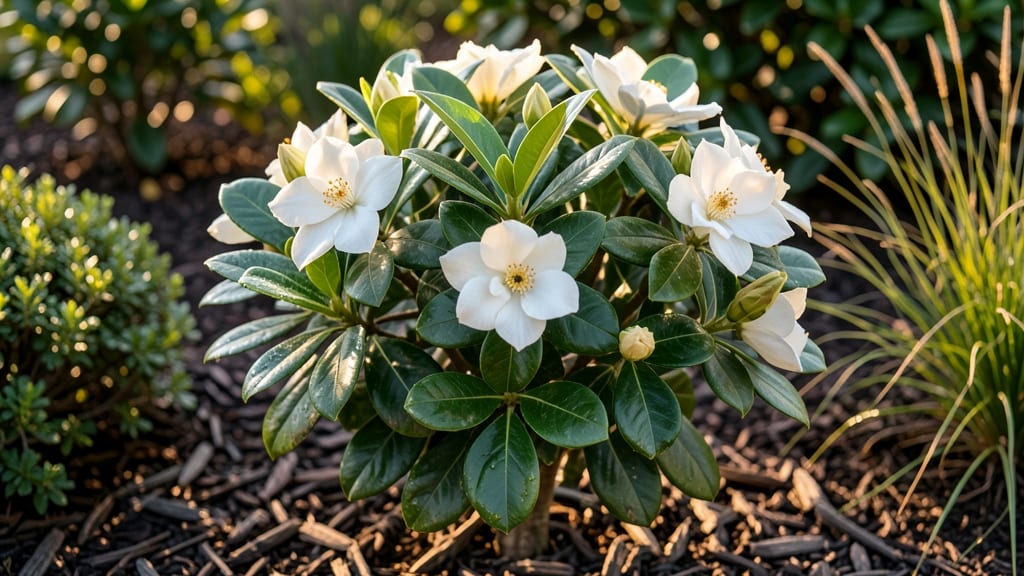
Gardenia hardy zones are 7 through 11, where established plants handle temperatures down to 10°F (-12°C). Young plants in zones 7-9 need winter protection, while zone 11's heat becomes the upper limit. Strategic mulching and microclimates help push survival into colder or hotter extremes.
Understanding gardenia hardiness isn't just about the zone number—it's about how your local climate interacts with the plant's natural resilience. 🌿 In zone 7, for example, a single hard frost can damage leaves, but mature plants often recover if roots stay protected.
I've seen gardeners in zone 6 keep theirs alive by wrapping containers in bubble wrap during winter dips below 20°F (-7°C). The key is creating a buffer between the plant and extreme temperatures, whether through thick mulch or strategic placement near south-facing walls.
What surprises many growers is how quickly gardenias can adapt when given the right conditions. Even in zone 10, where humidity spikes in summer, proper air circulation prevents fungal issues that often kill plants in hotter zones.
For gardeners pushing boundaries, I recommend testing one plant in a protected spot before committing to full garden beds.
💡 In This Article
- Gardenia Cold Tolerance Limits by USDA Zone
- Winterizing Gardenias in Marginal Hardiness Zones
Gardenia cold tolerance limits by USDA zone
Gardenia's cold tolerance hinges on their native tropical origins, where they evolved in subtropical climates with minimal temperature fluctuations. The 10°F (-12°C) threshold applies only to mature plants with established root systems that can store energy reserves.
Younger plants, with less developed roots, suffer damage at 32°F (0°C)—their leaves blacken and stems weaken, often leading to dieback. This is because their water transport systems freeze, disrupting nutrient flow.
The duration of cold exposure matters just as much as the temperature. A single night at 15°F (-9°C) might cause leaf burn, but prolonged exposure below 20°F (-7°C) for more than 4-6 hours risks killing the plant entirely.
In zone 7, where winters average 25°F (-4°C), gardenias can survive if protected, but their growth slows dramatically. The critical factor is how quickly the plant can recover its metabolic functions once temperatures rise—something older plants do better due to their larger root networks.
Below zone 7, gardenias struggle because their leaves lack the cold-hardy wax coatings found in temperate plants.
When frost hits, ice crystals form in leaf cells, rupturing membranes and causing irreversible damage. 🌱 The plant's natural response is to drop leaves as a survival mechanism, but repeated stress weakens its ability to regenerate.
This is why gardeners in zone 6 often treat them as annuals or use containers that can be moved indoors during winter.
Seasonal acclimation helps push these limits slightly. In fall, gardenias benefit from gradual temperature reduction (similar to how bulbs prepare for winter) and reduced watering to harden their stems.
I've seen gardeners in zone 8 apply a 4-6 inch layer of mulch in October to insulate roots, which can raise soil temperatures by 5-10°F during cold snaps. The key is creating a thermal buffer that mimics their natural tropical understory environment where they'd be protected by other vegetation.
What most people overlook is how humidity interacts with cold tolerance. Gardenias in zone 9 or 10 actually face more stress from summer heat waves than winter chills—prolonged exposure above 95°F (35°C) causes leaf scorch.
The plant's stomata (pores) close to prevent water loss, but this also blocks gas exchange needed for photosynthesis. In these zones, afternoon shade becomes as critical as winter protection.
For those testing zone boundaries, I recommend planting gardenias near south-facing walls where reflected sunlight creates 3-5°F warmer microclimates during winter. In containers, using 10-15 gallon pots with self-watering capabilities helps regulate soil temperature swings. The larger the container, the better the insulation—something that's often underestimated when choosing plant sizes.