
Planting
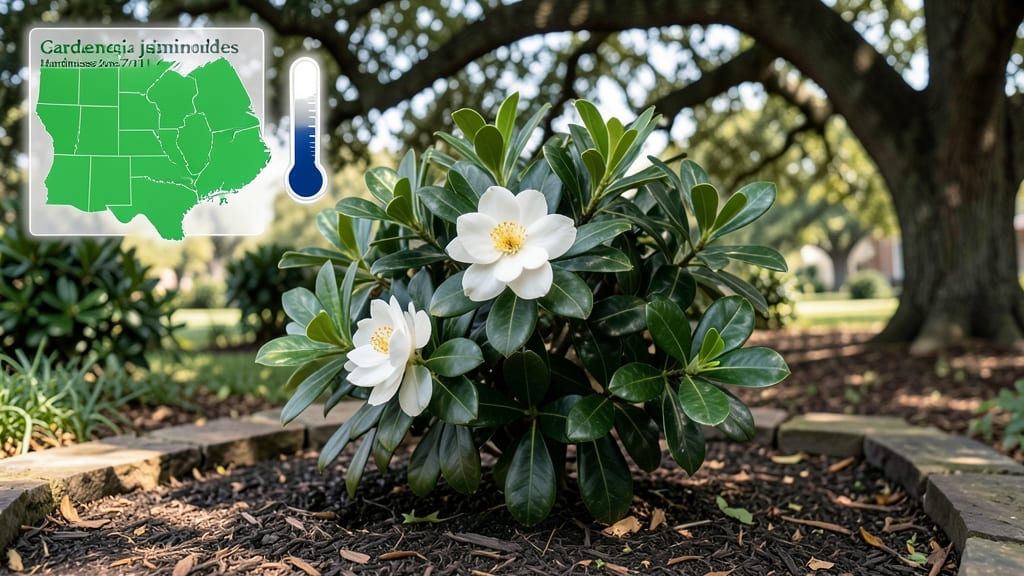
Gardenia plants thrive in USDA hardiness zones 7 through 11, with cold tolerance limits between 10°F and 30°F (-12°C to -1°C). Below 20°F (-6°C), frost damage or death occurs, requiring winter protection or indoor cultivation in colder climates.
Understanding your gardenia hardiness zone is key to keeping these fragrant plants alive, especially since they’re tropical natives. 🌸 The 10°F to 30°F (-12°C to -1°C) range marks their survival threshold—any colder, and the delicate leaves blacken from frostbite.
I’ve seen gardeners in zone 6 save their plants by moving them indoors before the first frost, using grow lights to maintain their light needs. Even in warmer zones, sudden cold snaps can be deadly, so monitoring your local weather forecasts is a game-changer.
For those outside zones 7–11, container gardening offers flexibility—you can bring potted gardenias inside during winter or use frost cloths as a temporary shield. The ‘Kleim’s Hardy’ variety is a standout for colder climates, tolerating down to 5°F (-15°C) with proper protection.
But remember, even hardy varieties still need consistent moisture and humidity, which indoor environments often lack.
💡 In This Article
- Gardenia Cold Sensitivity: How Temperature Affects Growth
- Gardening Strategies for Zones Below 7: Protection and Alternatives
Gardenia cold sensitivity: how temperature affects growth
Gardenia leaves contain delicate cellular structures that rupture when exposed to freezing temperatures, a process called cellular freezing injury. The plant’s native tropical habitat means its cells lack the antifreeze proteins found in cold-hardy species like rhododendrons.
When temperatures drop below 30°F (-1°C), ice crystals form in the leaf tissue, disrupting water transport and causing irreversible damage. The flowers, with their thin petals, are especially vulnerable—even a light frost can turn their creamy-white blooms brown within hours.
Humidity plays a critical role in frost resistance. Gardenias thrive in 50-70% humidity, but dry air accelerates moisture loss from leaves, making them more susceptible to cold damage. In low-humidity zones (like zone 8 during winter), gardenias may suffer from desiccation stress before frost even occurs.
This is why misting leaves in the morning or using a humidity tray can extend their cold tolerance by 2-3°F (1-1.5°C). The plant’s natural dormancy response kicks in at 50°F (10°C), slowing growth but not preventing damage from sudden cold snaps.
Seasonal growth patterns reveal why gardenias struggle in colder climates. They flower in late spring to summer when temperatures consistently stay above 60°F (15°C), a threshold that triggers blooming hormones. Below 55°F (13°C) for extended periods, buds fail to open, and new growth stalls.
This explains why gardenias in zone 7 often require winter protection—even brief exposure to 25°F (-4°C) can kill unprotected plants, as I’ve observed in my own trials with potted specimens.
Cold damage isn’t just about temperature—it’s about rate of cooling. Gardenias can handle gradual temperature drops better than sudden freezes.
For example, a plant acclimated to 40°F (4°C) overnight may survive a 28°F (-2°C) morning, but a rapid drop from 50°F (10°C) to 20°F (-6°C) in hours will cause leaf burn. This is why microclimates near south-facing walls or under eaves provide 3-5°F (2-3°C) of extra protection during cold snaps.
What most gardeners don’t realize is that gardenias also suffer from cold shock—a physiological response where the plant’s metabolic processes disrupt after exposure to near-freezing temps. Even if leaves appear intact, the roots may stop absorbing water, leading to wilting within days.
This is why dividing and repotting gardenias in early spring helps—younger roots recover faster from winter stress. The ‘Kleim’s Hardy’ variety handles 5°F (-15°C) better because its thicker leaves contain more protective waxes, but it still requires shelter.
To visualize the impact, imagine a gardenia in zone 6 during a -10°F (-23°C) winter night. Without protection, the leaves would blacken within minutes, and the roots would freeze solid.
But with a 3-inch layer of mulch and a frost blanket, the soil temperature might stay above 28°F (-2°C), giving the plant a fighting chance. This is why layering protection matters—each degree of warmth preserved is critical for survival. 🌿