
Trees
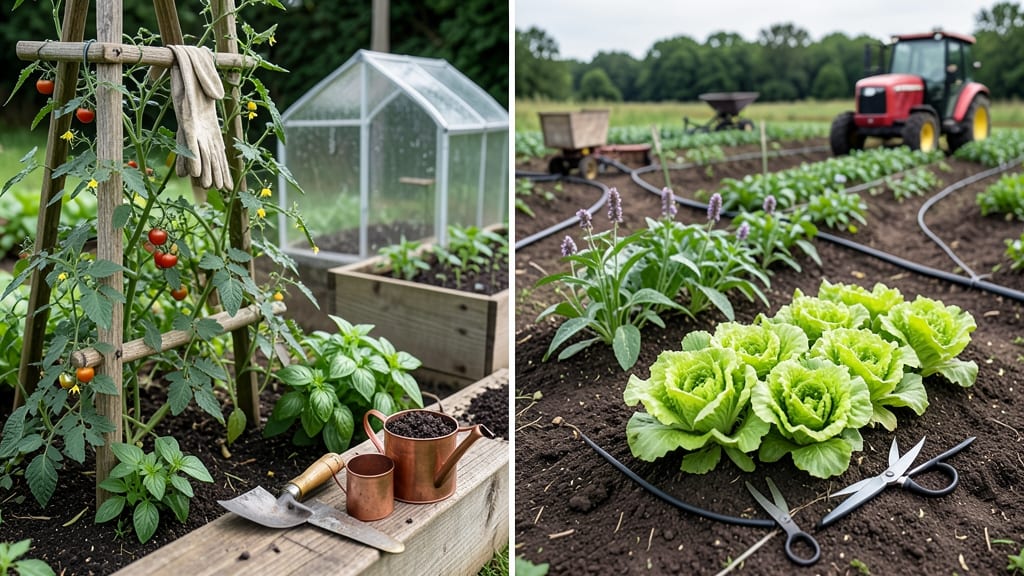
The difference between a gardener and farmer lies in their scale and purpose: gardeners cultivate plants for personal enjoyment, ornamental beauty, or small-scale home use in controlled environments, while farmers focus on large-scale crop or livestock production for commercial sale or mass consumption.
The distinction between these two roles goes beyond just planting seeds. Gardeners often prioritize aesthetics, flavor, or self-sufficiency, working with smaller plots and hand tools to create tailored spaces. 🌿 For example, a gardener might spend hours arranging flowers for visual appeal or growing heirloom tomatoes for homegrown meals.
Farmers, on the other hand, operate on a much larger scale, using machinery and systematic approaches to maximize yields for markets or food systems.
Another key difference is their relationship with technology and resources. Farmers frequently rely on tractors, irrigation systems, and chemical inputs to maintain productivity across vast acres, while gardeners often embrace organic methods and manual labor to achieve their goals.
This contrast reflects their fundamental objectives—one nurtures for personal fulfillment, the other sustains for economic or societal needs.
💡 In This Article
- Scale and Production Goals: Gardening vs Farming
- Practical Techniques: Gardening Methods vs Farming Practices
Scale and production goals: gardening vs farming
The most fundamental difference between gardeners and farmers lies in their production scale and economic motivations. A gardener typically works with plots measuring 50 to 500 square feet, perfect for growing flowers, herbs, or a few vegetable plants for home use.
These spaces are often in urban backyards, community gardens, or even container setups on balconies. The goal is rarely about quantity but about quality—whether that's the perfect rose bloom, a single heirloom tomato plant yielding 20-30 fruits, or a small harvest of fresh basil for cooking.
Farmers, by contrast, operate on an entirely different scale, managing acres to thousands of acres of land. A commercial vegetable farm might cultivate 50+ acres of crops like corn or soybeans, while livestock operations can involve hundreds or thousands of animals.
The focus shifts from individual plants to mass production, with yields measured in tons rather than pounds. For example, a single corn farm might produce enough grain to fill 500+ semi-trucks annually, destined for food processing, ethanol production, or export markets.
This scale requires entirely different infrastructure, from 100+ horsepower tractors to automated irrigation systems spanning miles.
The economic drivers also create a stark contrast. Gardeners often work with minimal financial investment, relying on seeds costing $2-$5 per packet and hand tools like trowels or pruners. Their "profit" might be measured in personal satisfaction, reduced grocery bills, or the joy of watching plants thrive.
Farmers, however, face significant capital expenditures—land leases or purchases can exceed $5,000 per acre, equipment costs reach $100,000+ for a single combine harvester, and operational budgets include fuel, labor, and storage facilities. The goal is profitability, with margins often determined by global market prices or government subsidies.
Labor allocation reflects these differences too. A gardener might spend 10-20 hours per week tending to their plot, while a farmer's workweek can exceed 60 hours, especially during planting or harvest seasons. Gardeners often work alone or with family, using their hands for tasks like transplanting seedlings or hand-weeding.
Farmers, however, coordinate teams of workers, sometimes numbering in the dozens, to manage tasks like planting 1,000 acres of soybeans in a single day using precision agriculture technology.
Even the time horizons differ dramatically. Gardeners typically plan for a single growing season, with decisions made based on monthly weather forecasts and immediate aesthetic or culinary goals. Farmers, however, must consider 5-10 year crop rotation plans, long-term soil health strategies, and market trends that span decades.
A gardener's "harvest" might be a single bouquet of sunflowers, while a farmer's success is measured in annual yields of 20,000 bushels of wheat or more.
Consider the example of tomato production: a gardener might grow 6 plants yielding 10 pounds total, carefully selecting disease-resistant varieties and hand-pollinating flowers for maximum flavor. A farmer, however, would cultivate 5 acres (about 220,000 plants) using mechanical harvesters, prioritizing disease resistance and shelf-life characteristics for commercial markets.
The gardener's tomatoes might be vine-ripened with 3% sugar content, while the farmer's would be bred for 1.5% sugar but with a longer storage life.