
Tools
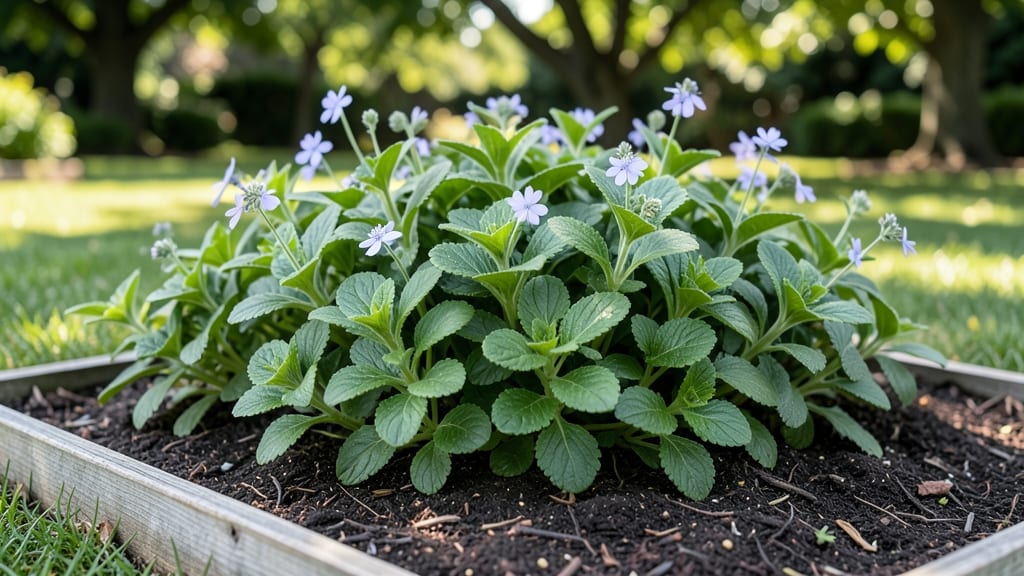
Determining the ideal garden bed size means aiming for 4 feet wide and 12–16 feet long, which balances accessibility and soil efficiency. Depth should be 6–12 inches for most vegetables and herbs to support strong root systems.
These dimensions aren't arbitrary—they're based on how plants grow and how you'll interact with them.
A 4-foot width lets you reach the center without stepping on soil, which keeps paths clean and prevents soil compaction. 🌱 Longer beds (12–16 feet) maximize space while maintaining consistent sunlight exposure across the entire plot.
Depth matters too: shallow beds (6 inches) work for lettuce and herbs, while deeper beds (12 inches) give root crops like carrots room to thrive.
For small spaces, you can scale down—just ensure the width stays under 4 feet for easy maintenance. Larger gardens might use multiple beds in a grid pattern, which improves airflow and makes crop rotation simpler.
The key is matching your bed size to both your plants' needs and your ability to care for them effectively.
💡 In This Article
- How Garden Bed Dimensions Impact Plant Growth and Soil Health
- Calculating Garden Bed Size for Your Space and Crop Needs
How garden bed dimensions impact plant growth and soil health
The 4-foot width standard exists because it creates a perfect balance between reach and soil health. When you stand at the center, your arms can comfortably extend 2 feet on either side without stepping on the bed.
This prevents soil compaction—a major issue when foot traffic compresses the top layer, reducing root penetration by up to 30%.
Compacted soil also restricts water infiltration, forcing you to water more frequently. 🌱 The width also aligns with most wheelbarrows (3 feet wide), making soil amendments and compost easier to distribute evenly.
Length plays a crucial role in sunlight exposure and airflow. Beds longer than 16 feet create shading issues at the center, where plants may receive only 60-70% of the sunlight hitting the edges. This "shade gradient" can reduce yields by 20-30% for sun-loving crops like tomatoes and peppers.
The 12-16 foot range keeps the entire bed in full sun while allowing you to reach all plants without stepping on them. For raised beds, this length also prevents warping over time—longer beds (>16 feet) risk sagging in the middle due to weight distribution.
Depth directly affects root development and water retention. Most vegetables thrive in 6-12 inches of soil because that's how deep their roots typically grow. Carrots and potatoes need the full 12 inches to develop properly, while shallow-rooted herbs like basil or cilantro do fine in 6 inches.
The deeper soil also creates a moisture reservoir—12-inch beds retain 30-40% more water than 6-inch beds, reducing irrigation needs by 2-3 times per week. This is why raised beds often outperform in-ground beds in drought-prone areas.
Bed shape matters too. Rectangular beds maximize space efficiency, while square beds (4x4 feet) work better for small urban gardens. The corners of square beds can become weed magnets because they're harder to reach, while the straight edges of rectangular beds allow for easier mulching.
For in-ground beds, the slight slope (1-2 degrees) created by raised edges helps water drain toward the center, preventing pooling that can lead to root rot. 💧 In contrast, flat in-ground beds often develop uneven moisture distribution, with edges drying out faster than the center.
Soil aeration improves when beds are properly sized. The 4-foot width allows you to till or aerate the entire bed without compacting the soil, while longer beds prevent the "edge effect" where plants near the perimeter dry out faster.
For example, a 4x12-foot bed has 48 square feet of planting area with minimal wasted space, compared to a 3x16-foot bed which has the same area but creates harder-to-reach corners. This efficiency translates to better weed suppression too—fewer gaps mean fewer places for weeds to establish.
Consider this real-world example: A 4x12-foot raised bed filled with 12-inch deep soil can support 24 tomato plants (spaced 12 inches apart) while maintaining full sun exposure. The same bed could also accommodate 48 lettuce plants (spaced 6 inches apart) in early spring or fall.
The dimensions ensure every plant gets equal access to sunlight, water, and nutrients without competition from neighboring plants. This level of precision is what turns a garden from a hobby into a productive system. ✨