A vegetable garden needs how many hours of sun does a vegetable garden need 6 to 8 hours of direct sunlight daily 🥕 to thrive, but many gardeners still struggle with uneven growth or poor yields—even when they think they’re giving their plants enough light.
Picture this: your tomato plants are lush but never ripen, your lettuce bolts to seed in weeks, or your peppers stay small and bitter. Those aren’t just bad luck—they’re classic signs of sunlight mismatches.
Some crops crave full sun, while others handle partial shade, and getting that balance wrong can mean the difference between a harvest and a disappointment.
Below, I break down the exact sunlight needs for 20+ common vegetables, from sun-loving tomatoes to shade-friendly spinach, plus how to tweak your garden layout for maximum efficiency—without burning your plants or wasting space.
You’ll also learn how to spot sunlight mistakes early, adjust for your climate, and even salvage a struggling garden before it’s too late. Let’s get started.
Low Light
6-8 hrs
Shade tolerant
Partial Sun
6-8 hrs
Bright indirect
Full Sun
6-8 hrs
Direct sunlight
Sunlight requirements for vegetable gardens: crop-by-crop breakdown
Sunlight is the lifeblood of your vegetable garden, directly impacting growth rates, fruit production, and nutrient quality. While most vegetables thrive with 6-8 hours of direct sun, some tolerate less—knowing the exact needs for each crop helps you optimize space and maximize yields.
For example, tomatoes and peppers demand full sun, while leafy greens like spinach can handle partial shade. Let’s break down the sunlight requirements for 20+ common vegetables to help you plan your garden layout like a pro.
Understanding your garden’s sunlight zones is key. A south-facing plot typically gets the most sun, while north-facing areas may only receive 2-3 hours of indirect light. Use a sunlight tracker for a week to map your garden’s exposure before planting.
This simple step prevents common mistakes like overcrowding sun-lovers or starving shade-tolerant crops. For instance, planting basil in a shady spot will result in leggy stems and fewer leaves, while radishes in full sun may bolt prematurely.
Here’s a quick reference for sunlight categories to guide your planning:
Vegetable
Sunlight Needs
Notes
Tomatoes
6-8+ hours
Full sun for maximum fruit set; prune lower leaves to improve airflow.
Peppers
6-8+ hours
Thrive in hot, sunny conditions; use black plastic mulch to retain heat.
Cucumbers
6-8 hours
Provide trellis support to avoid soil-borne diseases in crowded beds.
Basil
6+ hours
Less sun reduces flavor; harvest regularly to encourage bushiness.
Carrots
3-6 hours
Partial shade prevents bolting in hot climates; loosen soil for straight growth.
Spinach
2-4 hours
Shade-tolerant; harvest outer leaves first to prolong production.
Lettuce
2-4 hours
Use shade cloth in summer to prevent bolting; succession plant every 2 weeks.
Green Beans
6-8 hours
Bush beans tolerate partial shade better than pole varieties.
Radishes
3-6 hours
Fast-growing; thin seedlings to avoid competition for light.
Kale
3-6 hours
Cold-hardy; tastes sweeter after frost; harvest leaves as needed.
Corn
6-8+ hours
Plant in blocks, not rows, for cross-pollination; needs space to grow tall.
Onions
4-6 hours
Partial shade prevents bolting in hot weather; harvest when tops brown.
Swiss Chard
3-6 hours
Cut-and-come-again crop; harvest outer leaves to encourage regrowth.
How to measure and adjust sunlight for your garden layout
Getting your garden's sunlight right isn't just about guessing—it's a science that directly impacts your harvest. I've learned that even a 1-2 hour difference in sunlight can mean the difference between plump tomatoes and sad, underdeveloped fruit.
The key is measuring your space accurately and then making smart adjustments to maximize every ray of sunlight your garden receives.
Start by observing your garden throughout the day, especially during the longest days of summer and shortest days of winter. Use a simple sunlight tracking app like Sun Surveyor or Solar Calculator to map exactly how much light each area gets.
This will reveal those tricky spots that might seem sunny in the morning but get shaded by your house or fence by afternoon.
🌱 Key Sunlight Guidelines for Your Garden
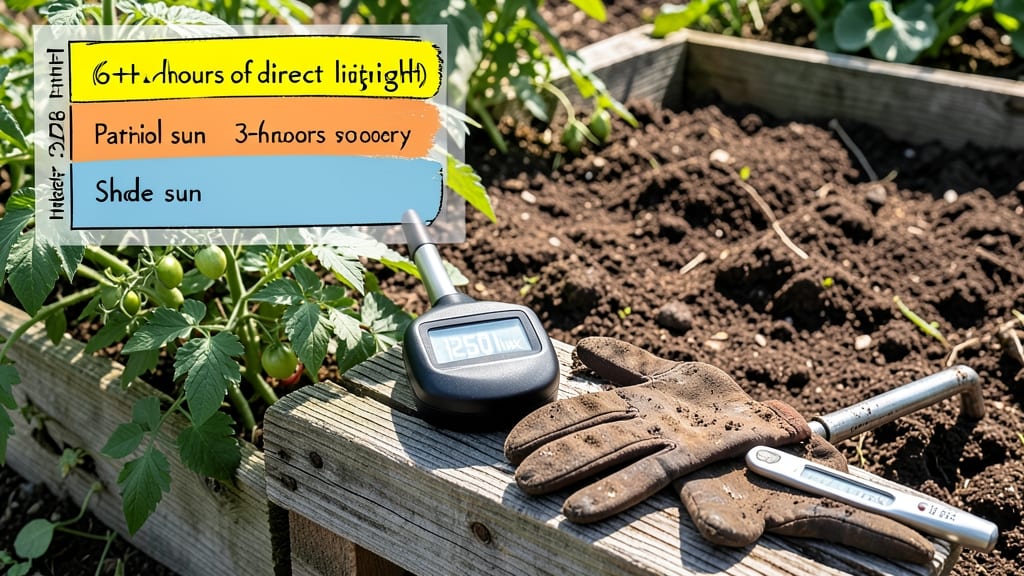
6+ hours = Full sun (ideal for tomatoes, peppers, cucumbers)
3-6 hours = Partial sun (best for beans, beets, carrots)
2-3 hours = Shade-tolerant (perfect for lettuce, spinach, kale)
Pro Tip: Use reflective mulch or light-colored surfaces to bounce extra light into shady areas.
Once you've mapped your sunlight, it's time to get creative with your garden layout. I always group plants by sun needs—tall, sun-loving plants like corn or sunflowers go in the sunniest spots, while shade-tolerant greens get tucked under taller plants.
This vertical layering maximizes space and ensures every plant gets its ideal light exposure.
Don't forget about companion planting—some plant pairs actually help each other thrive in similar light conditions. For example, basil and tomatoes both love full sun and can be planted together, while lettuce and radishes (which prefer partial shade) make great understory companions for taller plants.
This not only saves space but also creates a more efficient microclimate in your garden.
If you're working with limited sunlight, consider container gardening on wheels. I've had great success with movable pots that I can rotate throughout the day to follow the sun. Even just 1-2 hours of extra sunlight can make a world of difference for sun-loving plants like peppers or eggplants.
Plus, containers give you the flexibility to adjust as your garden grows and sunlight patterns change.
Finally, remember that your garden's sunlight needs will change with the seasons. What's full sun in summer might only be partial sun in winter. I always make a note of which plants thrive in which conditions so I can rotate crops strategically each year.
This seasonal awareness is what turns a good garden into a truly productive one.