
Tools
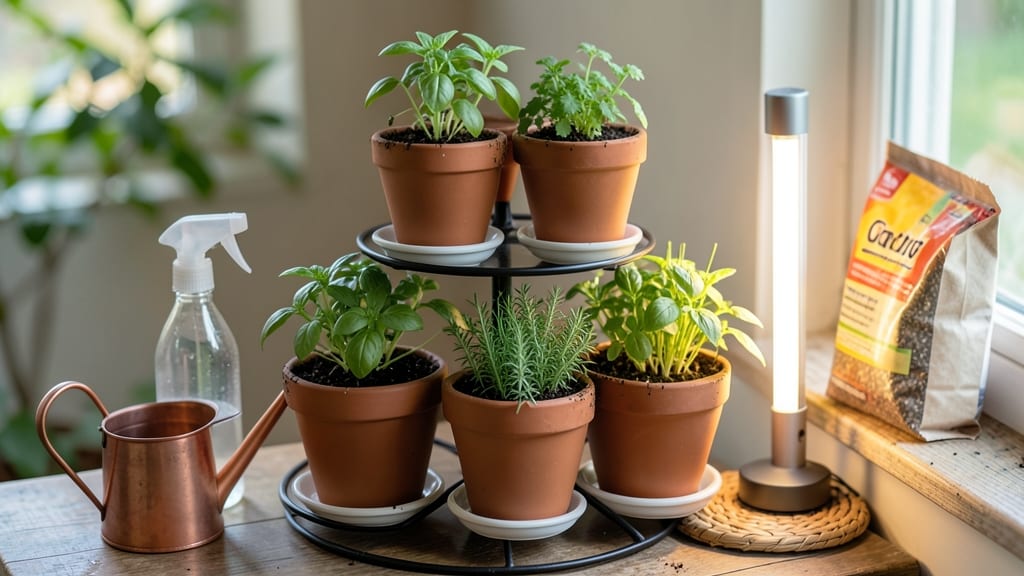
Starting a do-it-yourself indoor herb garden means picking shallow containers with drainage, using lightweight potting mix, and placing your setup near a bright window or under grow lights for 6-8 hours daily. Beginner-friendly herbs like basil, mint, and parsley grow well in these conditions with minimal fuss.
This setup works because herbs thrive in shallow root zones and need excellent airflow to prevent rot. 🌱 I’ve found that terracotta pots help regulate moisture better than plastic, while a mix of perlite and coconut coir keeps roots aerated.
The key is mimicking outdoor conditions—just without the space requirements. For herbs that need more humidity, like cilantro, a pebble tray with water underneath can make all the difference.
If natural light is limited, LED grow lights on a timer (12-16 hours daily) will keep your herbs happy, but position them just 6 inches above the plants to avoid burning.
A south-facing window gets the most light, but east or west works too—just rotate your pots weekly so all sides grow evenly. The goal is to replicate a sunny windowsill’s intensity without the risk of overheating.
💡 In This Article
- Choosing the Best Containers and Soil for Indoor Herb Growth
- DIY Lighting Solutions for Thriving Indoor Herbs Without Sun
Choosing the best containers and soil for indoor herb growth
Container selection directly impacts your herbs' health because roots need both oxygen and proper drainage to prevent rot. Terracotta pots with drainage holes are ideal—they wick away excess moisture while allowing airflow, but they dry out faster than plastic.
For herbs like basil, which prefers slightly drier conditions, terracotta's breathability prevents soggy roots. 🌱 Meanwhile, plastic containers retain moisture longer, making them better for humidity-loving herbs like cilantro, but they risk root suffocation without proper drainage.
The soil mix should be lightweight and well-aerated, typically a blend of 60% potting soil, 30% perlite or vermiculite, and 10% compost or worm castings. This ratio balances nutrients with drainage, preventing compaction that stifles root growth.
Most herbs thrive in a slightly acidic to neutral pH range (6.0-7.0), but basil prefers the higher end (6.5-7.0), while parsley does best in the mid-range (6.0-6.5). A simple pH test kit ensures you're in the optimal zone for your chosen plants.
Size matters too—herbs like thyme and oregano have shallow root systems and do well in 4-6 inch diameter containers, while larger plants like rosemary need 8-10 inch pots to accommodate their deeper roots.
Overcrowding leads to competition for nutrients and light, so give each plant its own space unless you're growing fast-spreading herbs like mint in a dedicated container with a liner to prevent takeover. 💫 The right container and soil combo isn't just about aesthetics; it's about replicating the loose, well-draining conditions herbs would find in a forest floor.
One often-overlooked factor is container material's heat conductivity. Terracotta absorbs heat during the day and releases it slowly at night, creating a more stable temperature for roots—especially important if your herbs are near a sunny window.
Plastic, on the other hand, can trap heat, potentially stressing delicate roots. For window-ledges where temperatures fluctuate, terracotta's thermal properties give your herbs a buffer against sudden changes that could shock their growth.
When it comes to soil additives, avoid garden soil from your yard—it's too dense and may contain pathogens. Instead, opt for a commercial potting mix formulated for herbs or vegetables.
Adding a handful of coarse sand (like horticultural grade) further improves drainage, while a sprinkle of mycorrhizal fungi can boost root health by enhancing nutrient uptake. The goal is to create an environment where roots can spread easily without battling compacted soil or waterlogged conditions. 🌿
Finally, consider the weight of your containers. Lightweight options like fabric grow bags are perfect for windowsills where you might need to move plants frequently, while heavier ceramic pots provide stability but require more effort to relocate.
The best choice depends on your space constraints and how often you're willing to tend to your herbs—because even the most beautiful setup won't thrive if it's too cumbersome to care for regularly.