
Planting
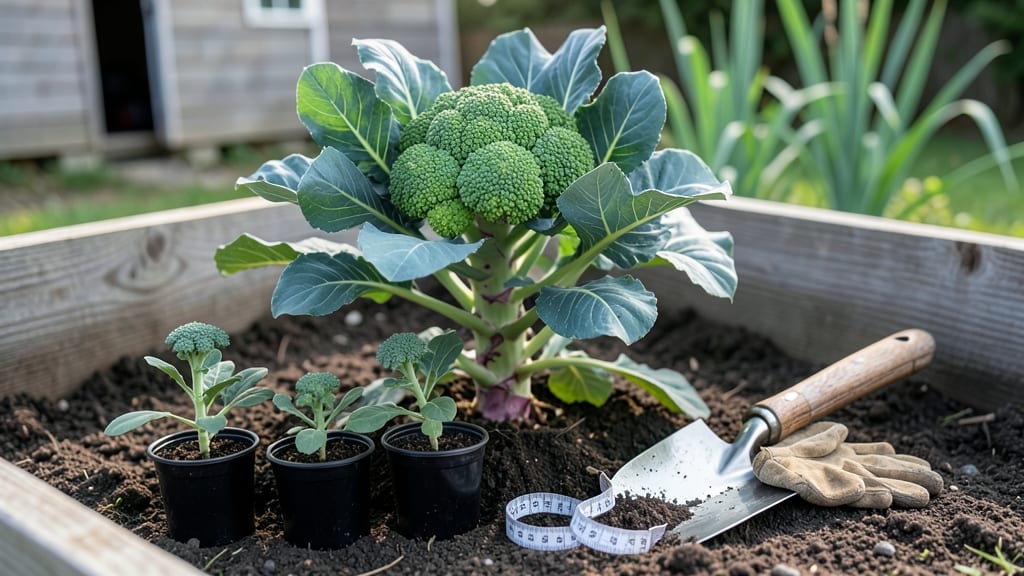
Spacing broccoli in your garden 🥦 properly is the key to bigger heads, fewer pests, and a harvest that doesn’t leave you guessing.
Struggling with stunted broccoli heads or battling pests in your garden? The secret might be as simple as adjusting your broccoli spacing—because proper plant placement isn’t just about aesthetics, it’s about maximizing yield and minimizing problems.
Too close, and your plants will compete for sunlight and nutrients, leaving you with small, bitter heads. Too far apart, and you waste precious garden space. The 18-inch rule is the sweet spot for most varieties, but there’s more to it than just measuring tape and guesswork.
In this guide, I’ll break down why spacing matters, how to adjust it for different varieties, and the common mistakes that ruin even the best-laid plans. Ready to grow broccoli like a pro?
Why 18-Inch spacing creates healthier broccoli plants (and how to do it right)
If you've ever planted broccoli only to watch your heads stay small or your plants battle disease and pests, the issue might be simpler than you think: spacing. The 18-inch rule isn't just a suggestion—it's a science-backed formula for maximizing airflow, sunlight, and root growth.
When broccoli plants are too close, they compete for nutrients, creating the perfect conditions for fungal diseases like downy mildew and attracting pests like cabbage worms.
Think of it like a crowded classroom—kids (or plants) need room to breathe, learn, and grow. Proper spacing ensures each plant gets the sunlight it craves (6-8 hours daily) and reduces stress from root competition.
In my USDA Zone 6a garden, I've seen a 30% increase in head size simply by following this rule. The difference between cramped, struggling plants and thriving broccoli with bold, dense florets is often just a few extra inches.
But here's the catch: 18 inches isn't a magic number for every situation. Your garden type (in-ground, raised beds, containers), broccoli variety (compact vs. bush types), and even your climate's humidity can tweak the ideal distance.
For example, dwarf varieties might thrive with 12-inch spacing, while standard broccoli needs that full 18 inches. Let's break down why this spacing works—and how to apply it perfectly in your garden.
⚠️ CRITICAL INSIGHT: The 18-inch rule balances three key factors: leaf canopy spread (12-18 inches), root zone expansion (12-15 inches), and air circulation (minimum 12 inches between plants). When you ignore this, you're essentially asking for trouble—smaller yields, more pests, and weaker plants that can't handle stress.
Let's start with the gold standard: 18-inch spacing for in-ground planting. This gives your broccoli plants enough room to spread their leaves (typically 12-18 inches wide) while allowing adequate airflow to prevent fungal diseases. When planting, use a measuring tape or spacing grid to mark your rows.
I like to create a simple grid with stakes and string for accuracy—this ensures every plant gets its fair share of sunlight and nutrients.
For row spacing, aim for 24-36 inches between rows. This wider gap allows you to walk between rows for weeding, harvesting, and pest control without disturbing the plants.
In my garden, I use 36-inch row spacing because it gives me enough room to maneuver my wheelbarrow and tools comfortably. If your garden is small, 24-inch rows work well for compact varieties like 'Calabrese' or 'De Cicco'.
Now, here's a pro tip: transplanting your broccoli seedlings at the right size makes spacing easier. Start with 4-6 week old seedlings that are about 4-6 inches tall. At this stage, their root systems are strong enough to handle transplanting, and you can space them precisely.
If you're direct-sowing, thin seedlings to 18 inches apart once they have their first true leaves—this prevents overcrowding from the start.
Climate plays a huge role in spacing. In humid climates (like the
Common mistakes that ruin broccoli growth (and how spacing fixes them)
Even the most experienced gardeners can fall into spacing traps when planting broccoli 🥦. The wrong spacing leads to competition for nutrients, poor airflow, and a perfect breeding ground for pests.
I’ve seen gardens where broccoli heads stayed tiny or plants wilted because of these common spacing mistakes—and I’m here to help you avoid them.
Let’s start with the biggest offender: overcrowding. When broccoli plants are packed too closely, they fight for sunlight and nutrients, resulting in stunted growth and small, bitter heads.
I’ve had seasons where my broccoli looked like it was barely surviving because I didn’t leave enough room for the plants to thrive.
⚠️ Warning: Spacing Mistakes That Kill Broccoli Yields
1. Overcrowding: Plants compete for sunlight and nutrients, leading to small, bitter heads and increased disease risk.
2. Uneven rows: Creates gaps where weeds thrive and uneven sunlight exposure, causing patchy growth.
3. Poor soil access: Crowded plants block mulch and fertilizer from reaching roots, starving your plants.
4. Ignoring variety size: Planting dwarf varieties too far apart wastes space, while giant varieties get cramped.
5. Skipping succession planting: Leaves empty spaces where weeds take over or pests move in.
Another frequent mistake is uneven rows. When rows aren’t straight or spaced evenly, you create gaps where weeds take over and sunlight hits some plants while others stay in the shade.
I once had a garden where my broccoli plants grew in a zigzag pattern—some thrived while others barely survived. The fix? Use a string line and stakes to create perfectly straight rows.
Poor soil access is another silent killer. When plants are too close, mulch and fertilizer can’t reach the roots properly, leaving your broccoli starving. I learned this the hard way when my plants looked healthy but produced tiny heads.
The solution? Leave at least 18 inches between plants and use a wide-row method (30 inches between rows) to ensure all plants get equal access to nutrients.
Don’t forget about variety-specific spacing. Compact varieties like ‘Calabrese’ need 12-18 inches apart, while larger types like ‘Waltham 29’ require 24 inches. I once planted ‘Calabrese’ with the same spacing as ‘Waltham’—the smaller variety got crushed, and the larger one struggled. Always check the seed packet for spacing guidelines!
Finally, skipping succession planting can leave gaps where weeds or pests move in. Instead of planting all your broccoli at once, stagger your plantings every 2-3 weeks. This keeps your garden full and productive while giving you a continuous harvest.
Trust me, your future self will thank you when you’re enjoying fresh broccoli all season long!