
Tools
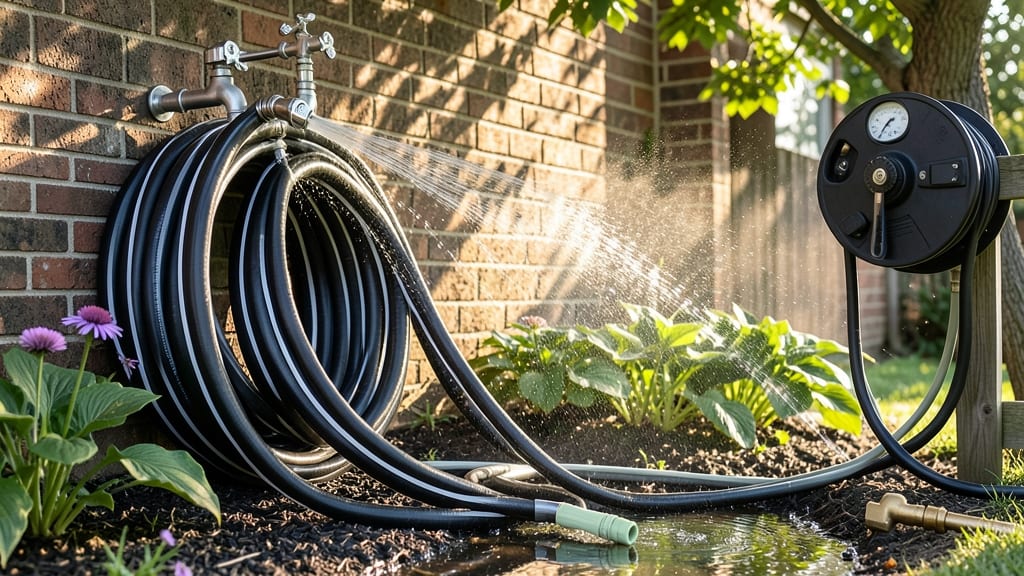
The biggest garden hoses available can extend up to 100 feet while maintaining a 5/8-inch diameter, providing an impressive 20+ GPM flow rate for demanding tasks like large-scale irrigation, farm watering, or commercial landscaping. Their reinforced construction—often using materials like PVC or heavy-duty rubber—ensures they can handle high-pressure systems without kinking or bursting.
When you're dealing with sprawling lawns, expansive gardens, or even agricultural watering needs, the right hose makes all the difference. 🔥 A 5/8-inch diameter is the gold standard for maximizing water flow, while the 100-foot length eliminates the need for constant repositioning.
I’ve seen these hoses handle everything from filling large irrigation tanks to powering high-volume sprinkler systems without losing pressure. The key here is the material—thick-walled PVC or reinforced rubber resists abrasion and UV damage, so you’re not replacing them every season.
For professional-grade performance, look for hoses with braided outer layers or double-wall construction. These features add durability while maintaining flexibility, making them easier to maneuver around obstacles. Many top-rated models also include quick-connect fittings for seamless hookups to sprinklers or nozzles.
If you’re investing in one of these heavy-duty hoses, pair it with a high-pressure pump to fully unlock its potential—otherwise, you might not see the full 20+ GPM flow rate you’re paying for.
💡 In This Article
- Factors Determining the Largest Garden Hose Capacity
- Best Heavy-Duty Hoses for Large-Scale Gardening and Landscaping
Factors determining the largest garden hose capacity
Hose capacity is determined by three critical factors: diameter, length, and material composition. The 5/8-inch diameter becomes the sweet spot because it balances water flow with flexibility—anything larger risks becoming too rigid for easy handling while smaller diameters (like 3/8-inch) struggle to deliver the 20+ GPM needed for heavy-duty tasks.
Think of it like a highway: a wider lane (diameter) allows more traffic (water) to pass through without congestion, but too wide makes maneuvering difficult.
Length plays a crucial role in pressure loss due to friction. A 100-foot hose at 5/8-inch diameter can maintain 80-90% of its original pressure at the end, assuming proper material quality. However, thinner residential hoses lose 50% or more pressure over the same distance.
The secret lies in the hose's internal smoothness—reinforced rubber or PVC with a low-friction lining minimizes energy loss, while cheaper vinyl hoses create turbulence that reduces flow rate dramatically.
Material science makes all the difference in durability. Heavy-duty hoses use polyvinyl chloride (PVC) or reinforced rubber because these materials resist kinking and abrasion. PVC, for instance, has a tensile strength of 5,000-7,000 PSI, while standard vinyl hoses typically max out at 1,500 PSI.
This means commercial-grade hoses can handle 150 PSI water pressure without bursting, compared to 80 PSI for residential models. The braided outer layer adds another 30-50% durability by protecting against UV rays and physical damage.
Pressure regulation matters too. Most residential systems operate at 40-60 PSI, but professional irrigation systems can reach 100+ PSI. A 5/8-inch hose with proper reinforcement can handle this without expanding or leaking, while thinner hoses may swell dangerously.
This is why landscape contractors specify hoses with pressure ratings of 150 PSI or higher—they need to perform consistently under varying conditions.
Consider this real-world example: A 100-foot, 5/8-inch hose from Flexzilla delivers 22 GPM at 50 PSI, while a 3/4-inch residential hose of the same length might only deliver 12 GPM at the same pressure.
The difference comes from the 30% larger cross-sectional area of the commercial hose, which allows more water volume to pass through per minute. 💫
For large-scale applications, the hose's weight capacity also becomes important. Heavy-duty models can support 50-100 pounds per foot when filled with water, making them stable enough for use with heavy sprinkler systems or farm irrigation. This stability prevents sagging or kinking that could disrupt water flow during critical operations.