
Tools
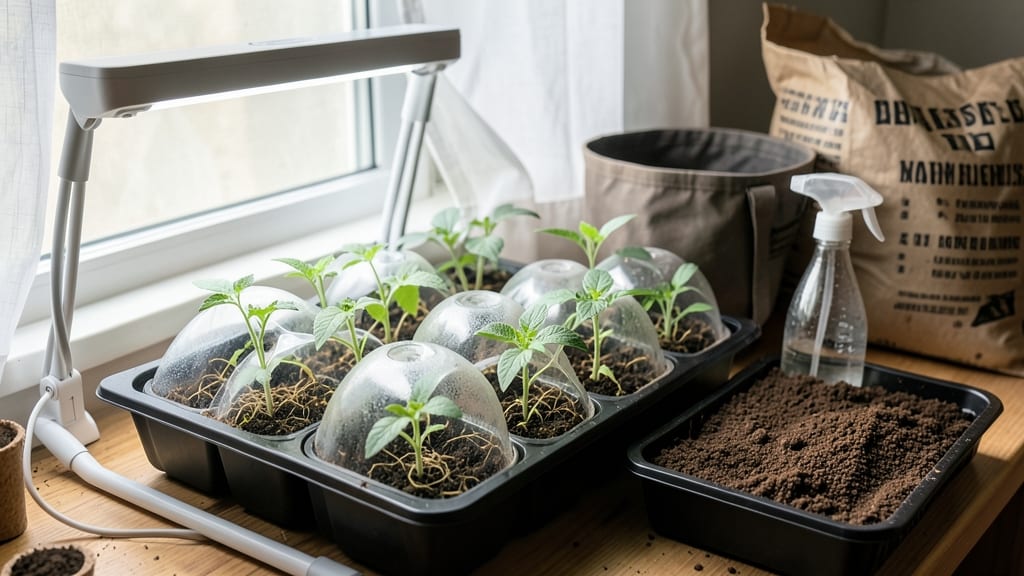
Starting garden seeds indoors at the right time ensures strong, healthy plants ready for transplanting—skipping this step can leave you with leggy, weak seedlings that never make it outside.
Timing your indoor seed starting just right can mean the difference between lush, thriving plants and weak seedlings that struggle to survive transplanting—especially when local frost dates vary by hundreds of miles.
Most gardeners wait until late winter or early spring, but the exact moment depends on your USDA zone, the last frost date, and how long your chosen plants need to mature before harvest.
In this guide, I’ll break down the zone-specific countdowns you need, plus how to adjust for microclimates, so you can confidently start seeds indoors and avoid common pitfalls like damping off or overcrowded trays.
USDA zone-by-zone countdowns for optimal indoor seed starting times
Getting your indoor seed starting timing right means the difference between healthy transplants and struggling seedlings. Your USDA hardiness zone determines when to begin—especially since last frost dates can vary by weeks or even months across regions.
Whether you're growing tomatoes, peppers, or leafy greens, knowing your zone helps you calculate the perfect seed starting window.
Most gardeners follow the 8-week rule for warm-season crops like tomatoes and peppers, which need 6-8 weeks indoors before transplanting. Cool-season crops like lettuce and spinach only require 4-6 weeks.
But without knowing your last frost date, you might start too early or too late. Let’s break it down by zone so you can set your seedling schedule with confidence.
Below is your zone-by-zone countdown for starting seeds indoors, including frost-free math for both long-season crops (like broccoli) and fast-growing greens (like basil). Use these guidelines to align your seed starting dates with your local climate.
| USDA Zone | Last Frost Date (Approx.) | Start Long-Season Crops (6-8 wks) | Start Fast-Growing Crops (4-6 wks) | Example Crops |
|---|---|---|---|---|
| Zone 3 | Mid-May | Early March | Late March | Tomatoes, Peppers, Broccoli |
| Zone 4 | Early May | Late February | Early March | Tomatoes, Peppers, Cabbage |
| Zone 5 | Mid-April | Early February | Mid-February | Peppers, Eggplant, Basil |
| Zone 6 | Early April | Late January | Early February | Tomatoes, Cucumbers, Spinach |
| Zone 7 | Mid-March | Early January | Late December | Peppers, Lettuce, Herbs |
| Zone 8 | Early March | Mid-December | Late November | Tomatoes, Basil, Cilantro |
| Zone 9 | Late January | Early November | Mid-October | Peppers, Eggplant, Okra |
| Zone 10 | No frost | Year-round | Year-round | All crops |
For example, if you’re in Zone 5 with a mid-April last frost date, you’ll want to start tomatoes and peppers by early February to give them 8 weeks indoors before transplanting. Meanwhile, lettuce and spinach can wait until mid-February since they only need 4-6 weeks.
In Zone 9, where frost is rare, you can start warm-season crops as early as November for an early spring harvest. But if you’re in Zone 3, waiting until early March ensures your seedlings won’t outgrow their containers before the last frost.
Pro tip: Use a grow light if your seed starting window falls during short daylight hours. 14-16 hours of light per day helps prevent leggy seedlings, especially for tomatoes and peppers.
Adjust your seed starting schedule based on your local microclimate—urban areas may have earlier last frosts than rural zones.
Don’t forget to account for seedling hardening off before transplanting. Give your seedlings 7-10 days of gradual outdoor acclimation to avoid transplant shock. This extra time ensures your
How to calculate your exact seed starting window using local microclimates
Your USDA zone is just the starting point for calculating when to start garden seeds indoors. Even neighbors just a few miles apart can have 3-4 week differences in frost dates due to urban heat islands or mountain shadows.
To pinpoint your exact window, you'll need to factor in elevation, historical frost data, and even your garden's microclimate. Let's break down how to do this with precision.
First, find your localized last frost date—not the USDA average. Check your county's historical frost records from the last 10 years (many agricultural extension offices provide this data).
For example, Denver (Zone 5) might average May 15th, but your urban backyard could be 7 days earlier due to pavement heat. Adjust your seed starting timeline accordingly.
Next, account for your elevation adjustments. Every 1,000 feet higher adds roughly 3-5 days to your frost-free period. If you're at 5,000 feet, subtract those extra days from your USDA zone's average.
For instance, a Zone 6 garden at 6,000 feet might need to start tomatoes 2 weeks earlier than the standard schedule.
5-Step Formula for Your Perfect Seed Starting Window
- 📅 Step 1: Find your local last frost date (not USDA average). Use 3-year averages for accuracy.
- 🌡️ Step 2: Adjust for elevation: Subtract 3-5 days per 1,000 ft above sea level.
- 🏙️ Step 3: Modify for urban heat islands: Add 5-10 days if in a city (pavement retains heat).
- 🌱 Step 4: Pick your plant family and its ideal seed-to-transplant window (e.g., 6-8 weeks for tomatoes, 4-6 weeks for lettuce).
- ⏳ Step 5: Count backward from your adjusted last frost date minus your plant's days to maturity.
Example: Zone 7 with 5,000 ft elevation and urban heat → Start peppers (8-week seedlings) March 1-15 instead of March 15-30.
Now, let's apply this to different plant families. Cool-season crops like lettuce and spinach can handle earlier starts (4-6 weeks before last frost), while tomatoes and peppers need 6-8 weeks.
For example, in Zone 5, I start my basil (4-week seedlings) by March 15th but delay eggplants (8-week seedlings) until March 1st—even though both are warm-season plants.
Don’t forget to test your soil temperature before transplanting. Cool-season crops thrive in 45-65°F soil, while warm-season plants need 60-85°F. Use a soil thermometer to confirm your outdoor beds are ready.
If your microclimate runs cooler (like near a lake), wait until soil temps hit the lower end of the range before planting.
Finally, keep a seed-starting journal for 2-3 years. Note which dates worked best for your specific location, and adjust future years based on your observations.
For instance, I learned my Zone 8 garden in a valley gets 10 days earlier last frosts than the USDA average—so I now start my cucumbers by February 20th instead of March 1st.