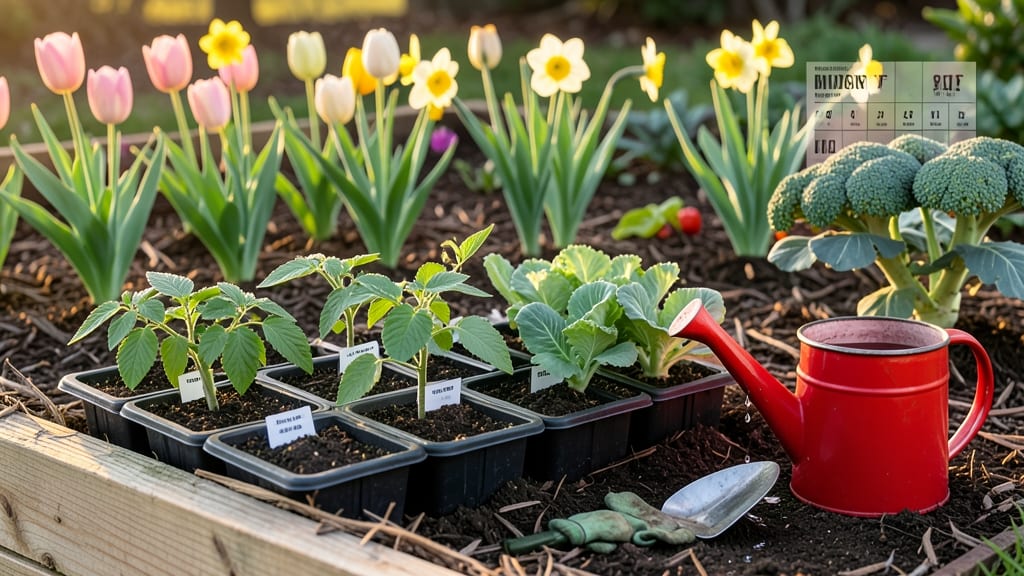
Planting your garden in Michigan at the right time means the difference between a bountiful harvest and a sad pile of frost-nipped seedlings.
Michigan’s unpredictable spring weather can turn a gardener’s excitement into frustration—planting too early risks frost damage, while waiting too long shortens the growing season. But timing your garden perfectly means bountiful harvests from tomatoes to tulips, all tailored to Michigan’s unique USDA zones.
With three distinct planting zones across the state, the key lies in knowing when the last frost typically passes in your area. In Zone 5 (northern Michigan), you’ll wait until late May, while Zone 6 (central Michigan) can start as early as mid-April for cold-hardy crops.
Here’s how to align your planting schedule with Michigan’s climate, including zone-specific deadlines, soil prep tips, and strategies to extend your growing season—so you can enjoy fresh veggies from garden to table all summer long.
🌱
When to Plant Your
Jan
❄️
Feb
❄️
Mar
🌱
Apr
🌱
May
🌱
Jun
🌱
Jul
☀️
Aug
☀️
Sep
🍂
Oct
🍂
Nov
🍂
Dec
❄️
Michigan’s planting deadlines by USDA Zone (5, 6, and 7)
Michigan spans USDA Zones 5, 6, and 7, with Zone 5 covering the Upper Peninsula and northern Lower Peninsula, while Zones 6 and 7 dominate southern and southwestern regions.
The last spring frost typically arrives between May 10-25, and the first fall frost hits September 20-October 15, depending on your zone. These dates dictate when to plant cool-season crops versus warm-season varieties.
For Zone 5, gardeners face shorter growing seasons (about 120-150 frost-free days), so focus on early-maturing varieties and cold-hardy plants. Zones 6 and 7 enjoy 150-180 frost-free days, allowing for longer-season crops like tomatoes and peppers.
Always check Michigan State University’s frost date maps for your exact location, as microclimates vary even within zones.
To simplify planning, I’ve created a zone-specific planting calendar below, covering 30+ common crops—from asparagus to zucchini—with exact monthly deadlines for spring and fall planting. Use this as your garden’s roadmap to avoid frost damage and maximize yields.
| Crop |
Zone 5 Deadline |
Zone 6 Deadline |
Zone 7 Deadline |
Notes |
| Peas |
April 15-May 1 |
April 1-May 10 |
March 20-April 15 |
Direct sow; tolerates light frost |
| Spinach |
April 10-May 15 |
March 25-April 30 |
March 15-April 15 |
Bolt-resistant varieties for summer |
| Lettuce |
April 1-May 10 |
March 15-April 20 |
February 20-April 1 |
Successive plantings every 2 weeks |
| Tomatoes |
May 15-June 1 |
April 20-May 15 |
April 1-May 10 |
Use row covers for early starts |
| Peppers |
May 20-June 10 |
May 1-May 20 |
April 15-May 1 |
Start indoors 8-10 weeks before last frost |
| Beans |
May 10-June 15 |
April 25-May 30 |
April 10-May 15 |
Warm soil required; avoid frost |
| Carrots |
April 10-May 15 |
March 20-April 30 |
February 20-April 10 |
Sow in loose, stone-free soil |
| Cucumbers |
May 15-June 10 |
April 20-May 15 |
April 1-May 10 |
Trellis for space-saving |
| Pumpkins |
May 1-June 1 |
April 15-May 15 |
April 1-May 10 |
Long season; choose compact varieties |
How to adjust planting times for Michigan’s unpredictable weather
Michigan’s unpredictable spring frost dates can leave gardeners scrambling, but smart adjustments let you maximize your growing season. By combining cold-hardy crops with protective tools like row covers, you can plant earlier without risk. Meanwhile, succession planting and heat-tolerant varieties help you squeeze extra harvests from late summers.
I’ve learned that USDA Zone 5 gardeners (like those in northern Michigan) face the most challenges, while Zone 6/7 areas (southern Michigan) enjoy slightly longer seasons. The key is flexibility—knowing which crops thrive in cool soil and which need warmth to germinate lets you fine-tune your schedule.
🌱 Numbered Highlights: Adjusting Planting for Michigan’s Weather
- 1. Plant cold-hardy crops early (spinach, peas, kale) 4-6 weeks before last frost—they tolerate 32°F soil temps.
- 2. Use row covers to extend spring planting by 2-3 weeks—they raise soil temps by 5-8°F.
- 3. Succession plant heat-lovers (tomatoes, peppers) every 2-3 weeks from late May to July.
- 4. Choose late-season varieties with shorter maturity dates (e.g., ‘Early Girl’ tomatoes instead of heirlooms).
- 5. Monitor frost dates—check Michigan State University’s frost prediction maps weekly in spring.
For high-value crops like tomatoes or peppers, I recommend a risk-assessment checklist before planting. Ask: Can I protect seedlings with cloches? or Will my soil warm enough by Memorial Day? If the answer’s no, opt for container gardening near your home’s south wall to capture extra heat.
Another trick? Direct-sow fast growers like radishes and lettuce every 2 weeks starting in early April. This ensures a steady harvest even if late frosts strike. For slower crops (like cabbage), wait until after May 15—this aligns with Zone 5’s average last frost.
Don’t forget fall planting! Cool-season crops like broccoli and carrots thrive when sown in late July to early August. They’ll mature before first frost (typically mid-October in Zone 6) and taste sweeter after a light frost.
When in doubt, start seeds indoors 6-8 weeks before your last frost date. This gives you a head start on warm-season crops and lets you transplant hardened-off seedlings as soon as soil temps hit 55°F. With these strategies, Michigan’s weather won’t dictate your harvest—you will! 🌱
★★★★★4.5(9 reviews)