
Picking
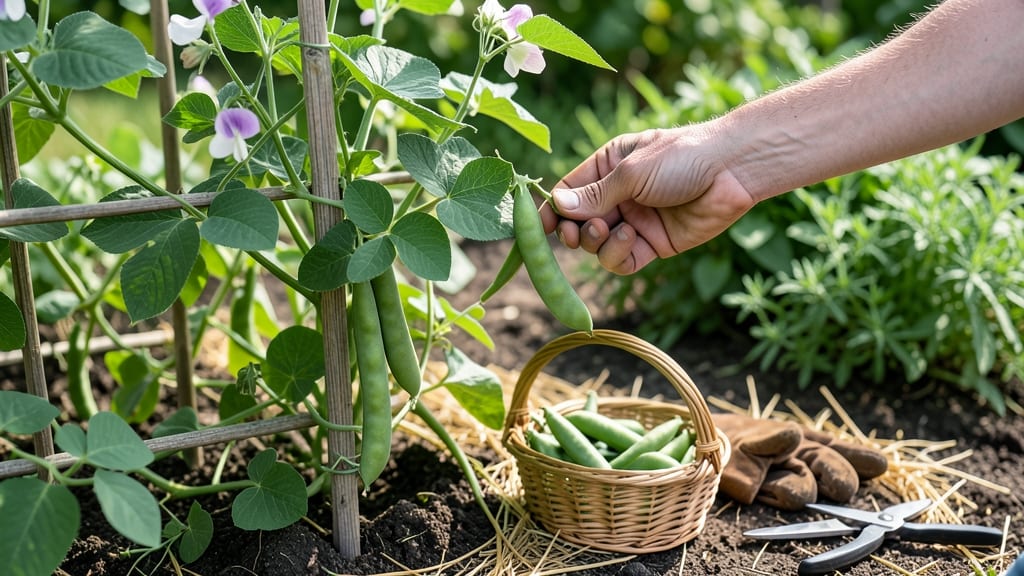
To pick peas from your garden at their sweetest, aim for pods that are 2 inches long and bright green 🌱—any longer and they turn tough and mealy.
Peas are one of the fastest-growing vegetables in your garden, but timing their harvest wrong can mean the difference between sweet, tender pods and tough, mealy failures—here’s how to nail it.
Start checking your plants 60 days after planting, when pods begin to swell. The key is consistency: snap peas should be picked when they’re crisp, sugar snaps when they’re plump but still firm, and shelling peas when seeds are visible but not overcrowded.
In this guide, I’ll break down the exact size cues, how often to harvest for maximum yield, and the telltale signs you’ve waited too long—so you never miss peak flavor again.


3 Key size indicators to harvest peas at perfect ripeness
Harvesting peas at the right moment transforms your garden into a flavor factory. Unlike many vegetables, peas demand precise timing—pick too early, and you waste sweet potential; too late, and they turn woody and tough.
The secret lies in three size-based indicators that work for all pea types: sugar snap, snap, and shelling peas. These cues ensure you harvest when sugar content peaks and pods remain tender.
First, understand that pea maturity varies by type. Sugar snap peas (like 'Sugar Ann') are best when pods are 2-3 inches long and crisp, while shelling peas (like 'Lincoln') should be harvested when pods are 1.5-2 inches but seeds are plump.
Snap peas (like 'Oregon Sugar Pod') fall in between, needing pods that are 2 inches long with firm texture. Ignoring these distinctions can lead to bitter or fibrous results.
Visual cues are your best tools. Look for pods that are bright green and glossy, not dull or yellowing. The seeds inside should be visible but not oversized—think "pebble-sized," not "marble-sized." This balance ensures maximum sweetness and tenderness. Pro tip: Run your thumb along the pod—it should feel smooth and slightly waxy, not rough or leathery.
| Pea Type | Ideal Pod Size | Seed Stage | Pod Firmness | Harvest Test |
|---|---|---|---|---|
| Sugar Snap | 2-3 inches | Small, barely visible | Crisp, snaps easily | Bend pod—should break cleanly |
| Snap Peas | 2 inches | Visible but plump | Firm, slightly waxy | Pinch pod—should feel dense |
| Shelling Peas | 1.5-2 inches | Plump, filling pod | Firm, not fibrous | Shake pod—seeds should rattle slightly |
Don’t rely solely on pod size—tactile tests are equally critical. For example, sugar snap peas should snap cleanly when bent at their widest point. If they bend without breaking or feel spongy, they’ve passed their prime.
Similarly, shelling peas should have seeds that rattle slightly when shaken—if they’re silent, the peas are underripe; if they sound hollow, they’re overripe.
Timing matters too. Harvest peas in the morning after dew dries for the best flavor and texture. Avoid picking after rain, as excess moisture can dilute sugar content and make pods waterlogged and bland.
I’ve found that harvesting every 2-3 days keeps plants producing, but check daily during peak season—overripe peas trigger flowering, which ends your harvest.
Watch for color changes as a final check. Pods should remain vibrant green; any yellowing or brown spotting signals overmaturity or disease. Even worse, wrinkled or shriveled pods mean the peas have dried out on the vine.
In my garden, I’ve lost entire harvests by ignoring these signs—don’t make the same mistake!
For sugar snap peas, aim for pods that are uniform in color and shape. If some pods on the same vine vary in size, prioritize the smaller, firmer ones—they’ll be sweeter.
With shelling peas, focus on pods where the seeds fill the pod but don’t bulge. Overstuffed pods mean the peas will crowd each other, leading to stunted growth and poor flavor.
Pro move: Use a small pruning shears or your fingers to snap pods at the stem. Avoid tearing, which can damage the plant. After harvesting, rinse peas immediately in cool water to remove dirt and store them in the fridge for up to 5 days.
For longer storage, blanch and freeze them—this preserves color, texture, and sweetness for months.
Remember, consistency is key. The more you harvest at the right size, the more your pea plants
How often to pick peas for maximum yield and plant health
Harvesting peas at the right intervals keeps your plants productive and your pods sweet. Pea plants produce continuously when you pick them regularly—skipping harvests can lead to overripe pods and reduced flowering. The key is consistency: check your vines every 2-3 days during peak production (spring and fall seasons).
When you harvest too infrequently, peas stop producing new flowers and focus energy on thickening existing pods. This leads to woodier, less tender peas and even premature plant decline.
On the flip side, picking too often stresses the plant. Balance is everything—aim for a schedule that matches your plant’s growth rate and your cooking needs.
🌱 Numbered Highlights: Pea Harvesting Schedule
- 📅 Start harvesting when pods reach 2 inches long and are bright green—usually 60-70 days after planting.
- ⏰ Pick every 2-3 days during peak production (spring/fall) to encourage continuous flowering.
- ⚠️ Stop harvesting if pods turn yellow or seeds bulge—this signals overmaturity and plant stress.
- 🌿 Reduce frequency in hot weather (summer) as growth slows—check vines every 4-5 days instead.
- 🌱 Extend harvest by planting succession crops every 2 weeks for a continuous supply.
For sugar snap peas and snap peas, harvest when pods are crisp and snap easily—this usually happens 1-2 weeks earlier than shelling peas. Shelling peas need slightly larger seeds inside, so wait until pods are 2.5-3 inches long and seeds are plump but still tender.
Use sharp scissors or your fingers to avoid damaging vines.
Morning harvests are ideal because peas are coolest and crispest then. Avoid picking after rain, as damp pods can develop fungal diseases like powdery mildew. If you miss a harvest day, check for yellowing pods or wrinkled skins—these are signs your plants need attention.
Prune any dead flowers or pods to redirect energy to new growth.
Regular harvesting isn’t just about yield—it’s about plant health. When you remove spent pods, you signal the plant to produce more flowers, leading to a longer harvest window. In my garden, this means 3-4 weeks of continuous pea production instead of just 1-2 weeks.
For best results, combine frequent picking with proper watering and trellising to keep vines supported.
Remember: Pea plants are annuals, so treat every harvest as a chance to maximize their potential. If you notice fewer flowers after a few weeks, it might be time to fertilize lightly with a high-phosphorus mix (like 5-10-10) to boost flowering.
With the right schedule, you’ll enjoy fresh peas straight from the vine all season long! 🌱