
Picking
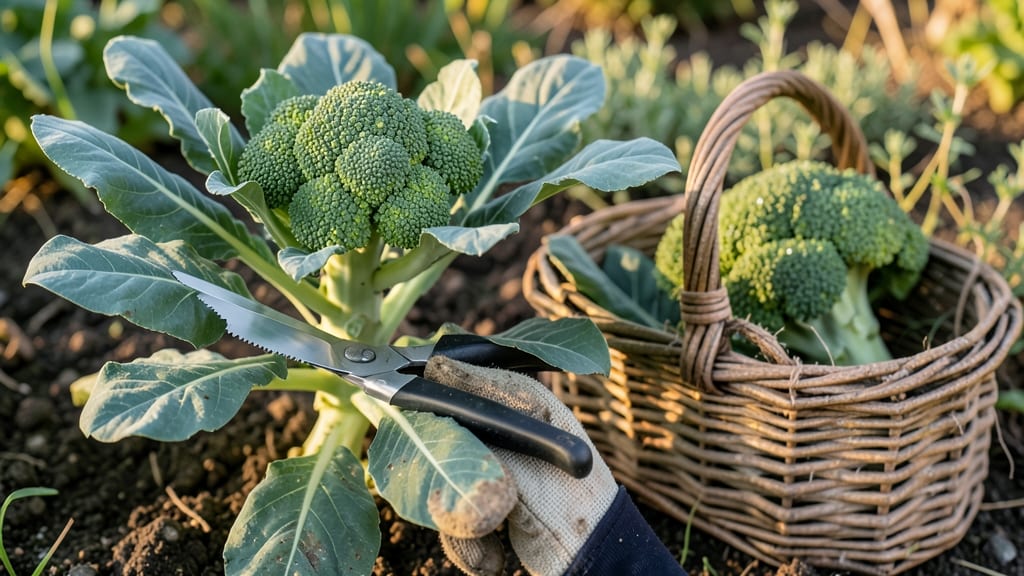
Picking broccoli at the right time ensures your garden yields the crispest, sweetest heads 🥦 — and missing the window means tough stems, bitter florets, or even wasted side shoots.
Harvesting too early leaves you with small, underdeveloped heads, while waiting too long turns those vibrant green crowns into bitter, yellowing buds.
The difference between a perfect harvest and a disappointing one often comes down to knowing those 3 key visual cues — size, color, and stem firmness — before you even touch the plant.
In Zone 6a, spring broccoli is ready by late May, while fall crops peak in October, but the real secret isn’t just the calendar. It’s spotting the moment when heads reach 6-8 inches, turn a deep, uniform green, and snap cleanly at the stem.
That’s when flavor and texture hit their peak.
Below, I’ll walk you through how to read your broccoli like a pro, plus pro tips for maximizing your harvest — including how to coax extra side shoots for weeks of fresh picks.


3 Key size & color clues to harvest broccoli at peak ripeness
Timing your broccoli harvest is everything—pick too early, and you’ll get tough, underdeveloped heads. Harvest too late, and those bitter florets and woody stems ruin the meal. The secret? Watch for these three visual cues that scream "perfectly ripe!"
Whether you're growing Calabrese or Romanesco, these clues ensure your broccoli is crisp, flavorful, and ready for the table.
First, focus on the head size. Aim for a diameter of 6-8 inches—any smaller, and the florets won’t be fully developed. Larger heads often mean the plant is pushing energy into flowering instead of flavor.
Think of it like waiting for the right moment when a fruit ripens: patience pays off with the best taste and texture.
Next, check the color consistency. Healthy broccoli heads should be a deep, vibrant green throughout. If you spot yellowing florets or brown spots, that’s a red flag—the plant is overripe and past its prime.
Even a single yellow bud signals it’s time to harvest before the whole head turns bitter. This is your plant’s way of saying, "I’m ready now!"
Finally, test the stem firmness with a gentle bend. A ripe broccoli stem should snap cleanly when you apply slight pressure—almost like a fresh asparagus stalk. If it feels hard and resists bending, the head isn’t ready yet.
But if the stem bends too easily and feels mushy, you’ve waited too long. This simple test is your quality control check before the harvest.
| Clue | What to Look For | Action |
|---|---|---|
| Head Size | 6-8 inches in diameter | Harvest when firm and compact |
| Color | Deep, vibrant green florets | Avoid yellowing or brown spots |
| Stem Firmness | Snaps cleanly with slight pressure | Test before cutting to confirm ripeness |
| Flower Buds | Tightly closed, no yellow showing | Harvest before buds open |
🌱 Pro Tip: Use sharp shears or a knife to cut stems about 5 inches from the base for regrowth.
Here’s a trick I use in my garden: harvest in the morning after the dew has dried. The heads are crispest then, and the flavor is at its peak.
Plus, you’ll avoid the stress of heat damage that can dull the taste later in the day. Think of it like picking your best tomatoes—timing matters!
Don’t forget to check for side shoots after your main harvest. Those smaller stems that sprout from the base can produce 3-5 more harvests per plant if you keep them trimmed.
It’s like getting a bonus round in your garden—just give them a little time to grow to 3-4 inches before snipping.
One common mistake? Waiting until the entire head is fully grown. Broccoli plants often produce multiple heads, but the first one is usually the largest. Harvest it when it’s perfect, and the plant will redirect energy to smaller, equally delicious side shoots. It’s all about balancing yield and quality.
If you’re growing broccoli in hotter climates, watch for bolting—when the plant flowers prematurely due to heat stress. In this case, harvest as soon as the heads reach 50% of their ideal size to avoid bitter flavors.
It’s a trade-off, but better a smaller, sweet head than a giant bitter one!
Finally, store your freshly harvested broccoli in the crisper drawer of your fridge, wrapped in a damp paper towel to keep it crisp for up to 5 days.
Or, cook it within 24 hours for the best texture. Your garden’s hard work deserves the best treatment—just like you’d treat a freshly picked bouquet of flowers.
Now that you’ve mastered the art of visual timing, your broccoli will be the star of every meal. Happy harvesting—and may your garden always yield that perfect, deep green treasure! 🥦
How to avoid common mistakes that ruin broccoli flavor
Harvesting broccoli at the wrong time can turn your garden's hard work into disappointment—tough stems, bitter florets, or even wasted yields. Many gardeners make the same mistakes, like picking too early or ignoring those sneaky side shoots that keep producing after the main head.
The good news? Avoiding these pitfalls is simple once you know the signs. I’ve learned the hard way that timing is everything when it comes to broccoli flavor and texture.
One of the biggest mistakes is harvesting broccoli too early. When you pick heads that are still small and loose, you’re left with tough, fibrous stems and underdeveloped florets. This happens because the plant hasn’t had enough time to develop its full flavor and sweetness.
On the flip side, waiting too late turns your broccoli into a bitter, woody mess as the florets start to yellow and flower. Both extremes rob you of that crisp, sweet flavor we all love.
Another common oversight is ignoring the side shoots that sprout from the stem after the main head is harvested. These smaller shoots are just as flavorful and can extend your harvest by weeks, especially if you’re growing broccoli in cooler climates.
Many gardeners pull the whole plant once the main head is gone, missing out on a second (or even third!) harvest. It’s like throwing away free, delicious broccoli!
Too Early: Small, loose heads with tough stems and underdeveloped florets. Result: Bland, fibrous broccoli.
Too Late: Yellowing florets and bitter, woody texture. Result: Inedible or overly strong flavor.
Solution: Harvest when heads are 6-8 inches wide, deep green, and firm to the touch. Use your thumb to check: if the stem snaps easily, it’s ready!
To extend your harvest season, focus on proper spacing and consistent care. Broccoli thrives in cool weather, so if you’re in a warm climate, opt for fall plantings to avoid the heat.
Mulch around your plants to keep the soil cool and moist, and fertilize lightly every 4-6 weeks with a balanced 5-10-10 mix. This encourages strong growth and more side shoots. I’ve seen my fall broccoli produce for nearly two months with this approach!
Don’t forget to rotate your harvests. If you’re growing multiple broccoli plants, stagger their planting dates so that you’re not overwhelmed with a single massive harvest all at once. This way, you can enjoy fresh broccoli all season long without any gaps.
It’s also a great way to test different varieties—some, like Calabrese, produce larger main heads but fewer side shoots, while others, like Romanesco, are more compact and prolific.
Finally, keep an eye out for pests and diseases. Aphids, cabbage worms, and fungal issues like clubroot can stress your broccoli and affect flavor. Use row covers early in the season to protect young plants, and remove any damaged leaves immediately.
Healthy plants produce sweeter, more flavorful broccoli, so don’t skip this step. With these tips, you’ll avoid the most common mistakes and enjoy broccoli that’s crisp, sweet, and full of flavor all season long.