
Companion Plants
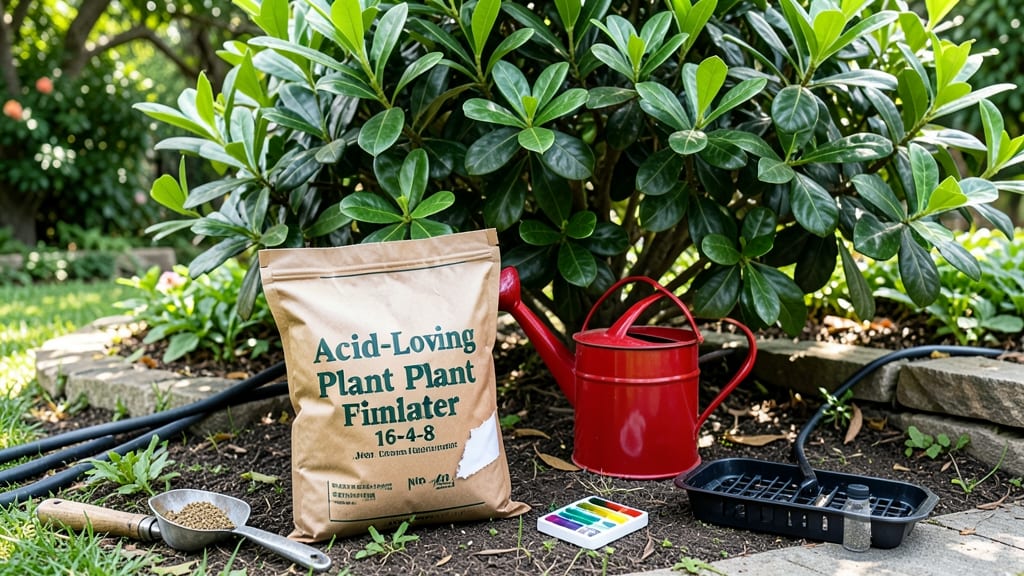
To feed gardenias properly, maintain acidic soil (pH 5.0–6.5) and use balanced fertilizer with higher nitrogen in spring, phosphorus for blooms, and potassium for root strength. Avoid over-fertilizing or alkaline soil, which stunts growth and reduces flowering.
Gardenias thrive when their soil mimics their natural acidic environment, which is why pH levels between 5.0 and 6.5 are non-negotiable. 🌿 Without this acidity, essential nutrients like iron and magnesium become unavailable, leading to yellowing leaves or poor blooming.
I've found that a slow-release, 10-10-10 fertilizer (equal parts nitrogen, phosphorus, potassium) works best in spring, while a bloom-boosting 5-10-10 formula supports summer flowering.
The key is patience—gardenias reward consistent care, not heavy feeding. Over-fertilizing can burn roots and attract pests, while alkaline soil locks out nutrients, causing stunted growth. Think of it like a fine wine: it needs the right conditions to develop its full potential.
💡 In This Article
- Optimal Soil pH and Nutrient Requirements for Gardenias
- Best Fertilizers for Gardenias and Application Tips
Optimal soil pH and nutrient requirements for gardenias
Gardenias evolved in the acidic, humus-rich soils of Southeast Asia, where pH levels naturally range from 5.0 to 6.5. This acidity isn't just a preference—it's a necessity for nutrient availability.
In alkaline conditions (above 7.0), critical micronutrients like iron and manganese become chemically locked, causing yellowing leaves (chlorosis) even when the plant appears otherwise healthy. The root zone's acidity also triggers the production of organic acids that chelate (bind) these nutrients, making them plant-accessible. 🌱
Nitrogen, phosphorus, and potassium (NPK) work together like a symphony: nitrogen fuels leafy growth, phosphorus stimulates root development and flower buds, while potassium strengthens cell walls for disease resistance. A 10-10-10 ratio in spring promotes vigorous foliage, but shift to 5-10-10 when buds form to prioritize blooms.
What's often overlooked? Micronutrients like magnesium (for chlorophyll) and calcium (for cell structure) must also be present—deficiencies show as brown leaf edges or weak stems. Soil tests reveal these hidden imbalances.
Here's the science: Gardenias absorb nutrients through cation exchange—positively charged mineral ions cling to negatively charged soil particles. Acidic conditions enhance this exchange, while alkaline soils repel nutrients, leaving roots starved. Imagine trying to drink through a clogged straw—that's what happens in non-acidic soil.
The solution? Amend with sulfur (to lower pH) or organic matter like peat moss, which naturally acidifies as it decomposes. 💫
Seasonal needs vary dramatically: Spring demands higher nitrogen (20% of NPK) to break dormancy, while summer blooming requires phosphorus dominance (10% NPK). Winter feeding should halt entirely—gardenias rest when days shorten.
The critical mistake? Assuming "more fertilizer = more flowers." Overdoing NPK burns roots and attracts fungal pests, while underfeeding starves the plant of the energy needed for fragrant blooms.
Visual cues reveal what's missing: Yellow leaves between veins signal iron deficiency, purple stems indicate phosphorus shortage, and weak stems with brown tips mean potassium or calcium lack. These symptoms aren't just cosmetic—they're the plant's SOS.
For example, a gardenia with yellow leaves but green veins? That's classic iron chlorosis from alkaline soil, not a nitrogen problem. The fix? Acidify the soil first, then fertilize.
Pro tip: Mulch with pine needles or oak leaves—they slowly release organic acids that maintain pH while suppressing weeds. This mimics the forest floor where gardenias thrive naturally.
The key takeaway: Acidic soil isn't optional; it's the foundation upon which all other feeding strategies depend. Without it, even the best fertilizer becomes useless. 🌿