
Tools
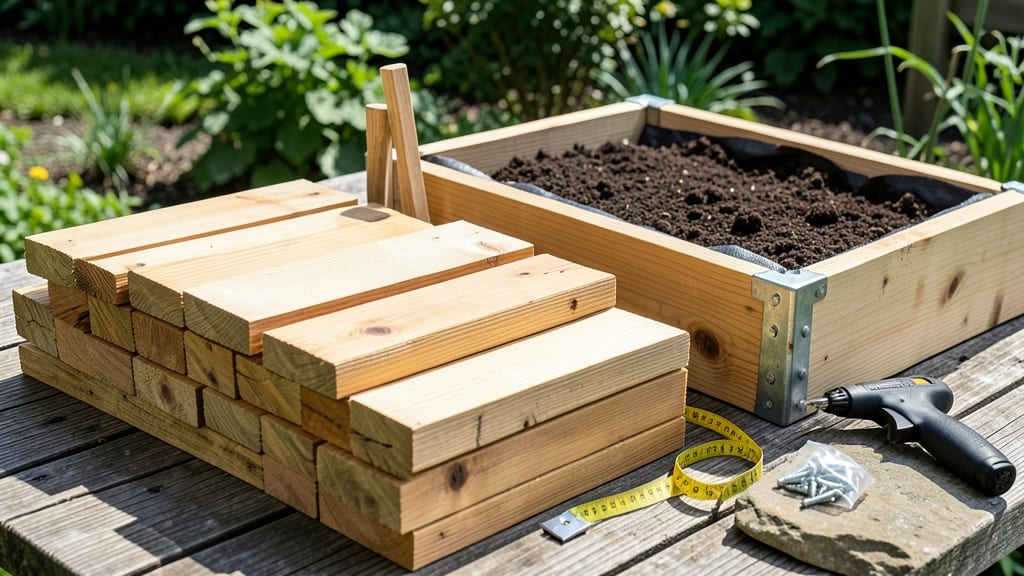
When building raised garden beds, the ideal wood sizes are 2x6 or 2x8 lumber for sides (6-12 inches tall) with 4x4 or 6x6 posts at corners, plus 2x12 or wider bottom boards to prevent moisture damage. Cedar or redwood are the most durable options for outdoor use without needing chemical treatments.
Choosing the right dimensions affects everything from plant growth to long-term stability. 🌱 The 6-12 inch height gives roots plenty of room to develop while keeping the bed manageable for planting and harvesting.
Wider bottom boards (2x12 or larger) create a solid foundation that resists warping, while corner posts add structural support against soil pressure.
I've found that using cedar or redwood eliminates the need for sealants, as these woods naturally resist rot and insects better than pressure-treated pine, which can leach chemicals into your soil over time.
For most gardeners, 2x6 lumber offers the perfect balance between material cost and bed width—typically around 5.5 inches wide—while still allowing easy access to the center. If you're growing taller plants like tomatoes or corn, you might opt for the 2x8 (7.25 inches wide) to accommodate wider root zones.
The key is ensuring your design supports both the weight of the soil and your gardening activities without compromising drainage or structural integrity.
💡 In This Article
- Optimal Raised Garden Bed Wood Dimensions Explained
- Best Wood Types and Longevity for Outdoor Garden Beds
Optimal raised garden bed wood dimensions explained
The ideal height for raised garden beds—typically 6-12 inches—balances root development with practical gardening needs. Most vegetables thrive with 8-12 inches of soil depth, as this accommodates root systems while preventing soil compaction from foot traffic.
For example, tomatoes need at least 12 inches of depth, while shallow-rooted herbs like basil or thyme do well in 6-inch beds. The extra height also improves drainage, reducing waterlogging that can suffocate roots.
When selecting side lumber, 2x6 or 2x8 boards (actual dimensions 5.5" x 5.5" and 7.25" x 7.25") create beds that are wide enough for comfortable planting but narrow enough to prevent soil from spilling over during watering.
The 2x6 is my go-to for most beds because it offers 5.5 inches of width, which is perfect for most gardeners to reach the center without bending. For taller plants or wider root zones, the 2x8 provides extra stability and space.
Corner posts made from 4x4 or 6x6 lumber (actual dimensions 3.5" x 3.5" and 5.5" x 5.5") are critical for structural integrity. These posts distribute weight evenly and prevent the bed from bowing outward under soil pressure.
A 4x4 works well for smaller beds (4' x 4'), while a 6x6 is better for larger beds or areas with heavy clay soil, which exerts more pressure on the sides. The wider base also improves stability in windy conditions.
At the bottom, a 2x12 or wider board (actual width 11.25") creates a solid foundation that prevents rot by allowing airflow underneath. This is especially important in humid climates, where stagnant moisture can accelerate wood decay.
The wider base also supports the weight of the soil and prevents the bed from sinking into soft ground. For extra durability, I recommend using 2x12 boards with the wide face down to maximize surface area and reduce moisture exposure.
Drainage is another key factor influenced by wood dimensions. Beds with 6-12 inches of height naturally improve drainage compared to ground-level planting, as excess water flows out through the bottom slats.
The gap between the bottom boards (typically 1/4" to 1/2") allows water to escape while keeping soil in place. This design mimics natural slopes found in wild ecosystems, where water drains away from plant roots.
For accessibility, consider the width of your gardening tools. If you're using a 12-inch trowel, a 2x6 bed (5.5 inches wide) lets you work comfortably without crowding. Wider beds (2x8 or larger) may require stepping into the bed, which can compact soil.
To avoid this, I often build beds in 4' x 8' sections, which are wide enough for most tasks but narrow enough to maintain soil structure.