
Tools
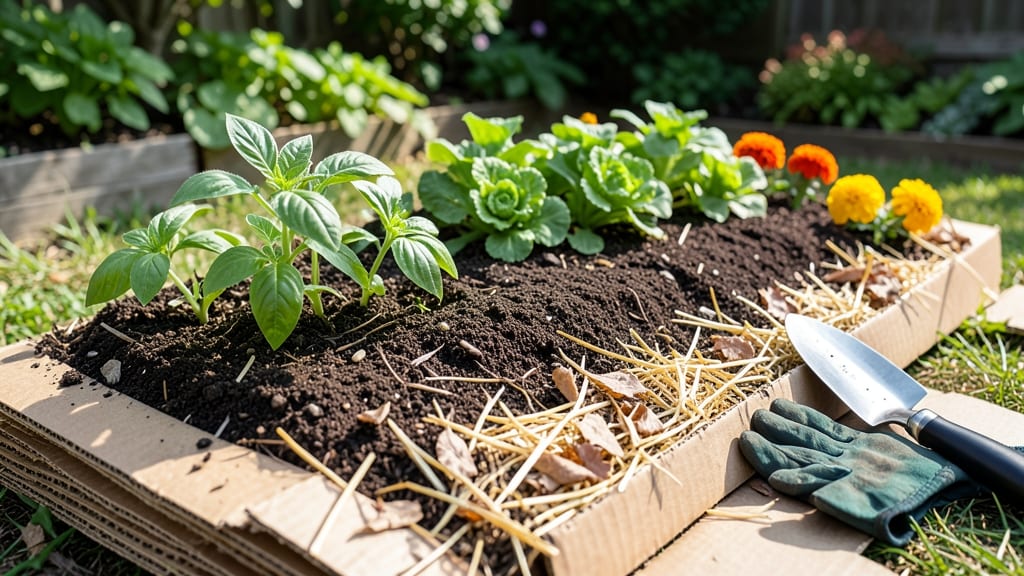
Lasagna gardening is a no-dig planting technique that creates rich soil by layering organic materials like grass clippings, leaves, and cardboard without tilling. This method boosts drainage, locks in moisture, and smothers weeds while breaking down into nutrient-dense growing medium over time.
This innovative approach eliminates the need for traditional soil preparation by leveraging natural decomposition. 🌱 The layered structure—often called "sheet composting"—allows you to build fertile beds directly on top of existing grass or soil, making it ideal for small spaces or poor-quality ground.
What makes it unique is how it mimics forest floor ecosystems, where fallen leaves and organic matter gradually transform into fertile topsoil. I've found it particularly effective for beginners because it requires minimal tools and reduces physical strain compared to digging.
One key advantage is the ability to customize layers based on available materials. For instance, nitrogen-rich "green" layers like vegetable scraps or fresh grass speed up decomposition, while carbon-rich "brown" layers such as dried leaves or shredded newspaper provide structure.
The process typically takes 4-6 weeks to become plant-ready, though you can start planting as soon as the top layer is 6-12 inches deep and begins to heat up.
💡 In This Article
- How Lasagna Gardening Builds Healthy Soil
- Step-by-Step Guide to Starting a Lasagna Garden Bed
How lasagna gardening builds healthy soil
Lasagna gardening works by creating a controlled composting environment where organic materials break down into rich humus through microbial activity.
The process begins with a base layer of cardboard or newspaper to block weeds and grass, followed by alternating layers of nitrogen-rich "greens" (like grass clippings or coffee grounds) and carbon-rich "browns" (such as dried leaves or straw).
This balance ensures efficient decomposition, with microbes converting the materials into a fluffy, nutrient-dense growing medium within 4-6 weeks. The texture becomes similar to well-aged compost but with better structure—almost like a cross between garden soil and mulch.
The decomposition process generates heat, which kills weed seeds and pathogens while accelerating nutrient release. Unlike traditional tilling, which disrupts soil structure and releases carbon dioxide, lasagna gardening preserves soil organisms and fungal networks.
The resulting soil holds 20-30% more moisture than conventional garden beds because the organic layers act like a sponge, reducing watering needs by upstrong>50% during dry spells. The layered structure also improves drainage by creating air pockets between materials, preventing compaction that often occurs with heavy foot traffic or machinery.
One of the most impressive aspects is how this method suppresses weeds naturally. The thick, insulating layers block sunlight from reaching weed seeds in the soil below, while the active decomposition creates an environment where beneficial microbes outcompete weed pathogens.
Studies show lasagna garden beds can reduce weed growth by up to 80% compared to tilled soil. The process also increases soil organic matter by 3-5 times faster than traditional composting, making it ideal for revitalizing depleted or clay-heavy soils without the need for chemical amendments.
For beginners, the key is maintaining the right balance between nitrogen and carbon sources. Too many greens can create anaerobic pockets that smell like rotten eggs, while too many browns slow decomposition. A good rule of thumb is a 3:1 ratio of browns to greens by volume.
For example, a 12-inch-deep bed might start with cardboard, then alternate between 2 inches of shredded newspaper and 1 inch of grass clippings, finishing with a top layer of compost or mulch to attract earthworms and protect the bed from erosion.
The microbial activity in lasagna beds creates a thriving ecosystem that continuously improves soil health. Earthworms, fungi, and bacteria work together to break down materials, releasing nutrients in forms plants can readily absorb. This contrasts with traditional composting, where nutrients are often locked up until the material fully decomposes.
In lasagna gardening, plants can access nutrients almost immediately, making it perfect for heavy feeders like tomatoes or peppers. The result is soil that stays fertile for years with minimal maintenance.
What's particularly satisfying is how this method transforms barren spaces. I've seen compacted clay soil become loose and crumbly within a season, while poor-quality garden beds gain structure and drainage. The process also eliminates the need for synthetic fertilizers, as the decomposed layers provide all essential nutrients naturally.
For urban gardeners with limited space, lasagna beds can be built in raised frames or directly on patios, making it one of the most adaptable gardening techniques available today.