
Tools
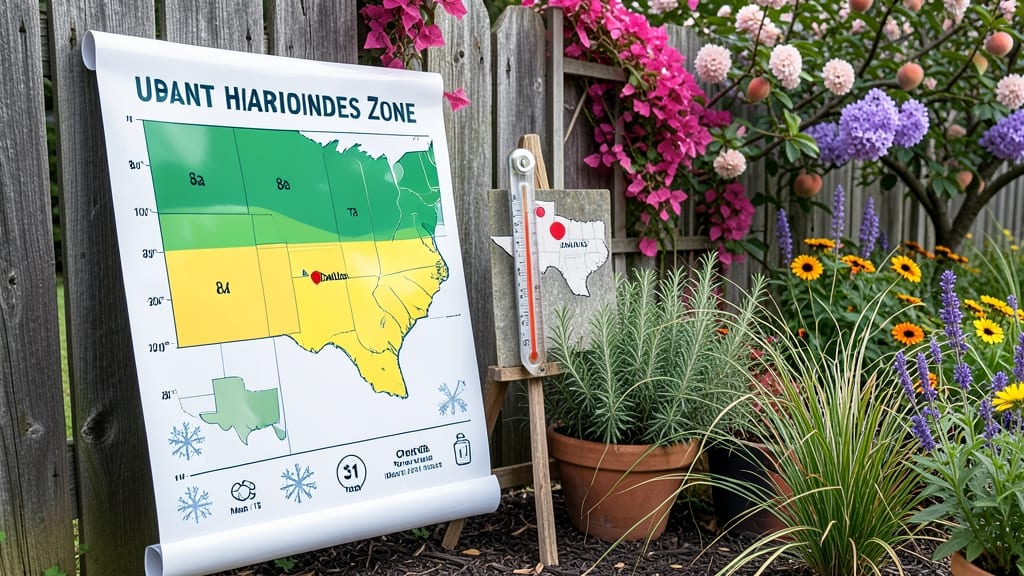
To determine what garden zone Dallas, TX, is in, know that it primarily falls within USDA Hardiness Zones 8a and 8b, with winter lows typically between 10°F to 20°F (-12°C to -7°C). Some outlying areas may reach Zone 7b, while urban heat can occasionally push microclimates into Zone 9a.
Understanding Dallas' USDA zones helps you choose plants that thrive in its specific climate conditions. 🌿 Zone 8a/8b means you can grow a wide range of warm-season plants like citrus trees, bougainvillea, and crepe myrtles, while also handling occasional frosts.
The city's urban heat island effect can create microclimates where tender plants survive better than in surrounding rural areas. For example, a garden on the city's north side might experience colder microclimates than one in downtown areas.
These zones are determined by average annual minimum temperatures over a 30-year period, which is why some years might feel colder or warmer than expected.
The 10°F to 20°F range gives gardeners a clear guideline for selecting cold-hardy plants while still allowing for some flexibility in choosing more sensitive varieties in protected microclimates.
💡 In This Article
- How USDA Zones 8a and 8b Define Dallas’ Plant Survival
- Best Plants for Dallas’ USDA Zone 8a/8b Climate
How USDA zones 8a and 8b define Dallas’ plant survival
USDA Zones 8a and 8b are determined by the average annual minimum winter temperatures over a 30-year period. Zone 8a experiences temperatures between 10°F and 15°F (-12°C to -9°C), while Zone 8b ranges from 15°F to 20°F (-9°C to -7°C).
These thresholds help gardeners understand which plants can survive the coldest nights in Dallas, where temperatures can drop unexpectedly even in mild winters. The city's frost-free period typically lasts around 240-260 days, giving warm-season plants ample time to grow and mature before winter sets in.
The 10°F to 20°F range explains why certain plants thrive here while others struggle.
For example, citrus trees like Meyer lemons and dwarf oranges can survive in Zone 8b but may need winter protection in Zone 8a. Roses, particularly cold-hardy varieties like 'Knock Out' or 'Dr. Huey', can handle these temperatures, while tropical plants like hibiscus or plumeria require careful overwintering or container growing.
The urban heat island effect in downtown Dallas can push microclimates into Zone 9a, allowing even more tender plants to survive in sheltered locations.
Seasonal variations play a critical role in plant survival. Dallas typically experiences 1-3 hard freezes per year, with temperatures dropping below 28°F (-2°C) for short periods. These cold snaps can damage or kill tender plants if they're not properly protected or chosen for the zone.
Heatwaves in summer, where temperatures can exceed 100°F (38°C) for weeks, also influence plant selection—drought-tolerant species like lantana or salvia thrive in these conditions, while moisture-loving plants need consistent irrigation.
Microclimates within Dallas create additional nuances. North-facing gardens or shaded areas may experience colder temperatures than south-facing or sunny spots, potentially pushing them into Zone 7b characteristics.
Conversely, urban heat islands near highways or industrial areas can create pockets where Zone 9a plants like bougainvillea or oleanders survive with minimal protection. Paying attention to these microclimates helps gardeners extend their growing seasons and choose plants that match their specific conditions.
Understanding these zones also means recognizing that 30-year averages don’t account for year-to-year variability. A particularly cold winter (like the 2011 freeze that dropped temperatures to 5°F (-15°C)) can push Zone 8a plants into survival mode, while milder winters may allow Zone 9a plants to thrive temporarily.
This variability is why gardeners in Dallas often use both zone guidelines and local observations to make informed planting decisions.