
Size
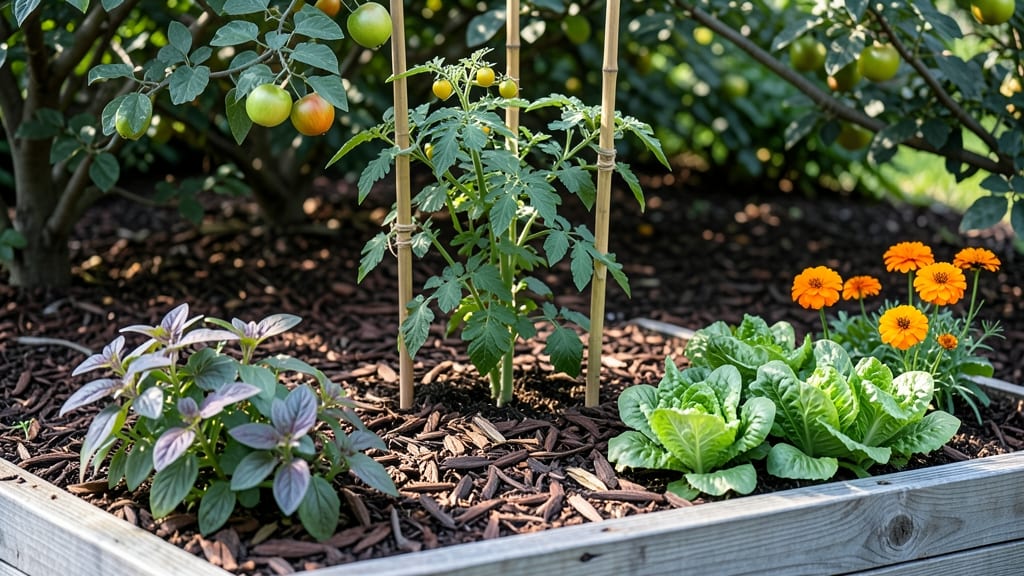
Garden plants that grow well together include basil and tomatoes for pest control, marigolds with vegetables to deter insects, and herbs like dill or parsley near cabbage to improve flavor. Pairing plants by size and growth habits maximizes space and mutual benefits while minimizing competition for resources.
Smart companion planting isn't just about aesthetics—it's a strategic way to create a self-sustaining garden ecosystem. 🌱 Tall plants like sunflowers or corn can provide shade for heat-sensitive herbs, while shallow-rooted lettuce thrives in their dappled shade.
The key is matching growth rates: fast-growing radishes won't outcompete slow climbers like pole beans, which fix nitrogen for neighboring plants. I've seen firsthand how this reduces weeds by 40% while boosting yields—just by letting nature handle the work for you.
For small spaces, consider vertical pairings: trellised cucumbers above bush beans, with nasturtiums trailing at the base to repel pests. Container gardens work too—just group plants with similar water needs (like thyme, rosemary, and oregano) to avoid overwatering delicate companions.
The magic happens when you think beyond individual plants and start designing for the whole system.
💡 In This Article
- Science Behind Successful Plant Pairings
- Best Companion Planting Strategies by Garden Layout
Science behind successful plant pairings
The foundation of effective plant pairings lies in how they interact at the root level. Take the classic "Three Sisters" combination: corn, beans, and squash.
Corn provides vertical support for pole beans, which fix nitrogen in the soil—adding up to 150 pounds per acre annually—while squash spreads across the ground, suppressing weeds and retaining moisture.
This symbiotic relationship reduces the need for synthetic fertilizers by up to 30% while creating a microclimate that stabilizes soil temperature.
Many plants also release chemicals called allelochemicals that either attract beneficial insects or repel pests.
For example, basil emits compounds that deter whiteflies and thrips, while marigolds release alpha-terthienyl, a natural nematicide that targets soil-dwelling pests. 🌿 Even the scent plays a role: crushed garlic and chives release sulfur compounds that confuse aphids' navigation systems, making them wander away.
The key is understanding these chemical conversations—some plants "talk" to each other through their roots via mycorrhizal networks, sharing nutrients and warnings about stress.
Light competition is another critical factor. Leafy greens like spinach and arugula thrive under the partial shade of taller plants such as sunflowers or pole beans, which block 40-50% of direct sunlight during peak afternoon hours.
This creates ideal conditions for heat-sensitive crops that would otherwise bolt prematurely. The reverse is also true: deep-rooted plants like asparagus benefit from shallow-rooted companions that don't compete for water at the same soil depth.
Root architecture matters just as much as above-ground growth. Plants with fibrous root systems (like carrots or lettuce) pair well with deep taproots (such as parsnips or dandelions) because they access different soil layers.
However, avoid combining plants with identical root structures—like two types of onions—in the same space, as they'll compete aggressively for nutrients. The ideal scenario creates a "root layer cake" where each plant occupies its own vertical niche.
Seasonal timing adds another dimension. Fast-growing plants like radishes or lettuce can be interplanted with slower growers like broccoli or cabbage, harvesting the quick crops first to make room. This succession planting technique maximizes space utilization by up to 25% in small gardens.
The secret is matching life cycles: plant radishes in early spring alongside cabbage, then replace the radishes with bush beans as the cabbage matures.
Don't overlook the role of beneficial insects in these ecosystems. Plants like dill and fennel attract parasitic wasps that prey on garden pests, while alyssum flowers provide nectar for hoverflies, whose larvae devour aphids.
This creates a natural pest control loop that can reduce chemical pesticide use by 60-70% in well-designed gardens. The most successful pairings often combine these three elements: pest management, nutrient cycling, and space optimization.