
Tools
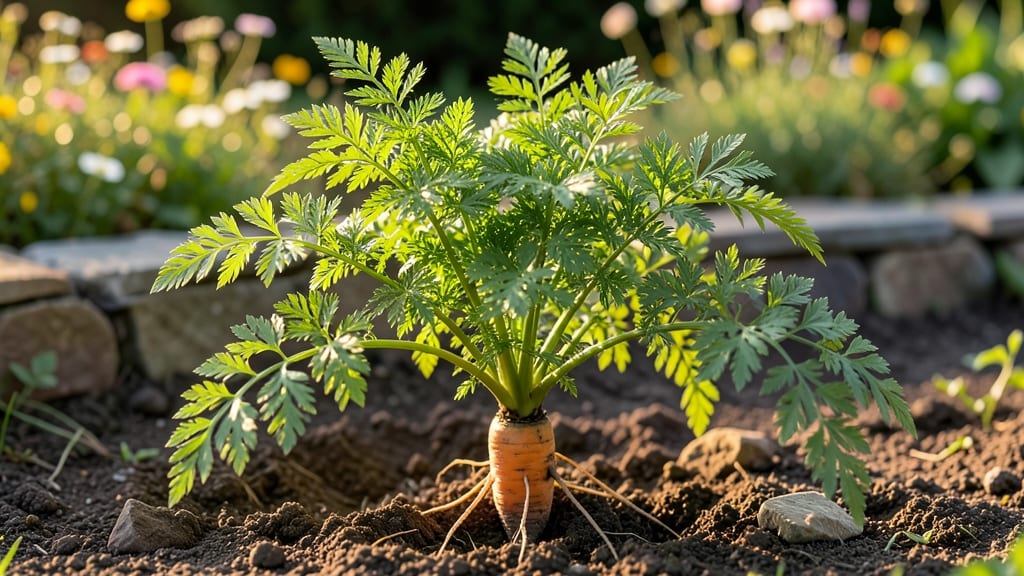
What do carrot tops look like in the garden? They grow as delicate, fern-like foliage with finely textured, saw-toothed leaves arranged in a circular rosette close to the ground. These vibrant green leaves typically reach heights of 6-12 inches and spread 6-10 inches wide, thriving best in full sunlight and developing a distinctive bluish-green tint when healthy.
Carrot tops start as tiny, rounded seedling leaves that gradually unfurl into their signature feathery shape as they mature. 🌱 The leaves grow in a basal rosette pattern, meaning all foliage emerges directly from the soil rather than along a stem, which helps distinguish them from similar herbs like parsley or cilantro.
Healthy carrot greens maintain a crisp texture and bright color, while stressed plants may show yellowing or curled edges—key indicators of overwatering or nutrient deficiencies.
The growth pattern varies by season—young plants develop rapidly in spring, while mature tops may slow in extreme summer heat. When harvesting, always leave at least 2-3 inches of growth to encourage regrowth, as carrot tops are edible and packed with nutrients like vitamin K and calcium.
Many gardeners also use them in pest control by planting around carrots to deter flies.
💡 In This Article
- Carrot Leaf Structure and Growth Stages Explained
- How to Distinguish Carrot Greens from Similar Garden Plants
Carrot leaf structure and growth stages explained
Carrot tops feature a unique pinnate leaf structure with finely divided, saw-toothed edges that resemble delicate ferns. Each leaf grows in a lancet shape, typically 2-4 inches long and 0.5-1 inch wide, with a central vein and 7-13 pairs of lateral veins that create their signature lacy appearance.
These leaves emerge in a basal rosette pattern, meaning they all grow directly from the soil level rather than along a central stem, which helps distinguish them from other garden herbs.
The growth process begins with tiny, rounded cotyledons that unfurl within 7-14 days of germination. As the plant matures, true leaves emerge in a spiral pattern, gradually forming the characteristic rosette.
Healthy carrot tops develop a slightly bluish-green hue due to high chlorophyll content, while stressed plants may show yellowing edges (chlorosis) or purplish stems (phosphorus deficiency). In optimal conditions with 6-8 hours of sunlight daily and well-draining soil, mature plants can reach 12-18 inches in diameter by their third month.
Seasonal variations significantly impact growth patterns. Spring seedlings grow rapidly with 1-2 inches of new foliage per week, while summer heat may cause bolting (premature flowering) if temperatures exceed 80°F. Fall plants often develop deeper green leaves as they prepare for winter dormancy.
The texture of healthy leaves remains crisp and slightly waxy, while overwatered plants develop soft, mushy foliage prone to fungal infections like powdery mildew.
Identifying healthy vs. stressed foliage requires close inspection of leaf edges and overall vigor. Healthy carrot tops maintain uniform coloration and upright growth, while pests like aphids create sticky residue and curled edges.
Root maggots, a common carrot pest, often cause yellowing between leaf veins as they feed on roots. Regularly checking the underside of leaves for tiny white eggs or chewed margins helps prevent infestations before they spread.
An interesting growth adaptation is how carrot tops photosynthesize more efficiently in cool weather, which is why they thrive in spring and fall. The leaves contain high levels of carotenoids (like beta-carotene), giving them their vibrant color and making them valuable as edible greens.
When harvesting, always cut leaves 1-2 inches above the soil to encourage regrowth, as the plant can produce new foliage from the crown.
For gardeners using carrot tops as companion plants, their aromatic compounds help deter pests like carrot flies. The strong scent comes from volatile oils that repel insects while attracting beneficial predators like ladybugs. This dual function makes them a low-maintenance pest control solution for vegetable gardens.