
Tools
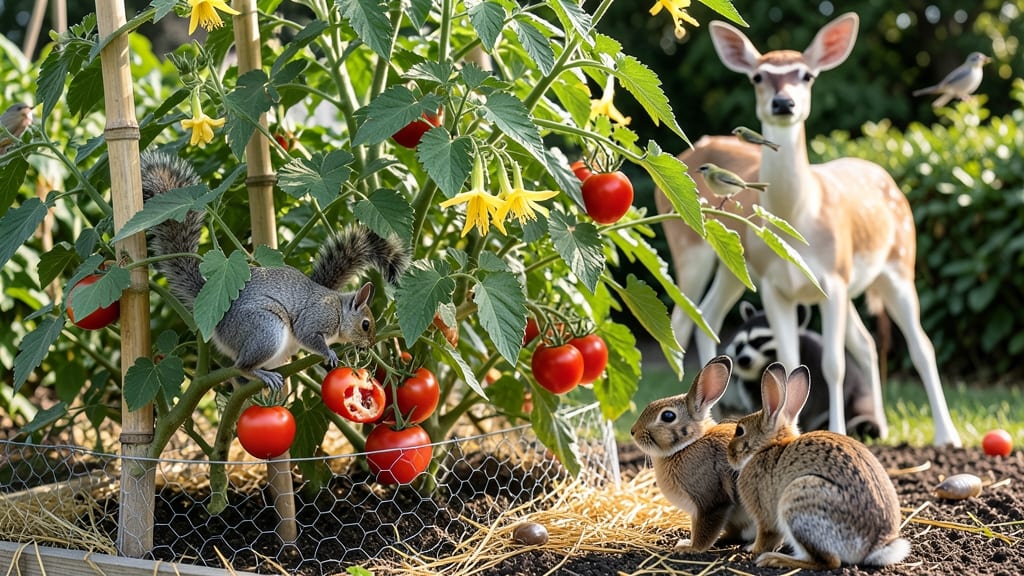
Many animals eat garden tomatoes, including squirrels, raccoons, deer, rabbits, birds, and insects like tomato hornworms and aphids, which can destroy plants by consuming leaves, fruit, or roots. Effective protection methods include barriers, repellents, and companion planting.
Wildlife and insects see your garden tomatoes as an all-you-can-eat buffet—especially when they're ripe and juicy. 🌱 Squirrels and raccoons are notorious for raiding plants at night, while deer can strip entire vines in minutes.
Even smaller creatures like birds and tomato hornworms (giant green caterpillars) can decimate your harvest if left unchecked. The key to protecting your crop lies in understanding these pests' habits and acting early with physical barriers or natural deterrents.
For instance, row covers create a physical barrier that keeps most mammals and birds out, while neem oil disrupts insects' life cycles without harming beneficial pollinators. Planting basil or marigolds nearby can also confuse pests with their strong scents, giving your tomatoes a fighting chance.
The sooner you implement these strategies, the better your chances of enjoying a bountiful harvest.
💡 In This Article
- Identifying Tomato-Eating Pests in Your Garden
- Natural and Chemical Solutions to Protect Tomatoes
Identifying tomato-eating pests in your garden
Your garden tomatoes face a relentless menu of hungry guests, each leaving distinct clues about their presence. Squirrels and raccoons are the night-shift raiders, drawn by the sweet aroma of ripe fruit.
They typically leave behind clean, jagged bite marks on tomatoes, often near the stem where they can easily carry off the fruit. These mammals also create visible paths in your garden soil, especially near fences or woodpiles where they nest.
Deer and rabbits, on the other hand, take a more systematic approach. Deer will strip entire plants down to the stem in minutes, creating a uniformly chewed appearance along the vine. Rabbits leave neat, 45-degree angle cuts on stems and leaves, about 1-2 inches high—their way of avoiding thorns.
Birds like starlings and grackles target ripening fruit, often pecking through the skin to feast on the juicy interior, leaving behind small, scattered puncture holes that ooze tomato juice.
The real silent destroyers are insects like tomato hornworms and aphids. Hornworms—giant green caterpillars with white stripes—can devour a plant in days, leaving behind skeletons of leaves with only the veins remaining.
Aphids cluster on undersides of leaves, causing them to curl and yellow as they suck out sap. These pests thrive in warm, humid conditions, with populations exploding between June and August when tomato plants are most vulnerable.
Seasonal patterns play a crucial role in pest activity. Early spring brings rabbits and deer seeking fresh greens, while summer attracts birds and insects. Fall sees a resurgence of mammals preparing for winter storage.
The key is monitoring your plants daily during peak growing seasons—look for missing fruit, uneven holes, or wilting leaves as early warning signs. 🔍
What most gardeners overlook is the time-of-day feeding pattern of these pests. Squirrels and raccoons are nocturnal, while birds strike during dawn and dusk. Insects, however, are most active in early morning hours when humidity is high.
This knowledge lets you time your inspections and deterrents most effectively—like setting up motion-activated lights for night raiders or spraying neem oil in the morning for insects.
Consider this visual guide to damage types:
- Jagged, clean bites: Squirrels/raccoons (night raiders)
- Uniform stem stripping: Deer (broad destruction)
- 45-degree stem cuts: Rabbits (precision feeders)
- Small puncture holes: Birds (surface peckers)
- Veiny leaf skeletons: Hornworms (internal destruction)
- Curled yellow leaves: Aphids (sap suckers)
The sooner you can identify these specific patterns, the faster you can implement targeted solutions before your entire harvest becomes a wildlife buffet. 🌿