
Tools
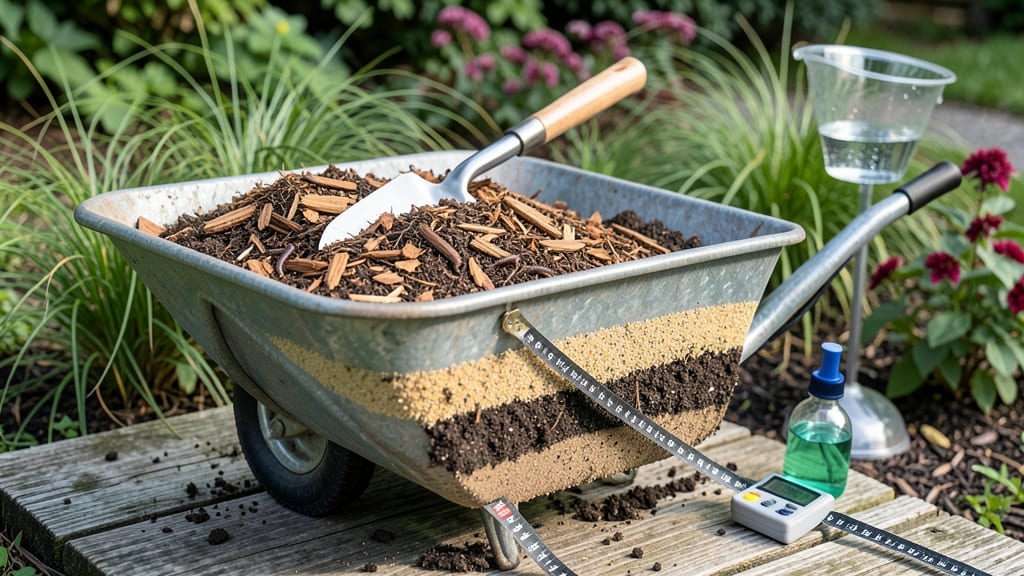
A rain garden soil mix requires 60% topsoil, 30% compost, and 10% sand or perlite to balance drainage and water retention while supporting native plants. Avoid heavy clay or compacted soil to prevent runoff or root suffocation.
The ideal rain garden soil mix creates a perfect balance between water absorption and drainage, ensuring your plants thrive without drowning or drying out. 🌱 The 30% compost boosts microbial activity, helping roots access nutrients efficiently, while the 10% sand or perlite prevents compaction and keeps excess moisture from pooling.
This blend works especially well for native plants that naturally handle fluctuating moisture levels, like coneflowers or switchgrass. For clay-heavy soils, adding coir or leaf mold can further improve structure and aeration.
Why this ratio matters: The 60% topsoil provides a stable foundation, while the organic components break down over time, gradually improving soil quality.
Unlike heavy clay mixes that repel water or sandy soils that drain too quickly, this blend mimics natural wetland conditions—just enough moisture retention to support plants while preventing waterlogging.
For best results, test your soil's drainage first by digging a hole, filling it with water, and timing how long it takes to drain.
💡 In This Article
- How Soil Composition Affects Rain Garden Water Retention
- Best Organic Amendments for Rain Garden Soil Health
How soil composition affects rain garden water retention
The magic of a rain garden soil mix lies in its porosity—the balance between air pockets and water-holding capacity. Organic matter like compost acts like a sponge, holding 3-5 times its weight in water while still allowing oxygen to reach roots.
Without it, soil becomes hydrophobic, repelling water like a greasy pan. For example, pure clay holds moisture but suffocates roots with 10% air space, while pure sand drains too fast, leaving plants thirsty.
The ideal mix achieves 40-50% porosity, perfect for plants like purple coneflowers that thrive in moderate moisture.
Sand or perlite in your mix plays a critical role by preventing compaction. These granular materials create macropores (large air/water channels) that drain excess water within 24-48 hours, while the compost's micropores (tiny water-holding spaces) retain moisture for plants.
Imagine a rain garden planted with wetland species like cardinal flower in the center (needs constant moisture) versus drought-tolerant sedges at the edges—this gradient works because the soil composition gradually changes porosity across zones.
A 10% sand addition can transform heavy clay from 5% porosity to 30%+, making all the difference.
What most gardeners miss is how organic matter breaks down over time, gradually improving water retention. Fresh compost has 80% water-holding capacity, but after 6 months, it decomposes into stable humus that holds 200% its weight in water.
This is why established rain gardens often need less frequent watering—the soil structure becomes self-regulating. For sandy soils, adding 20% compost (instead of 30%) can be enough, since sand already drains well but lacks nutrient retention.
The key is testing: Dig a 12-inch hole, fill with water, and if it drains in 1 hour, your mix needs more compost.
Clay soils present the biggest challenge because their plate-like particles repel water when dry and become impermeable when wet. Adding 1 part coconut coir to 3 parts clay can transform its structure by creating 10,000+ new air pockets per cubic inch.
This is why some experts recommend 50% compost in clay-heavy mixes—it's not just about water retention, but preventing soil crusting that blocks oxygen. The result? Roots grow deeper, and plants like joe-pye weed (which loves moisture) thrive even in heavy clay regions like the Midwest.
For visual learners, think of soil like a sponge cake: The topsoil is the sturdy base, compost is the moist sponge layer, and sand/perlite are the air pockets. When you press too hard (compaction), water can't move through—just like squeezing a wet sponge until it drips.
The ideal rain garden mix maintains that delicate equilibrium, where water moves vertically through the profile (downward drainage) while still being available to roots. This is why native plants often outperform non-natives in rain gardens—they've evolved to handle these exact moisture fluctuations.
Pro tip: If your soil feels gritty when dry or sticky when wet, you're likely dealing with poor structure. The fix? Mix in 1 part biochar (a charcoal-like amendment) to every 10 parts soil. Biochar increases water retention by 50%+ while adding negative charges that attract nutrients.
It's like giving your soil a built-in moisture battery that releases water slowly during dry spells. For the best results, combine biochar with well-aged compost—the two work synergistically to create the perfect rain garden foundation. 💧