
Tools
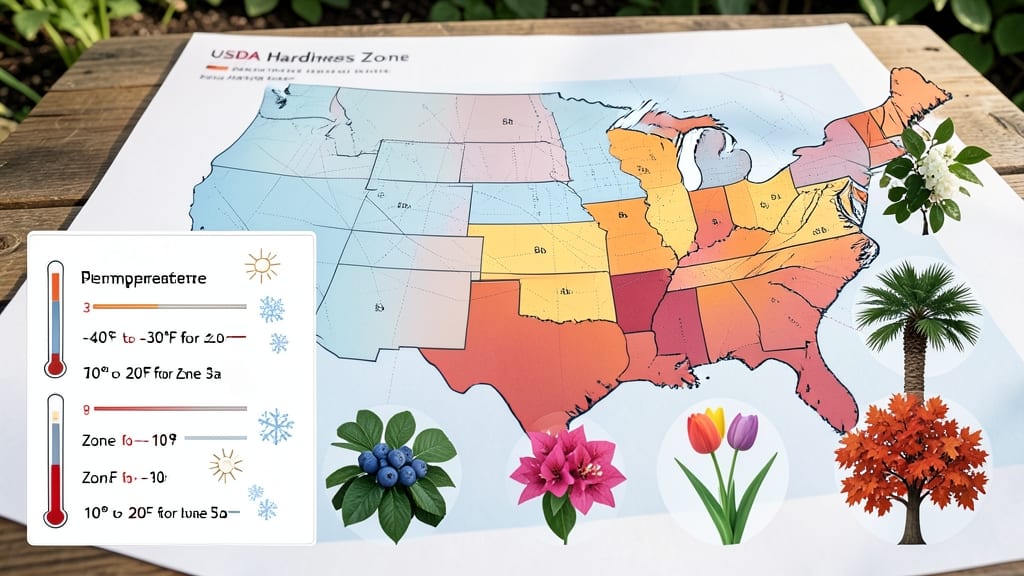
Understanding US climate zones for gardening means knowing your region's hardiness zone (1-13), which is based on average winter lows and helps you pick plants that survive local conditions. The USDA Plant Hardiness Zone Map is your go-to tool for matching frost tolerance with plant needs.
These zones aren't just about cold tolerance—they factor in frost-free days, soil conditions, and even microclimates like urban heat islands or sheltered valleys. 🌡️ For example, a Zone 5 garden in Minnesota faces 50°F to 40°F winters, while Zone 9 in Florida rarely dips below 20°F.
The map updates every 10 years to reflect climate shifts, so always check the latest version before planting. I recommend using a frost clock to track your local frost dates, which can vary even within the same zone.
Beyond the map, elevation plays a surprising role: every 1,000 feet up drops your zone by about 1-2 degrees. Coastal areas may also experience milder winters due to ocean currents, creating pockets where Zone 8 plants thrive in areas officially labeled Zone 7.
This is why I always verify with local nurseries—they know the unspoken rules of your microclimate.
💡 In This Article
- How USDA Plant Hardiness Zones Determine Plant Survival
- Choosing Plants for Your US Gardening Zone: A Practical Guide
How USDA plant hardiness zones determine plant survival
The USDA Plant Hardiness Zone Map divides the U.S. into 13 zones based on the average annual minimum winter temperature, with each zone spanning a 10°F range. For example, Zone 5 experiences −20°F to −10°F winters, while Zone 9 stays above 20°F.
This temperature threshold is critical because most plants have a hardiness rating (like Zone 5) indicating the coldest temperature they can tolerate. When winter temps drop below this threshold, plant cells can freeze and rupture, leading to death.
What makes this system precise is the 30-year average of minimum temperatures, which accounts for natural climate variability. However, the map doesn’t capture frost-free days—another key factor. In Zone 4, you might have only 100 frost-free days, while Zone 10 enjoys 300+ days.
This affects growing seasons dramatically. For instance, tender annuals like basil (Zone 10) won’t survive Zone 6 winters, but cold-hardy perennials like coneflowers (Zone 3-9) thrive in both.
Microclimates add complexity to these zones. A south-facing slope in Zone 6 might reach Zone 7 temps due to sunlight exposure, while a low-lying area could drop into Zone 5.
Coastal regions often experience milder winters because ocean currents moderate temperatures—think of San Francisco’s Zone 9 climate despite its northern latitude. Even urban areas can be 5-10°F warmer than rural zones due to the "heat island" effect from pavement and buildings.
Elevation is another game-changer: for every 1,000 feet gained, temperatures drop by 3.5-5°F. That means a mountain garden in Zone 6 at sea level could function like Zone 4 at 5,000 feet.
This is why high-altitude gardeners in Colorado (Zone 5) might grow plants suited for Zone 3. The USDA map accounts for elevation adjustments, but local variations still require gardeners to test plants in their specific microclimate.
Understanding these factors helps explain why some plants labeled "Zone 5" might still struggle in your garden. For example, a Russian olive tree (Zone 3-9) could survive Zone 5 winters, but its growth rate slows dramatically in colder microclimates.
The key is matching not just the zone, but also the plant’s chilling requirements (hours below 45°F) and heat tolerance during summer.
For practical application, I recommend using a frost clock to track your last spring frost and first fall frost—these dates can shift even within the same zone. Pair this with a soil thermometer to monitor root-zone temps, which often stay warmer than air temps.
This layered approach ensures you’re not just guessing but making data-driven planting decisions.