
Tools
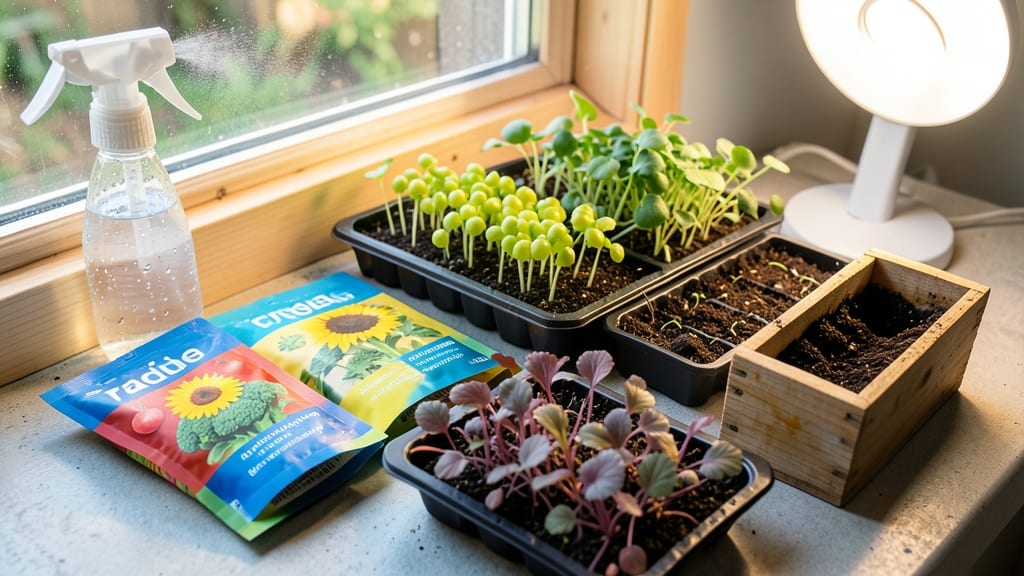
For urban garden seeds, prioritize quick-sprouting varieties such as radishes, lettuce, green onions, and bush beans to boost productivity in tight spaces with limited light. Opt for compact or dwarf types to optimize vertical growth and accelerate harvest times.
Fast-growing urban garden seeds are your secret weapon for transforming small balconies or windowsills into productive growing spaces. 🌱 These varieties thrive in containers because they develop shallow root systems, allowing them to access nutrients efficiently in limited soil volumes.
Many also adapt well to partial shade, making them perfect for urban environments where full sun isn't always available. The key to success lies in selecting seeds with rapid germination times—typically under two weeks—so you can enjoy fresh harvests without waiting months.
Beyond speed, consider dwarf or bush varieties that naturally stay compact, saving space while still delivering high yields. For example, cherry tomatoes and bush beans can produce abundant harvests in just 5-gallon containers, while leafy greens like spinach or kale grow well in even shallower setups.
This approach lets you maximize every inch of your urban growing area while keeping maintenance manageable.
💡 In This Article
- Why Fast-Growing Seeds Thrive in Urban Gardens
- Top 10 Fast-Growing Urban Garden Seed Picks for Containers
Why fast-growing seeds thrive in urban gardens
Urban gardening demands seeds that can outpace challenges like shallow soil depths and limited sunlight. Fast-growing varieties excel because they develop shallow root systems—typically reaching only 6-12 inches deep—that efficiently absorb nutrients from container soil.
This adaptation allows them to thrive in 5-gallon pots or window boxes where deeper-rooted plants would struggle. For example, radishes mature in just 25-30 days with roots no deeper than 1 inch, making them perfect for urban conditions 🌱.
The science behind rapid germination involves enzymes that break down seed coatings quickly, often triggered by consistent moisture and moderate temperatures (60-75°F). Lettuce seeds, for instance, sprout in 5-7 days when kept evenly moist, while bush beans germinate in 7-14 days.
These timelines align perfectly with urban gardeners' need for quick results. Additionally, many fast growers like green onions and microgreens require only 4-6 hours of sunlight daily, adapting well to partial shade common in city environments.
Container gardening creates unique microclimates where soil warms faster and dries quicker than ground soil. Fast-growing seeds leverage this by completing their life cycles before moisture becomes an issue.
For instance, cherry tomato 'Tiny Tim' produces fruit in 60 days while staying under 2 feet tall, ideal for 10-inch pots. This efficiency translates directly to higher yields per square foot—critical when space is limited. The trade-off?
These plants often have shorter overall growth periods, so timing your plantings becomes essential for continuous harvests.
Seed size also plays a role in urban success. Larger seeds like beans contain more stored energy for rapid initial growth, while tiny seeds like lettuce pack high nutrient density to fuel quick sprouting.
Proper spacing—typically 1-3 inches apart for leafy greens and 4-6 inches for bush beans—prevents competition for light and nutrients in confined spaces. The result? Healthier plants that mature faster, even when crowded.
This spatial efficiency is why urban gardeners often achieve yields comparable to larger gardens using the same seed quantities.
Soil composition matters just as much as seed selection. Urban containers benefit from lightweight, nutrient-rich mixes that drain well but retain moisture. Adding compost or worm castings boosts nutrient availability for fast growers, while perlite or vermiculite prevents compaction in shallow soils.
The combination of proper soil and well-chosen seeds creates an environment where urban gardens can produce 2-3 times more food per square foot than traditional gardens, all while adapting to city constraints.
What most people overlook is how light quality affects growth rates. Urban gardens often receive artificial light from nearby buildings or streetlights, which can skew toward blue wavelengths that promote leafy growth over fruiting.
Fast-growing varieties compensate by focusing energy on rapid vegetative development rather than flowering, making them more resilient in these conditions. For example, 'Red Sails' lettuce grows well under 4-5 hours of artificial light while still producing edible leaves in 30 days.