
Tools
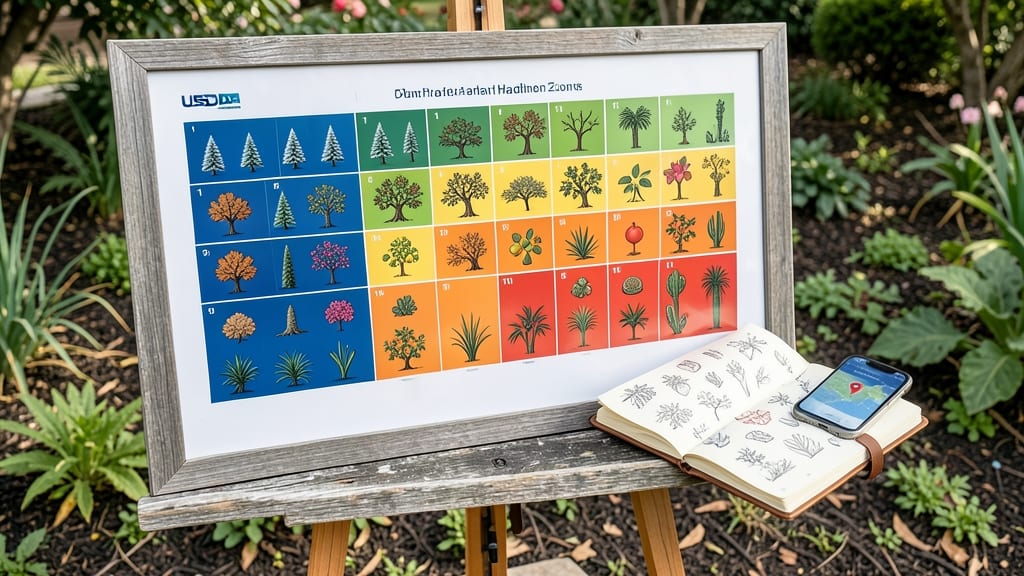
U.S. gardening zones help you grow the right plants by dividing the country into numbered regions (3-11) based on average winter lows, ensuring you choose species that survive your area's climate. Check your zone via the USDA Plant Hardiness Zone Map using your ZIP code, then select plants matched to your specific zone for best success.
These zones are based on the coldest average winter temperatures your area typically experiences, with each zone representing a 10°F range.
For example, Zone 5 endures -15°F to -10°F winters, while Zone 9 stays above 20°F. 🌡️ The USDA updates the map every 10 years to reflect climate shifts, meaning your zone might change over time—especially if you live near coastlines or mountainous regions where microclimates create local variations.
Understanding your zone isn't just about survival; it's about thriving.
Once you know your zone, you can confidently select perennials, shrubs, and trees that naturally adapt to your climate. For instance, peonies thrive in Zones 3-8, while bougainvillea needs Zones 9-11. Mistakes like planting tender species too early (like tomatoes in Zone 4 before last frost) often lead to failure.
Pro tip: Use the USDA Interactive Map to zoom in on your exact location—even small shifts (like a hilltop vs. valley) can create 5°F differences.
💡 In This Article
- How U.S. Gardening Zones Are Determined
- Choosing Plants Based on Your U.S. Gardening Zone
How U.s. gardening zones are determined
The U.S. gardening zone system relies on precise scientific data: specifically, the average annual minimum winter temperatures recorded over 30 years. These temperatures are measured at 5 feet above ground level (standardized to avoid ground-level cold pockets) and rounded to the nearest 5°F increment.
For example, Zone 6 spans -10°F to 0°F, while Zone 8 ranges from 10°F to 20°F. This 10°F banding creates clear boundaries for plant survival thresholds—critical for species like hydrangeas (Zone 3-9) or citrus trees (Zone 9-11). 🌡️
Microclimates—localized variations in temperature and moisture—play a huge role in why your backyard might differ from the official zone. A south-facing slope can add 5°F to winter lows, while a north-facing valley might drop 3°F colder.
Coastal areas benefit from moderating ocean breezes, often placing them 1-2 zones warmer than inland regions at the same latitude. Elevation also matters: every 1,000 feet up increases cold exposure by about 3.5°F, which is why mountain gardens often align with zones 2-3 colder than valley floors.
Climate change has forced the USDA to update its zone map every 10 years, with the most recent 2023 revision showing 20% of the U.S. shifted into warmer zones since 1990.
This shift means plants that once struggled in Zone 7 (like olive trees) now thrive in parts of the Midwest.
The science behind these updates involves analyzing 20+ years of temperature data from NOAA weather stations, adjusting for urban heat islands (which can add 5°F to city centers) and long-term warming trends. 🌍
Here’s how to interpret the data practically: If you’re in Zone 5a (-20°F to -15°F), you’ll need to choose perennials like coneflowers (Echinacea) that survive -20°F, while avoiding tender species like tomatoes until after your last frost date (typically April 15-May 1 in most Zone 5 areas).
The zone map also accounts for 10-year survival rates: a plant labeled "Zone 6" has a 90% chance of surviving winter in that zone, but only 50% in Zone 5.
For gardeners, this means layering plants by hardiness. For example, in Zone 6, you might plant daylilies (Zone 3-9) as perennials but treat canna lilies (Zone 8-11) as annuals, digging them up before winter.
The USDA’s Interactive Map lets you hover over your location to see these nuances—notice how Denver (Zone 5b) sits just 10 miles from Boulder (Zone 4b) due to elevation changes.
This precision helps avoid costly mistakes like planting roses (Zone 3-9) in a Zone 4 microclimate where they’d suffer winter dieback.
What most people overlook is how soil temperature interacts with air temperature. Even in Zone 7, soil may not thaw until late April, delaying planting for cool-season crops like broccoli or kale.
The USDA’s companion Plant Hardiness Zone Map pairs with the First/Last Frost Date Calculator to give a fuller picture—because a plant’s survival depends on both cold tolerance and growing-season length. 🌱