
Tools
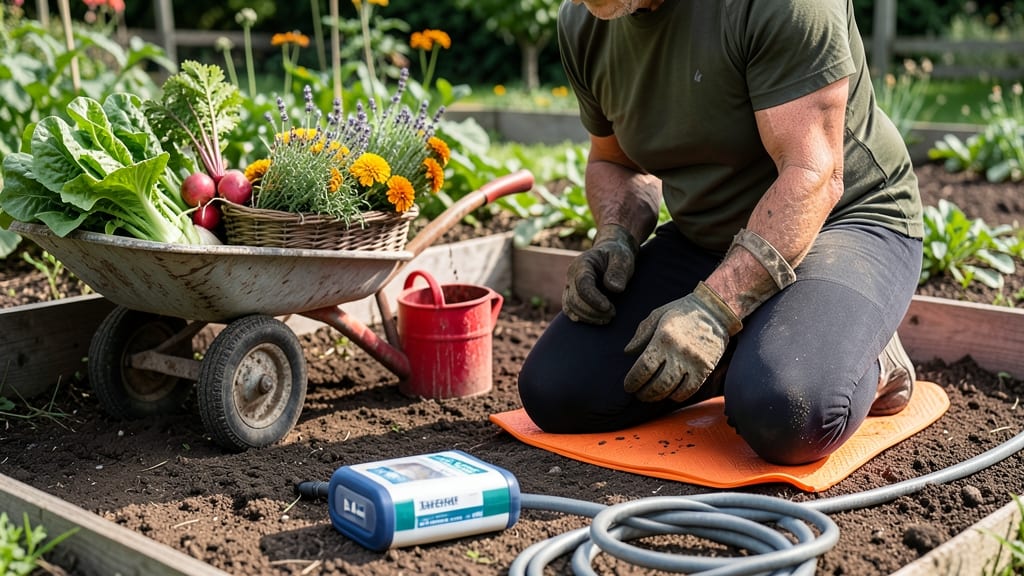
Treating lower back pain after gardening requires gentle stretching to ease muscle tension, alternating ice or heat packs based on your inflammation level, and using over-the-counter pain relievers like ibuprofen. Prioritizing rest and maintaining proper posture during recovery helps prevent further strain.
Gardening might feel relaxing, but the repetitive bending, twisting, and heavy lifting can strain your lower back muscles, especially if your core isn't strong enough to support your movements. 🌿 The good news is that addressing pain early with targeted stretches—like the cat-cow stretch or knee-to-chest—can significantly reduce stiffness.
For inflammation, ice packs work best in the first 48 hours, while heat helps relax tense muscles later on. I always recommend pairing these steps with a 10-minute rest period lying on your back with knees bent to take pressure off your spine.
If pain persists beyond a few days, consider strengthening your core with planks or bridges to build endurance for future gardening sessions. Proper footwear with good arch support can also make a big difference in how your body handles prolonged standing or kneeling.
💡 In This Article
- Why Gardening Triggers Lower Back Pain
- Post-Gardening Recovery Stretches and Mobility Exercises
Why gardening triggers lower back pain
Gardening may feel therapeutic, but the biomechanics involved—like repetitive bending at 45° angles or deeper—place immense stress on your lumbar spine. Studies show that prolonged bending increases intradiscal pressure by up to 50%, compressing the spinal discs and irritating nerves.
This is especially true when combined with twisting motions, which can torque the spine by 15-20° per movement, adding shear forces that weak core muscles can't fully counteract.
The issue isn't just the movements themselves but how they accumulate over time. For example, weeding for 30 minutes can cause muscle fatigue in the erector spinae (your back extensors), leading to compensatory postures that strain the lower back.
Poor footwear—like flat soles without arch support—exacerbates this by altering your center of gravity, forcing your core to work harder to stabilize you. 🌱 Even garden tools contribute: heavy trowels or digging forks add 5-10 lbs of force per swing, which over time can trigger micro-tears in muscle fibers.
Core weakness is the silent culprit. A strong core (abs, obliques, and lower back muscles) acts like a natural corset, stabilizing your spine during movements. But if your core-to-back strength ratio is imbalanced—common in sedentary lifestyles—your lower back bears the brunt of the load.
Research shows that individuals with weaker cores experience 30% more lumbar strain during bending tasks compared to those with balanced strength. This is why even "light" gardening can leave you aching.
Another factor is dehydration and electrolyte imbalance. Sweating during gardening depletes fluids and magnesium, which are critical for muscle relaxation. Low magnesium levels can heighten muscle spasms and nerve sensitivity, making your lower back more prone to pain signals.
Even a 5% drop in hydration (just 1.5 lbs of fluid loss) can reduce muscle endurance by 10-15%, amplifying fatigue-related discomfort.
Posture plays a sneaky role too. Many gardeners slouch slightly to reach plants, increasing the curvature of the spine (lordosis) and narrowing the space for spinal nerves. Over time, this can compress the sciatic nerve, radiating pain down your legs—a condition called sciatica.
The good news? Correcting posture during tasks (like using a kneeling pad to reduce bending depth) can cut spinal compression by nearly 40%.
Finally, age matters. After 40 years old, intervertebral discs lose 20% of their water content, making them less resilient to repetitive stress. This is why gardeners over 40 often report more persistent lower back pain, even after short sessions.
The discs' reduced shock-absorbing ability means every bend or twist delivers more direct force to the vertebrae.