
Tools
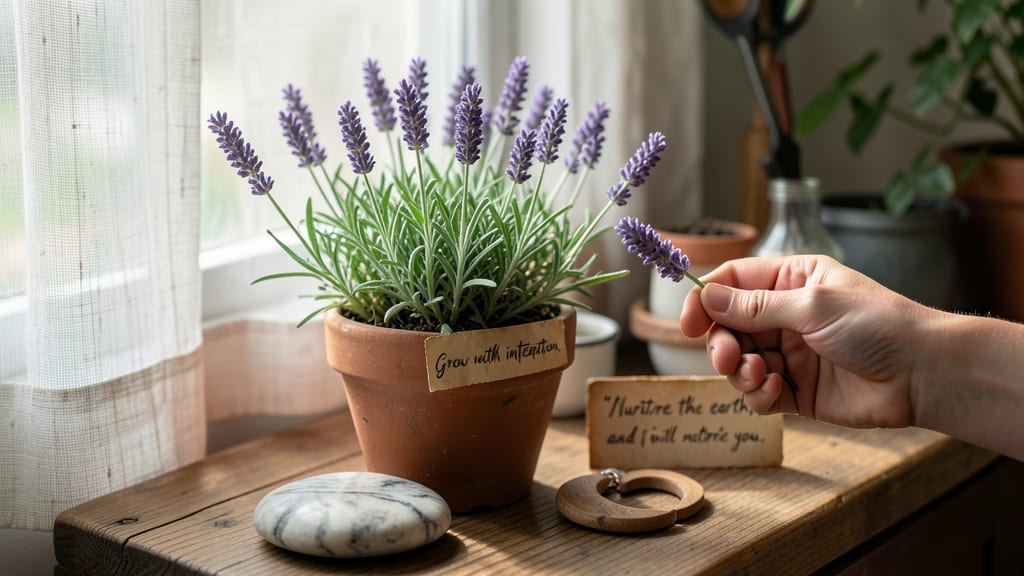
Spiritual gardening quotes connect you to nature's wisdom, weaving patience, cycles, and sacredness into every seed you plant and life you nurture. These words transform gardening into a spiritual practice that honors both earth and inner growth.
These powerful phrases often draw from ancient traditions and Indigenous wisdom, framing gardening as a metaphor for personal transformation. 🌱 For example, quotes about "planting seeds of intention" reflect how every action in the garden mirrors our inner journeys.
Many gardeners use them as daily reminders to slow down, observe nature's rhythms, and cultivate mindfulness alongside their plants.
You'll find these quotes appearing in garden journals, meditation guides, and even as markers for different plant beds—each serving as a gentle nudge to approach gardening with purpose.
The best ones blend practical advice with spiritual reflection, like "The earth laughs in flowers" by Ralph Waldo Emerson, which celebrates nature's joy while encouraging us to find our own.
💡 In This Article
- The Meaning Behind Classic Spiritual Gardening Quotes
- How to Use Spiritual Quotes in Your Garden Practice
The meaning behind classic spiritual gardening quotes
Many spiritual gardening quotes draw from ancient wisdom traditions that view plants as living teachers.
For instance, the Native American proverb "We do not inherit the earth from our ancestors; we borrow it from our children" reflects an ecological philosophy where gardening becomes an act of stewardship—not just for the present, but for future generations.
This perspective frames each seed planted as a sacred trust, where the soil represents both literal earth and metaphorical legacy. 🌱 The act of tending to plants mirrors our responsibility to nurture human relationships and cultural continuity.
Indigenous cultures often use planting metaphors to describe personal growth, like the Hopi phrase "Plant your seeds in the spring, and by summer you'll harvest your dreams." Here, the physical process of planting becomes a ritual for setting intentions—each seed symbolizing a goal or aspiration.
Scientifically, this aligns with how seeds require consistent moisture, sunlight, and patience to germinate, much like how personal transformation demands sustained effort.
The quote "A garden is a love affair with the earth" by Ruth Stout captures this intimacy, where every weeding session or harvest becomes a dialogue between human and nature.
Ecological philosophy also plays a key role in these quotes. The Japanese concept of "satoyama" (harmonious coexistence between humans and nature) is echoed in quotes like "The earth has music for those who listen" by George Santayana.
This idea suggests that gardens are not just functional spaces but living symphonies—where the rustling of leaves, the hum of bees, and the slow decomposition of organic matter compose a natural soundtrack for spiritual reflection.
The sensory experience of gardening—touching damp soil, smelling rain on petals—becomes a form of meditation that grounds us in the present moment.
Many quotes also highlight the cyclical nature of gardening as a metaphor for life. "What flowers bloom in the spring will fade in the autumn" reminds us that growth and decay are natural parts of the same process.
This duality is reflected in how a thriving garden requires both nurturing and acceptance of impermanence—whether through pruning dead branches or letting some plants return to the soil.
The quote "The roots of all mountains are on the earth" by Lao Tzu extends this idea, suggesting that even the most towering achievements (like a flourishing garden) are built on humble, earthly foundations.
Consider how these quotes function as spiritual tools. A quote like "The earth laughs in flowers" by Emerson isn't just poetic—it invites us to find joy in nature's resilience. This perspective shifts gardening from a chore into a celebration of life's vitality.
For example, when facing a failed crop, the quote "Sometimes the seeds you plant won't grow, but the lessons you learn will" offers comfort by reframing setbacks as part of the learning process.
This duality—celebrating success while embracing failure—is what makes spiritual gardening quotes so powerful in cultivating both gardens and inner wisdom. 🌿