
Fertilization
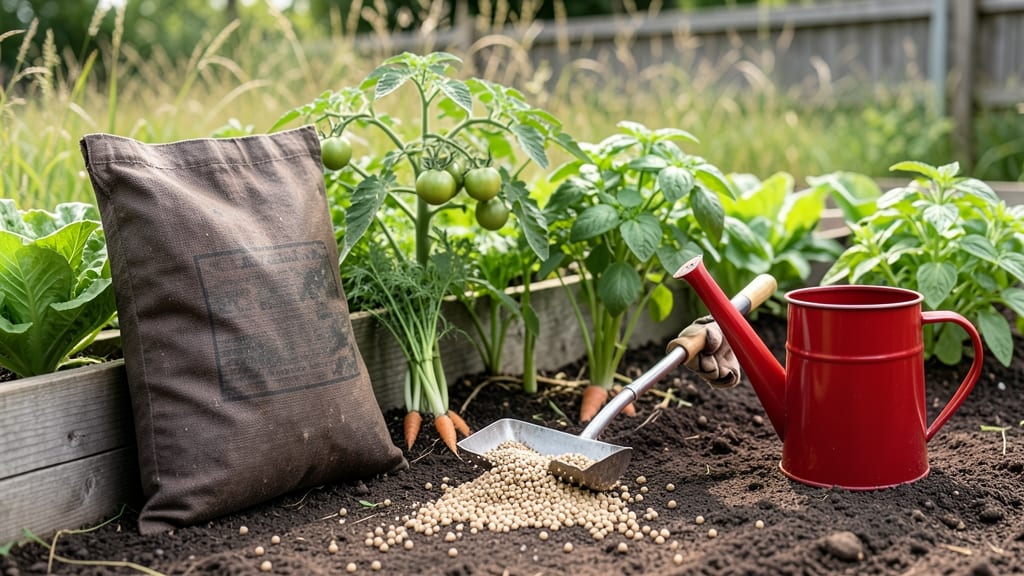
Figuring out how much fertilizer for garden requires balancing soil health, plant type, and nutrient ratios: begin with 1/4 to 1/2 pound of a 10-10-10 blend per 100 sq ft for annuals, increase to 1/2 to 1 pound for perennials, and conduct soil tests every year to prevent overuse.
Soil composition plays a huge role in how much fertilizer your garden actually needs. 🌱 Sandy soils drain quickly, so nutrients wash away faster, while clay holds onto them too tightly—meaning you might need more frequent but lighter applications.
Organic fertilizers like compost break down slowly, while synthetic granules release nutrients all at once. I always recommend starting with a soil test to identify deficiencies before applying anything, because guesswork can either starve your plants or burn their roots.
For vegetables like tomatoes or peppers, you'll want to apply fertilizer every 4-6 weeks during the growing season, but trees and shrubs often do better with a single spring application. Watch for yellowing leaves or stunted growth—these are clear signs you're either overdoing it or not providing enough.
The key is consistency: too little won't feed your plants, but too much can poison the soil over time.
💡 In This Article
- Soil Type and Fertilizer Application Ratios Explained
- Plant-Specific Fertilizer Dosage Charts and Scheduling
Soil type and fertilizer application ratios explained
Soil composition fundamentally changes how your garden absorbs nutrients. Sandy soils, with their large particles, drain nutrients within 24-48 hours after application, often requiring 20-30% more frequent applications than loamy soils. The ideal NPK ratio for sandy gardens is 12-12-12 because the higher phosphorus helps bind nutrients longer.
Clay soils, on the other hand, hold nutrients so tightly that plants can't access them—here, a 10-10-10 ratio works better when applied in smaller, more frequent doses to prevent buildup.
Loamy soils, the gardener's gold standard, hold moisture and nutrients perfectly, making them ideal for balanced 10-10-10 fertilizers. Organic options like composted manure or bone meal release nutrients gradually, while synthetic granules dissolve immediately—this means organics need 30% less total volume but more frequent top-ups.
The key difference? Synthetics can cause "fertilizer burn" if overapplied, while organics improve soil structure over time. 🌱
Test your soil's pH first—most plants thrive between 6.0-7.0. Acidic soils (below 6.0) need lime to adjust, while alkaline soils (above 7.0) benefit from sulfur. For example, blueberries require acidic soil (pH 4.5-5.5) and need 1/3 pound of elemental sulfur per 100 sq ft annually.
The right pH unlocks nutrient availability: phosphorus becomes unavailable at pH 7.5+, while nitrogen leaches out below pH 5.5.
Micronutrient deficiencies often appear as subtle signs: yellowing between leaf veins signals iron deficiency, while purple stems indicate phosphorus shortage. These issues aren't fixed by more fertilizer—they require targeted amendments. For instance, iron deficiency in tomatoes responds better to chelated iron supplements than general NPK blends.
Always match your fertilizer to what your soil test reveals, not what's on the package.
Seasonal timing matters too. Spring applications focus on nitrogen for leafy growth, while summer emphasizes phosphorus for flowering. In clay soils, split applications every 6 weeks prevent nutrient lockout, while sandy soils may need monthly top-ups. The goal is steady nutrient availability—not a one-time dump. 💫
Consider slow-release options like Osmocote for container gardens, where nutrients dissolve over 3-6 months. These are perfect for high-drainage conditions like raised beds, where frequent watering would otherwise wash away soluble nutrients. The trade-off? They cost more upfront but save time and reduce waste.
Remember: the best fertilizer is the one your plants can actually use. A soil test costs $20 but prevents costly mistakes—like over-fertilizing and creating a toxic buildup that repels beneficial microbes.
Start with the basics, then refine based on what your soil and plants tell you. That's how you grow a thriving garden without guesswork. ✨