
Companion Plants
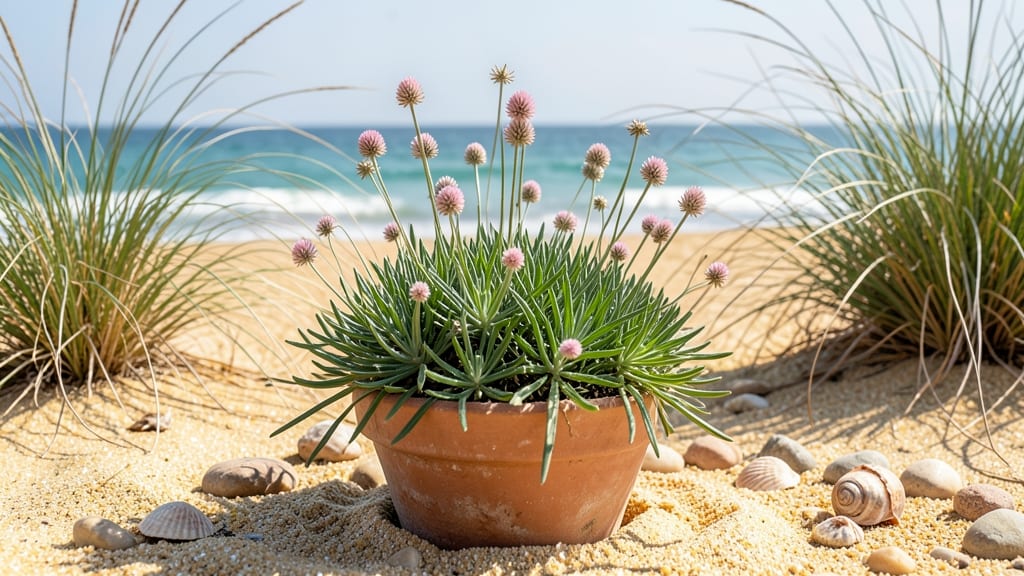
For seaside gardens, salt-tolerant plants like sea oats, beach roses, and saltmarsh cordgrass are ideal choices because they withstand wind, salt spray, and sandy soil while creating a picturesque coastal look. Succulents and hardy shrubs also perform exceptionally well in these tough conditions.
Coastal gardens face unique challenges like salty air, sandy soil, and strong winds, but the right plants turn these obstacles into opportunities. 🌊 The key is selecting species that naturally thrive in these conditions—like sea lavender or dune grass—which have evolved to filter out salt through specialized root systems.
These plants don't just survive; they create stunning visual contrast with their silvery foliage and vibrant blooms that pop against the ocean backdrop.
Beyond aesthetics, these salt-tolerant varieties require minimal intervention once established. Their deep root systems access moisture deep in the sandy soil, reducing your watering needs, while their flexible stems bend rather than break in storms.
I've found that grouping these plants strategically—placing taller varieties like beach heather as windbreaks behind more delicate flowers—creates a layered look that feels both natural and intentional.
💡 In This Article
- How Salt-Tolerant Plants Survive Coastal Challenges
- Designing a Low-Maintenance Seaside Garden Layout
How salt-tolerant plants survive coastal challenges
Salt-tolerant plants have evolved remarkable physiological adaptations to thrive where most would perish. Their secret lies in specialized salt exclusion mechanisms—many, like saltmarsh cordgrass, filter out excess salt through their roots using a process called "salt excretion."
This plant actively pumps salt into specialized bladders on its leaf edges, which then burst to release it. Meanwhile, others like sea lavender absorb salt in small quantities and compartmentalize it in older leaves, sacrificing them to protect new growth.
Their deep root systems—often extending 6-10 feet downward—tap into groundwater reserves, making them drought-resistant even in nutrient-poor sandy soil. Compare this to typical garden plants with shallow roots that dry out quickly.
Waxy leaf coatings on species like beach roses create a protective barrier that repels salt spray while reducing water loss. These adaptations explain why coastal plants can handle 3-5 times more salt in their soil than inland varieties without suffering damage.
Wind resistance is another critical survival trait. Flexible stems and horizontal growth habits allow plants like sea oats to bend rather than snap in 70+ mph coastal winds, while their dense clumping provides natural erosion control. The trade-off?
Some species grow more slowly due to energy diverted to these protective structures. For example, beach heather may take 2-3 years to establish compared to 1 year for inland perennials, but its resilience makes it worth the wait.
Ecologically, these plants play vital roles beyond survival. Saltmarsh cordgrass, for instance, stabilizes shorelines by trapping sediment with its dense root networks, while beach roses provide habitat for migratory birds. Their ability to thrive in harsh conditions actually creates microhabitats where other species can eventually establish.
This ecological engineering is why coastal plant communities often appear more diverse than they initially seem—what looks like a tough environment is actually a carefully balanced ecosystem.
Understanding these adaptations helps explain why some coastal plants excel in specific zones. For example, dune grass thrives in the most exposed areas where salt spray is heaviest, while beach holly prefers slightly sheltered spots with better moisture retention. The key is matching plant placement to these natural gradients. 🌊
What most gardeners don't realize is that these same adaptations make coastal plants surprisingly low-maintenance once established. Their deep roots mean less frequent watering, and their salt tolerance eliminates the need for soil amendments in most cases.
The real work comes in the first 6-12 months of establishment, where consistent moisture and occasional pruning of damaged growth are crucial to help them develop their protective structures.
Consider this: A beach rose planted in typical garden soil would likely die within months from salt buildup or wind damage, yet in its native coastal environment, it flourishes for decades with minimal care.
This resilience isn't just about survival—it's about transforming challenging conditions into a thriving, self-sustaining ecosystem that requires less intervention than traditional gardens. 🌿