
Neem Oil
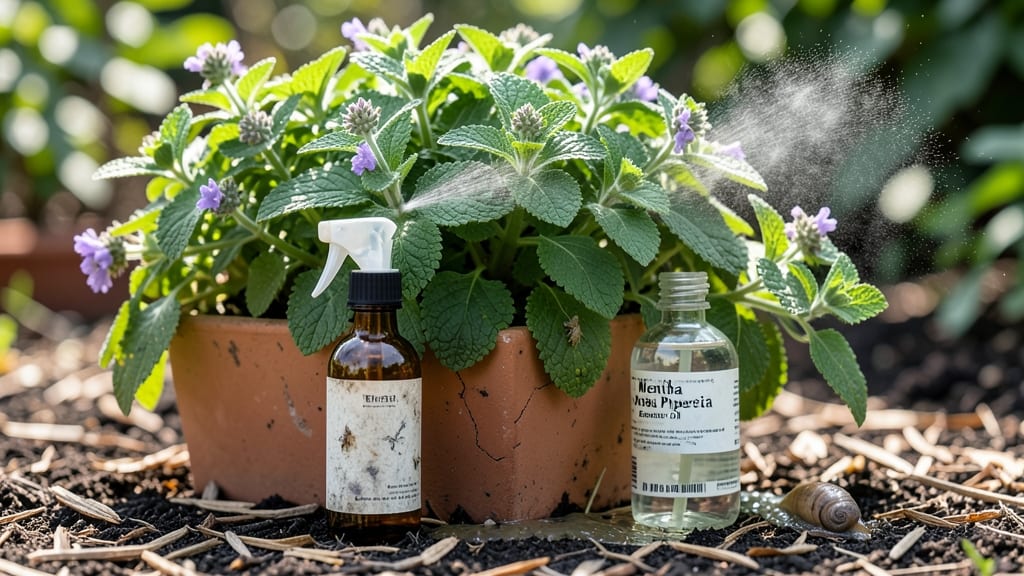
Peppermint oil for garden pests works as a strong natural deterrent against ants, aphids, and spider mites thanks to its menthol compounds, which confuse insects' navigation systems. Mix it with water and apply as a targeted spray to soil or foliage, avoiding direct contact with edible plants.
This natural solution leverages menthol's ability to mask plant scents that attract pests while creating an inhospitable environment. 🌿 Unlike harsh chemicals, peppermint oil breaks down quickly and won't linger in your garden ecosystem.
I've found the most effective results come from applying it during early morning hours when pests are most active, though you'll want to reapply every 7-10 days for continuous protection.
For best results, combine 10-15 drops of peppermint oil with 1 cup of water and 1 teaspoon of dish soap (as an emulsifier). This ratio creates a fine mist that adheres well to leaves while being gentle enough for most plants.
Always test on a small area first—some delicate varieties like basil or citrus can develop sensitivity to the strong aroma.
💡 In This Article
- How Peppermint Oil Disrupts Insect Behavior
- Safe Peppermint Oil Spray Recipes for Gardens
How peppermint oil disrupts insect behavior
The power of peppermint oil lies in its two key compounds: menthol and menthone. These chemicals act like biological "noise" for insects, overwhelming their olfactory receptors—the same way strong perfume can make you sneeze.
Menthol, in particular, mimics the scent trails ants use to navigate, creating false signals that send them scrambling in the wrong direction. 🌿 For aphids and spider mites, the oil's strong aroma masks the plant's natural scents that attract them, effectively starving them out by removing their chemical cues.
Scientifically, peppermint oil disrupts the insects' central nervous system at a cellular level. Menthol binds to TRPM8 receptors in insects (similar to how it creates that cooling sensation in humans), triggering confusion and disorientation.
This is why soft-bodied pests like aphids and spider mites are most affected—their delicate exoskeletons can't withstand the oil's volatility, causing dehydration and death within 24-48 hours. Harder pests like beetles or caterpillars are less impacted because their thicker exoskeletons block the oil's penetration.
What makes peppermint oil stand out compared to synthetic pesticides is its dual-action approach: it repels while also causing physiological stress. Unlike neonicotinoids that kill by nerve poisoning, peppermint oil creates an environment where pests can't thrive.
The oil's volatility means it dissipates quickly (typically within 2-3 days), leaving no harmful residues—unlike chemical pesticides that can persist for weeks and harm beneficial insects like ladybugs or bees.
There's a reason this works best on soft-bodied pests: their waxy cuticles can't protect against the oil's lipophilic (fat-attracting) properties. When peppermint oil makes contact, it dissolves the protective wax layer, leading to rapid dehydration.
For example, aphids lose up to 30% of their body moisture within hours of exposure, while spider mites become sluggish and stop reproducing. This targeted effectiveness means you're not just masking problems—you're actively creating an inhospitable environment for the pests that matter most.
The concentration matters too. Pure peppermint oil is too strong for direct application—its 40-60% menthol content would burn plant tissues. That's why dilution is critical: reducing it to 1-2% concentration (about 10-15 drops per cup of water) provides enough menthol to disrupt pests without harming your plants.
This precise balance is what makes peppermint oil a gardeners' secret weapon against soft-bodied invaders.
Interestingly, the oil's effectiveness varies by pest species. While ants are repelled by the scent alone, aphids require direct contact for the menthol to penetrate their bodies. This is why spraying undersides of leaves (where aphids cluster) is more effective than treating soil borders.
The oil's ability to work through both repellency and direct contact makes it one of the most versatile natural pest control options available.