
Tools
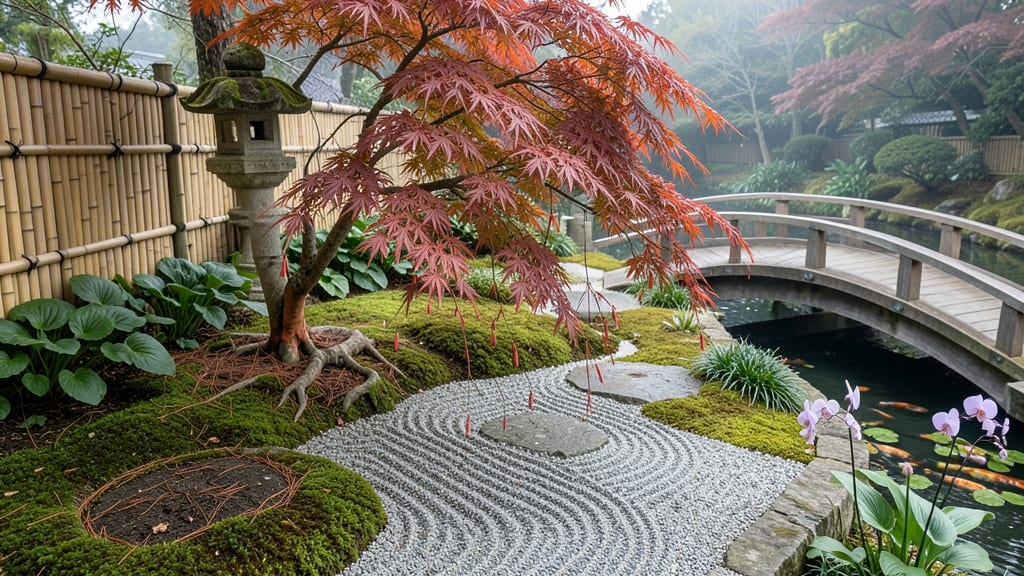
A Japanese garden in Los Angeles transforms urban spaces into tranquil retreats by weaving traditional Zen aesthetics with California’s natural beauty, showcasing tranquil koi ponds, meticulously shaped bonsai trees, and carefully arranged moss-covered stones at iconic spots like the Huntington Library’s Japanese Garden and Pasadena’s Japanese Friendship Garden. These designs embody wabi-sabi philosophy, celebrating nature’s imperfect beauty.
Los Angeles’s Japanese gardens stand out by adapting age-old traditions to the region’s climate and terrain. 🌿 Unlike traditional Japanese gardens in Japan, these LA spaces often incorporate drought-resistant plants and minimal water features to thrive in Southern California’s dry conditions.
The result is a harmonious blend where every element—from the placement of rocks to the sound of water—creates a meditative atmosphere that feels both timeless and distinctly Californian.
The most striking examples, like the Japanese Friendship Garden in Pasadena, use karesansui (dry landscape) techniques to create visually stunning, low-maintenance designs that still evoke serenity.
These gardens also embrace shakkei, or "borrowed scenery," by framing views of nearby mountains or city lights to connect visitors with their surroundings in unexpected ways.
Whether you're drawn to the meticulous care of bonsai trees or the peaceful ripples of a koi pond, each garden offers a unique escape from the city’s hustle.
💡 In This Article
- Core Principles Behind LA’s Japanese Garden Designs
- Best LA Japanese Gardens for Visitors and Their Hidden Features
Core principles behind LA’s Japanese garden designs
At the heart of every Japanese garden in Los Angeles lies the philosophy of wabi-sabi, which embraces imperfection, transience, and simplicity. This concept is visibly reflected in the gardens' weathered stones, asymmetrical plantings, and moss-covered rocks—elements that celebrate nature's raw beauty rather than polished perfection.
Unlike meticulously manicured Western gardens, LA’s Japanese gardens prioritize organic shapes and textures, like the rough bark of a 100-year-old pine tree or the delicate veins of a maple leaf. 🌿 The dry, arid climate of Southern California actually enhances wabi-sabi by accelerating the natural aging process of materials, creating a patina that feels authentically aged.
One standout technique adapted for LA’s climate is karesansui, or dry landscape gardening, which replaces water features with carefully raked gravel or sand to symbolize rippling water.
The Japanese Friendship Garden in Pasadena, for instance, uses this method to create the illusion of flowing streams without wasting precious water—a necessity in drought-prone regions.
The rake patterns mimic water currents with precision, and visitors often notice how the texture changes underfoot, from smooth gravel to slightly rougher edges near the stones. This technique also reduces maintenance, allowing the garden’s natural beauty to shine year-round.
Another key principle is shakkei, or "borrowed scenery," where designers strategically frame views of the surrounding landscape to expand the garden’s perceived space.
At the Japanese Garden at the Huntington Library, for example, carefully placed stone lanterns and bamboo screens create visual pathways that lead visitors’ eyes toward the distant San Gabriel Mountains. This technique transforms a small urban garden into a vast, immersive experience by integrating the city’s natural and built environments.
The result is a seamless blend where the garden feels like a continuation of the broader landscape rather than an isolated retreat. ✨
Water features play a crucial role in these gardens, but their design reflects LA’s practical needs. Instead of large ponds, many gardens use narrow, winding streams or small waterfalls that create soothing sounds without requiring excessive water.
The Japanese Garden at the Getty Center, for instance, features a delicate bamboo water channel that meanders through the space, its gentle trickle designed to mask city noises while adding a meditative quality.
The placement of these features often follows the principles of feng shui, ensuring they harmonize with the garden’s energy flow and the visitor’s path.
Climate adaptations also extend to plant selection. Traditional Japanese gardens rely on moisture-loving plants like azaleas and camellias, but LA’s gardens incorporate drought-resistant species such as junipers, ice plants, and California native grasses.
These plants not only survive the dry climate but also contribute to the garden’s aesthetic, their silvery-blue hues and spiky textures adding contrast to the softer greens and mosses.
The Huntington’s Japanese Garden, for example, blends these native plants with classic choices like maples and pines, creating a hybrid beauty that feels both familiar and uniquely Californian. 🌵
Finally, the role of stone in these gardens cannot be overstated. Each rock is carefully selected and placed according to its shape, color, and texture, often following the principles of suirokaban (water-rocks) or iseki (scenic rocks).
The stones at the Japanese Friendship Garden, for instance, range from smooth river rocks to jagged volcanic boulders, each telling a story of the garden’s history. Their placement is never random; it’s calculated to guide the visitor’s eye and create a sense of balance and harmony within the space.