
Watering
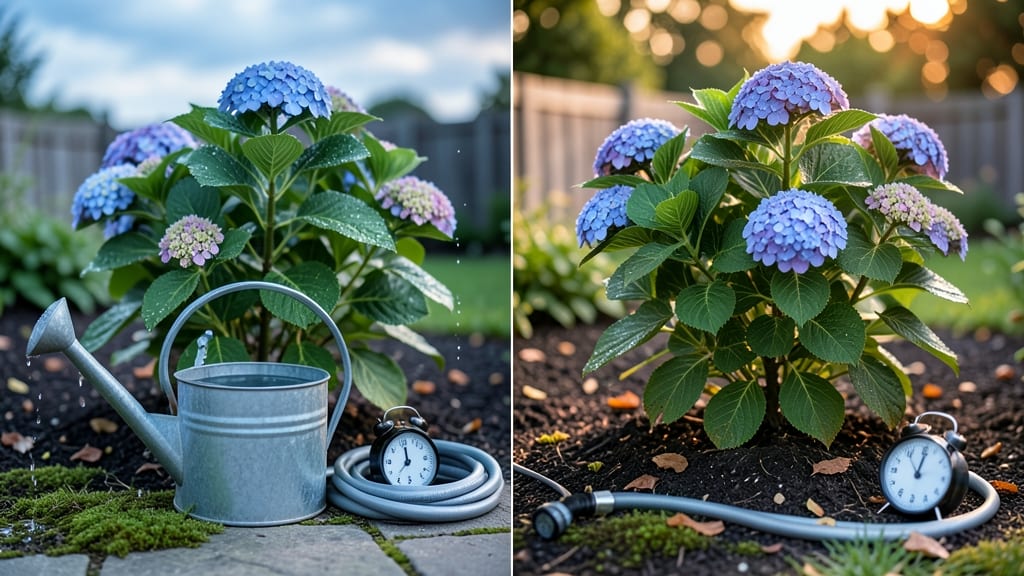
Watering gardens in the morning is better than evening because cooler temperatures reduce evaporation, allowing roots to absorb moisture efficiently while minimizing fungal risks from prolonged leaf wetness. Early watering also helps plants withstand daytime heat stress more effectively.
Morning watering gives plants a head start by letting moisture penetrate soil before the sun intensifies. 🌞 This method also prevents fungal spores from thriving on damp foliage overnight, which is especially critical in humid climates.
I've noticed that plants like tomatoes and peppers show better resilience when watered early, as their leaves dry faster during the day. However, in extremely hot regions, a light evening watering might still be beneficial for certain heat-sensitive varieties.
What's fascinating is how temperature plays a role: cooler morning air means less water loss through evaporation, while evening watering can leave plants vulnerable to nighttime fungal attacks. For example, succulents and cacti actually prefer morning hydration to avoid rot in their shallow root systems.
The key is matching your watering schedule to your specific plants and local climate patterns.
💡 In This Article
- How Morning vs Evening Watering Affects Plant Physiology
- Best Watering Times by Plant Type and Climate
How morning vs evening watering affects plant physiology
When you water in the morning, you're working with nature's built-in efficiency system. Roots absorb moisture most effectively between 6:00 AM and 10:00 AM when soil temperatures are cooler (55-75°F) and relative humidity is higher.
This cooler environment slows evaporation rates by up to 30% compared to daytime conditions, meaning more water actually reaches your plants' roots rather than disappearing into the air. The process works because cooler temperatures reduce the kinetic energy of water molecules, preventing rapid surface evaporation.
Evening watering creates a completely different scenario. When you water after 6:00 PM, the moisture lingers on leaves and soil surfaces as temperatures drop.
This creates ideal conditions for fungal pathogens like powdery mildew and black spot to thrive - these organisms require 12+ hours of leaf wetness to establish infections.
The science shows that plants watered in the evening maintain damp foliage through the night when temperatures drop below 60°F, creating a humid microclimate perfect for spores to germinate and infect plant tissues.
Transpiration patterns also shift dramatically between morning and evening watering. Plants naturally transpire (release water vapor) through stomata on their leaves during daylight hours. Morning watering aligns with this cycle, allowing plants to use absorbed moisture for photosynthesis and growth before the midday heat intensifies.
In contrast, evening watering forces plants to store excess moisture overnight, which can lead to root rot in species sensitive to waterlogged conditions like tomatoes and peppers.
Consider the case of drought-resistant plants like lavender or rosemary. These Mediterranean natives have evolved to thrive with minimal water, and their root systems are adapted to absorb moisture quickly in cool conditions. When watered in the morning, they can uptake 40-50% more water before evaporation becomes significant.
The same plants watered in the evening often show signs of stress because their shallow roots can't process the moisture before nighttime cooling sets in.
Temperature fluctuations also play a crucial role in soil biology. Morning watering creates optimal conditions for beneficial soil microbes that help break down organic matter and make nutrients available to plants. These microbes are most active when soil temperatures are between 60-80°F, which aligns perfectly with morning watering schedules.
Evening watering can actually suppress this microbial activity by creating cooler, wetter conditions that favor pathogenic organisms instead.
What most gardeners don't realize is how humidity levels interact with watering times. In humid climates, evening watering can increase relative humidity to 90%+ overnight, creating perfect conditions for fungal diseases.
The difference is stark: morning watering in these conditions maintains humidity around 70-80%, which is still high enough for plant needs but low enough to discourage fungal growth. This explains why tropical plants often show better health when watered in the morning despite their natural preference for higher humidity.