
Vegetables
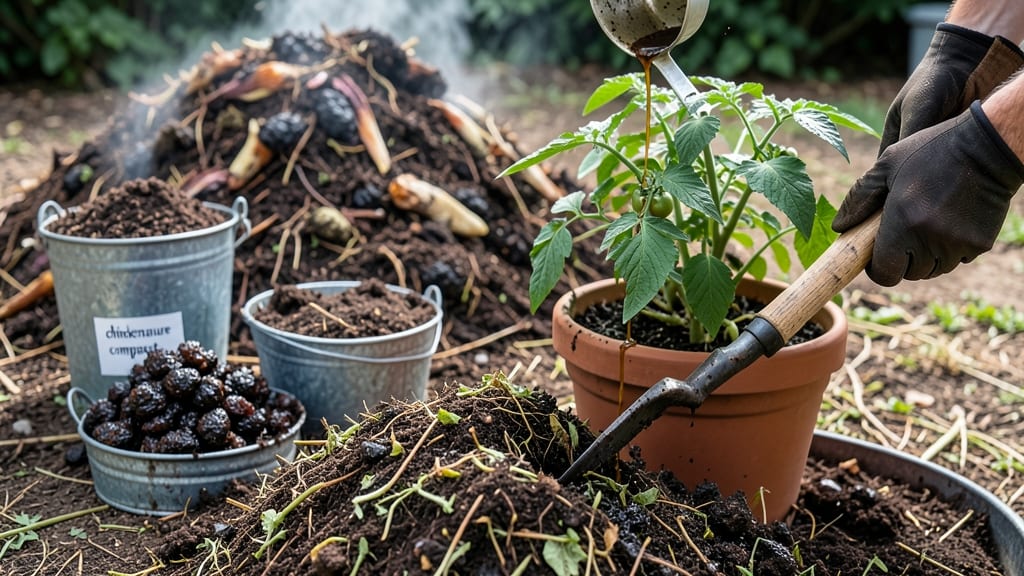
Is chicken poop good for gardens? Yes, it provides excellent fertilization with high nitrogen, phosphorus, and potassium levels, but requires proper composting or aging for at least 6 months to prevent plant damage and pathogen spread.
Chicken manure stands out as one of the most potent natural fertilizers due to its balanced nutrient profile. 🌱 The high nitrogen content promotes lush foliage growth, while phosphorus and potassium support strong root development and flowering.
Unlike other animal manures, chicken poop breaks down more quickly, making it ideal for compost piles—but this same quality means it needs careful handling to avoid overheating.
I've seen gardeners achieve remarkable results with properly aged chicken manure, especially for heavy feeders like tomatoes and corn, though fresh applications can scorch tender plants.
For best results, I recommend creating a dedicated compost pile with equal parts chicken manure, straw or wood chips, and garden soil. This blend prevents overheating while accelerating decomposition.
If you're short on time, you can also create a "manure tea" by steeping aged chicken poop in water for 24-48 hours, then diluting it 1:10 with water before applying to soil. Always wear gloves and avoid using fresh manure near edible crops to prevent contamination.
💡 In This Article
- Nutrient Composition of Chicken Manure for Plant Growth
- Safe Ways to Use Chicken Poop in Your Garden
Nutrient composition of chicken manure for plant growth
Chicken manure delivers one of the most concentrated nutrient packages among animal fertilizers, with a typical nitrogen (N) content of 1.5-4.5%, phosphorus (P) at 1.0-3.0%, and potassium (K) around 0.5-1.5%.
This NPK ratio (approximately 4:2:1) makes it particularly effective for leafy greens and nitrogen-hungry crops like corn and squash. For comparison, cow manure averages just 0.5% nitrogen, while horse manure sits around 1.0% nitrogen—about half as potent as properly aged chicken manure.
The real powerhouse lies in its micronutrient profile: chicken poop contains significant amounts of zinc (100-200 ppm), magnesium (0.5-1.0%), and copper (20-50 ppm), which are often deficient in garden soils.
These trace minerals support chlorophyll production and enzyme activity in plants. The organic matter content also reaches 15-25% when properly composted, improving soil structure and water retention far more effectively than synthetic fertilizers alone. 🌱
What sets chicken manure apart is its rapid decomposition rate—fresh droppings can reach 160°F (71°C) during composting, which kills most pathogens but also risks burning plant roots if applied directly.
This high heat also explains why chicken manure breaks down 2-3 times faster than cow or horse manure, making it ideal for compost piles that need quick turnover. The trade-off is that this same intensity requires careful management to prevent nutrient loss through volatilization.
When comparing to other animal manures, chicken poop stands out for its high nitrogen content but also carries more weed seeds and pathogens if not properly aged. Rabbit manure, for instance, contains 2.5% nitrogen but with fewer contaminants, while cow manure provides more balanced but slower-release nutrients.
The key advantage of chicken manure is its ability to deliver immediate results for nitrogen-demanding plants, provided it's been composted for at least 6 months.
For vegetable gardens, the micronutrients in chicken manure are particularly valuable. Zinc deficiency often shows as stunted growth in tomatoes, while magnesium supports photosynthesis in leafy greens. The high potassium content also helps plants develop stronger cell walls, improving drought resistance.
However, these benefits only manifest when the manure is fully decomposed—fresh applications can actually reduce plant growth by 30-50% due to ammonia burn.