
Watering
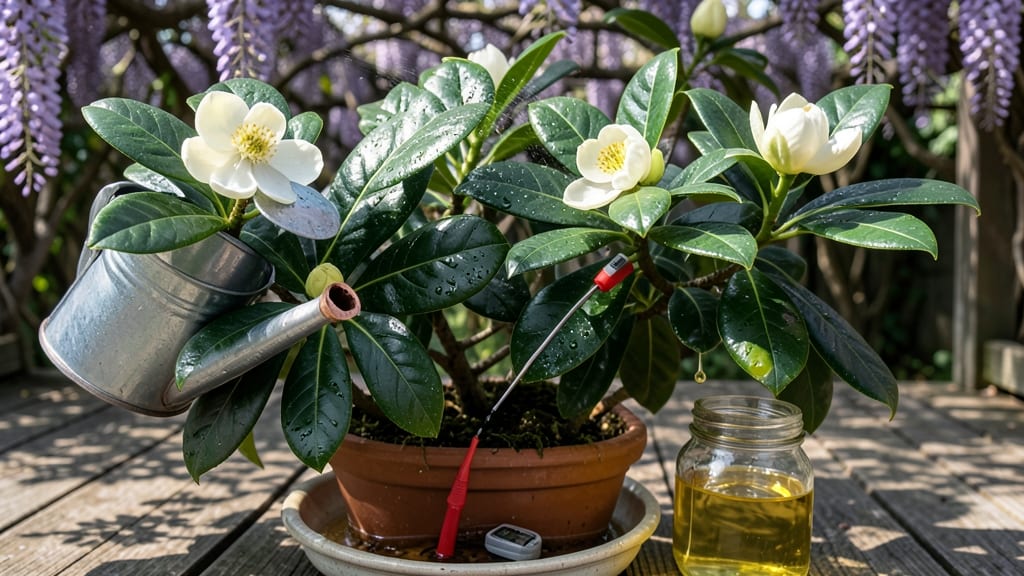
To water a gardenia 🌸 properly, focus on deep, consistent moisture—never letting the soil dry out completely, but avoiding soggy roots that strangle growth.
Struggling to keep your gardenia blooming? The secret isn’t just in the soil—it’s in how you water it. Overwatering kills roots, underwatering stunts flowers, and most gardeners get it wrong without even realizing it.
Gardenia thrives on a schedule that matches its thirst: deep watering every 3-5 days in spring and summer, but cutting back to once a week in winter. The key is checking soil moisture—stick your finger in 2 inches deep. If it’s dry, water; if it’s damp, wait.
Here’s what you’ll learn: the exact watering routine for your zone, how to spot overwatering (yellow leaves) vs. underwatering (crisp edges), and why rainwater or filtered tap water keeps your gardenia happier than chlorine-laced city water.
The perfect watering schedule for gardenias: when, how much, and what to avoid
Gardenias thrive on consistent moisture but despise soggy roots—it’s a delicate balance most gardeners struggle with. Unlike drought-tolerant succulents, gardenias demand regular hydration while requiring well-draining soil to prevent root rot.
The key? Watering deeply but infrequently, adjusting for seasons and container size. I’ve learned this the hard way after watching my first gardenia’s leaves yellow from overzealous watering.
Your gardenia’s watering needs shift with the seasons—spring and summer demand frequent deep watering, while fall and winter slow down to bi-weekly soaks. Even the soil type matters: sandy soil dries faster than clay, meaning you’ll water more often in raised beds than in-ground plantings.
The goal is to keep the top 2-3 inches of soil slightly moist, never soggy. Think of it like a sponge: squeeze it until barely damp, then let it recover.
⚠️ CRITICAL RULE: Never water gardenias at night. Wet foliage + cool temps = fungal infections like powdery mildew. Morning watering (before 10 AM) gives leaves time to dry while roots absorb moisture efficiently. Pro tip: Use a moisture meter or the finger test—stick your index finger 2 inches deep; if dry, it’s time to water.
| Season | Frequency | Amount | Best Time | Visual Cue |
|---|---|---|---|---|
| Spring (Mar-May) | Every 3-4 days | 1-1.5 gallons | Morning (6-9 AM) | New growth appears |
| Summer (Jun-Aug) | Daily or every other day | 1.5-2 gallons | Early morning | Leaves crisp in heat |
| Fall (Sep-Nov) | Every 5-7 days | 1 gallon | Late morning | Fewer blooms, slower growth |
| Winter (Dec-Feb) | Bi-weekly | 0.5-1 gallon | Mid-morning | Dormant leaves may brown |
| Potted Gardenias | Every 2-3 days | 1 gallon per 12" pot | Morning | Container soil dries faster |
Potted gardenias dry out twice as fast as in-ground plants because containers lack moisture retention. If your gardenia is in a clay or ceramic pot, water every 2-3 days in summer; plastic pots may need daily checks.
Always water until 10% runs out the drainage hole—this ensures roots get hydrated, not just the topsoil. I once killed a gardenia by watering lightly daily instead of deeply every 3 days—don’t make my mistake!
Watch your gardenia’s leaves for watering red flags: Yellowing leaves often signal overwatering, while crispy edges mean underwatering. Droopy leaves? It could be thirst—or root rot. Gently tug on the plant: if it slides out easily, roots are rotting.
Healthy roots should resist slightly. Another trick: tap the pot—a dull thud means dry soil; a hollow sound = time to water.
Seasonal adjustments are non-negotiable. In summer heat (85°F+), increase frequency to daily deep watering and mulch with 2-3 inches of pine bark to retain moisture. In
3 Common watering mistakes that kill gardenias (and how to Fix them)
Your gardenia might look healthy on the surface, but hidden watering mistakes are silently sabotaging its growth. The most common errors—overwatering, underwatering, and poor drainage—can turn lush foliage into a sad, droopy mess.
Let’s diagnose these issues and fix them before your plant’s roots throw in the towel.
I’ve seen gardeners unknowingly drown their gardenias with well-meaning watering routines, while others let them dry out like forgotten houseplants. The key is balance: gardenias crave moisture but despise soggy roots. Chlorine shock from tap water is another silent killer—many gardeners never connect yellowing leaves to their water source.
Let’s tackle these three mistakes head-on with actionable fixes.
🌿 How to Water Gardenia: The Fixes You Need
-
Mistake 1: Overwatering
Soil stays soggy 2+ days after watering
Fix: Let top 2-3 inches dry between waterings. Use a moisture meter or stick your finger in—if it’s damp, wait. -
Mistake 2: Underwatering
Leaves crisp at edges, buds drop
Fix: Water deeply (1-2 gallons) when soil is dry 1-2 inches down. Mulch to retain moisture. -
Mistake 3: Poor drainage
Water pools on surface, roots smell rotten
Fix: Amend soil with perlite or sand. Elevate pots for better airflow. Drainage holes? Non-negotiable. -
Silent Killer: Chlorine shock
Yellow leaves, stunted growth
Fix: Use rainwater or let tap water sit 24 hours before watering. Add a drop of lemon juice per gallon to neutralize chlorine.
Let’s start with the most destructive mistake: overwatering. I’ve seen gardeners water their gardenias daily, thinking they’re giving their plants a drink. But gardenias hate soggy roots—it’s a fast track to root rot.
The fix? Check soil moisture before watering. Stick your finger 2-3 inches deep; if it feels damp, skip watering. For potted gardenias, lift the pot—if it’s heavy with moisture, wait another day.
On the flip side, underwatering causes buds to drop before they open, and leaves turn crispy at the edges. This is your gardenia’s way of screaming for help. The solution? Deep watering—soak the soil until water runs out the drainage holes.
In-ground plants need 1-2 gallons per watering, while potted ones may need less but more frequently. Mulching helps retain moisture and keeps roots cool.
Poor drainage is the third villain in this trio. If water pools around your gardenia’s roots, you’re asking for trouble. Amend heavy clay soil with perlite or coarse sand to improve aeration.
For potted gardenias, ensure the pot has drainage holes and use a well-draining mix. Pro tip: Elevate pots on saucers with pebbles to prevent water from sitting at the bottom.
Now, here’s the sneakiest culprit: chlorine shock. Many municipalities add chlorine to tap water, which can burn your gardenia’s roots over time. If you’ve ruled out overwatering but still see yellowing leaves, your water source might be the problem.
Switch to rainwater, or let tap water sit in a barrel for 24 hours before using. A splash of lemon juice (1 tsp per gallon) can also help neutralize chlorine.
Remember, gardenias thrive on routine. Water in the morning to reduce evaporation and fungal risks. Adjust your schedule seasonally—water more in summer heat and less in winter dormancy. With these fixes, your gardenia will reward you with glossy leaves and fragrant blooms all season long. 🌸