
Blooming
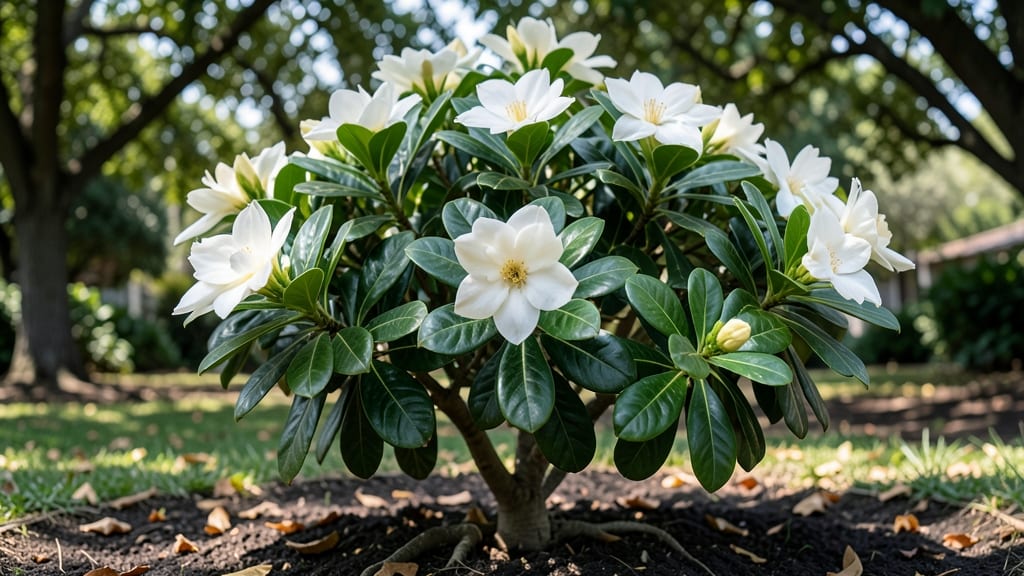
Gardenias generally bloom once annually in late spring to early summer, though tropical varieties may produce occasional flowers throughout the year. With the right care, you can sometimes coax extra blooms from certain species like Gardenia jasminoides.
Most gardenias follow a predictable seasonal rhythm tied to temperature shifts and daylight changes. 🌸 In cooler climates, these plants enter dormancy after their spring bloom, conserving energy until warmer conditions return.
Tropical gardenias, however, often break this pattern by producing sporadic flowers when conditions are ideal—typically during warm, humid periods. The key difference lies in their native growing zones: temperate varieties evolved to sync with seasonal changes, while tropical types respond more to consistent warmth than calendar dates.
What makes this timing so fascinating is how gardenias "read" environmental cues. These plants detect changes in daylight length and temperature through specialized cells in their stems and leaves. When nights grow shorter and temperatures rise in spring, they trigger the hormonal cascade that leads to bud formation.
This biological clock explains why gardenias in USDA Zone 8 or higher might bloom twice a year if given optimal growing conditions.
💡 In This Article
- Seasonal Blooming Patterns in Gardenias
- Pruning and Care Tips to Extend Gardenia Blooms
Seasonal blooming patterns in gardenias
Gardenias' blooming cycles are primarily governed by their native climate origins. Temperate varieties like Gardenia jasminoides, which hail from Japan and China, follow a strict seasonal rhythm triggered by daylight hours and temperature shifts.
These plants detect shorter nights in late winter through specialized photoreceptors called phytochromes, which initiate the flowering process. The result is that blooms typically appear between May and July in the Northern Hemisphere when temperatures stabilize between 65-75°F during the day.
The tropical gardenia species, such as Gardenia augusta, operate on a different schedule. These varieties, native to Southeast Asia, often bloom sporadically when conditions are optimal—typically during warm, humid periods with consistent temperatures above 70°F. Unlike their temperate counterparts, tropical gardenias don't have a strict seasonal shutdown.
Instead, they may produce flowers whenever they receive adequate sunlight and moisture, sometimes resulting in 2-3 blooming cycles per year in ideal climates like Florida or Hawaii.
Daylight length plays a crucial role in this process. Gardenias are considered "short-day plants," meaning they flower in response to decreasing daylight hours. When nights grow longer than 12-14 hours, these plants receive a signal to prepare for dormancy.
This explains why gardenias in northern climates often bloom just once per year—typically in spring when days begin lengthening again after winter. In contrast, tropical gardenias experience more consistent daylight patterns year-round, allowing for more frequent blooming opportunities.
Another fascinating factor is how gardenias respond to temperature fluctuations. These plants require a period of cooler weather to "reset" their biological clocks. For temperate varieties, this often means a brief period of 50-55°F nights in late winter or early spring.
Without this temperature drop, some gardenias may fail to bloom at all. Tropical varieties, however, don't need this cold shock and can produce flowers whenever conditions are favorable, making them more adaptable to warm climates.
Consider this comparison: A gardenia in USDA Zone 7 might produce just one bloom cycle per year between May and June, while a tropical variety in Zone 11 could produce three smaller bloom cycles—February-April, July-August, and October-November.
The key difference lies in their genetic adaptation to either seasonal changes or consistent tropical conditions. 🌿 This explains why gardenia enthusiasts in warmer climates often report more frequent blooming than those in temperate regions.
What most gardeners don't realize is that gardenias also respond to humidity levels. These plants thrive in environments with 50-70% relative humidity, and lower humidity can stress the plant, reducing its ability to produce flowers.
In dry climates, gardenias may enter a semi-dormant state, conserving energy and delaying blooming until conditions improve. This is why gardenias often bloom more prolifically in coastal areas where humidity remains consistently high.