
Light Requirements
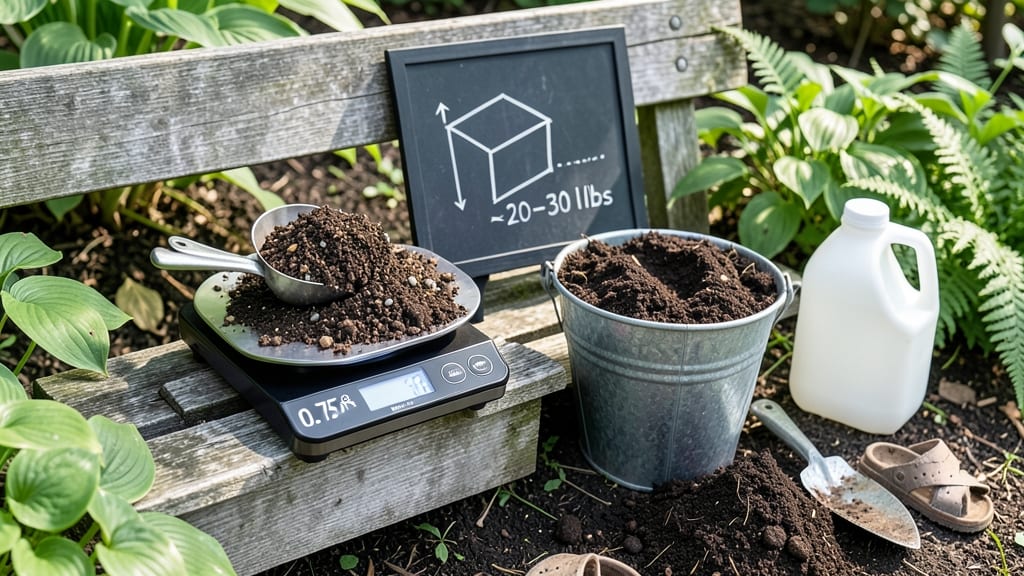
To determine how much .75 cubic feet of garden soil weighs, expect between 15 and 22 pounds, influenced by moisture levels, organic content, and soil compaction—drier loamy soil averages 18-20 pounds, while heavier clay or saturated soil can exceed 22 pounds.
Understanding soil weight is crucial for projects like raised beds or container gardening, where precise measurements matter. 🌱 The variation comes from how tightly soil particles pack together—wet clay soil can feel twice as heavy as dry sandy loam, even in the same volume.
For accurate estimates, I always check moisture levels first; a simple squeeze test tells me whether to adjust my calculations upward or downward.
This weight range also affects how much soil you can move or how large a container you'll need. For example, a 5-gallon bucket holds about 0.375 cubic feet of soil, so you'd need roughly 5-7 buckets to fill a 0.75 cubic feet space.
Always account for settling—freshly tilled soil compacts over time, potentially adding 10-15% more weight than your initial estimate.
💡 In This Article
- Factors Affecting Garden Soil Weight per Cubic Foot
- Practical Ways to Measure Soil Weight for Gardening Projects
Factors affecting garden soil weight per cubic foot
Soil weight varies dramatically because it's not just dirt—it's a complex mix of minerals, organic matter, water, and air. The key player here is moisture content, which can add up to 50% more weight when soil goes from dry to saturated.
For example, a cubic foot of dry loam might weigh 100 pounds, but after a heavy rain, that same volume could swell to 150 pounds due to absorbed water filling the pore spaces between particles.
Next comes organic matter, where compost or decomposed plant material adds both weight and volume. A soil mix with 10% organic content (like compost-amended loam) will weigh 10-15% more than mineral-only soil.
Clay particles, which are flat and dense, pack tightly and increase weight—clay-heavy soil can reach 110-130 pounds per cubic foot when wet, while sandy soil with large, loose grains might only hit 90-100 pounds in the same volume.
Don't overlook compaction, which shrinks air pockets and forces particles closer together. Tilling or foot traffic can reduce volume by 20-30%, making the same weight of soil occupy less space.
This is why freshly dug soil often feels lighter—it's less compacted than soil that's been walked on or machinery-driven. For your 0.75 cubic feet measurement, this means the actual weight could vary by 3-5 pounds depending on how recently the soil was disturbed.
The particle size distribution also plays a role. Silt has intermediate properties between sand and clay, while loam—a balanced mix—typically falls in the 100-120 pounds per cubic foot range when moist.
What's fascinating is how these factors interact: adding organic matter to clay soil can actually reduce its overall weight slightly by creating more air pockets, while adding water to sandy soil increases its density by filling those large voids between grains.
For practical gardening, these variations mean your 15-22 pound estimate for 0.75 cubic feet could shift significantly. A rain-soaked clay plot might push toward 25 pounds, while a dry, sandy raised bed could drop to 12 pounds.
Always test your soil's moisture level by squeezing a handful—if it holds shape but crumbles when pressed, it's likely in that 18-20 pound sweet spot for loamy soil.
Here's a quick reference for common soil types:
- Sandy soil: 80-100 pounds per cubic foot (dry), 100-120 pounds when moist
- Loamy soil: 100-120 pounds per cubic foot (ideal gardening soil)
- Clay soil: 110-130 pounds per cubic foot (can exceed 150 pounds when saturated)
- Organic-rich soil (compost-heavy): 40-70 pounds per cubic foot (lighter but nutrient-dense)
Understanding these factors helps you plan projects like raised beds or container gardening with precision.
For instance, if you're building a 4'x8' raised bed that's 12 inches deep (2.67 cubic feet), you'd need roughly 50-60 pounds of soil—enough to make lifting and moving manageable without overestimating your strength or equipment needs. 🌱