
Vegetables
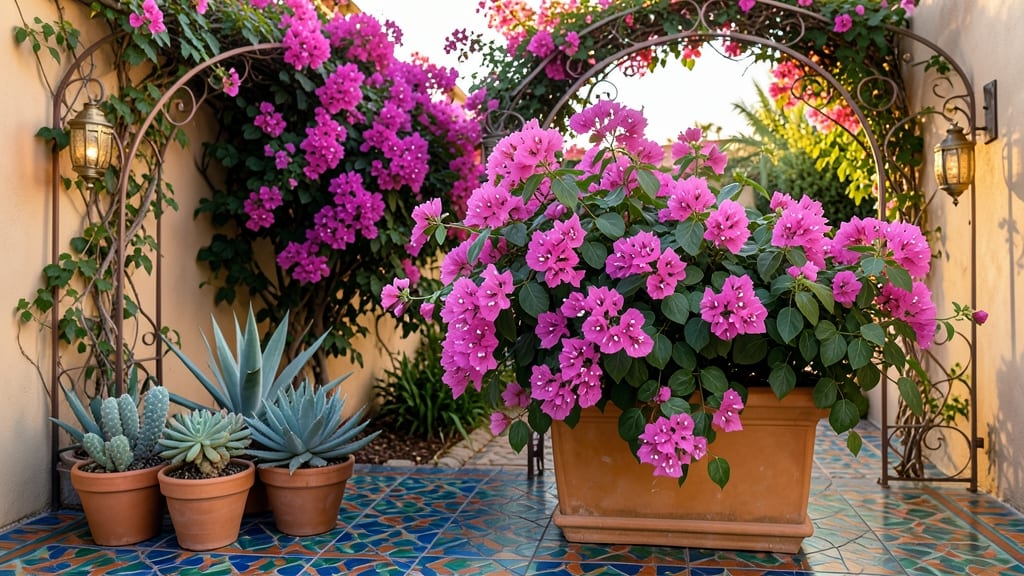
The gardens of Marrakech create tranquil havens where Islamic patterns and Berber traditions merge with vibrant plant life, offering peaceful escapes from the city’s lively markets. Iconic spots like Majorelle and Menara Gardens highlight Morocco’s mastery of blending water features, sunlit pathways, and culturally significant flora.
The gardens of Marrakech aren’t just green spaces—they’re living museums of Moroccan culture. 🌿 These meticulously designed landscapes use geometric patterns inspired by Islamic art to create visual harmony, while water channels (called qanats) reflect the region’s ancient hydraulic engineering.
The plant selection tells a story too: cypress trees symbolize protection, bougainvillea adds vibrant color, and orange groves provide both beauty and practical fruit. What makes them special is how they transform the city’s bustling energy into serene sanctuaries.
Beyond their aesthetic appeal, these gardens serve as cultural anchors. Majorelle Garden, with its famous cobalt-blue walls, was once a private retreat for artist Jacques Majorelle before becoming a UNESCO site.
Menara Garden, meanwhile, offers panoramic views of the Atlas Mountains while demonstrating Morocco’s traditional agdal system—orchards that combine agriculture with landscape design. Visitors often overlook the Jardin Secret, a lesser-known gem tucked behind the Bahia Palace, where the scent of orange blossoms and jasmine creates an intoxicating atmosphere.
💡 In This Article
- How Marrakech Gardens Reflect Islamic and Berber Design Principles
- Visiting Marrakech’s Most Stunning Gardens: Tips and Hidden Gems
How Marrakech gardens reflect Islamic and Berber design principles
The gardens of Marrakech are masterpieces of Islamic geometry, where every curve and angle follows strict mathematical rules. Designers use the four-part layout—a central fountain surrounded by four quadrants—inspired by the Paradise gardens described in the Quran.
This symmetry isn’t just decorative; it creates a sense of balance and tranquility, reflecting Islamic beliefs about harmony in nature and architecture. The pathways often form intricate Arabesque patterns, with tiles arranged in repeating motifs that guide visitors through the space like a meditative journey.
Water plays a central role, with qanats (ancient underground channels) delivering water to fountains and pools, a technique perfected by Berber engineers over 2,000 years ago.
These systems don’t just irrigate plants—they create a soothing soundtrack of trickling water, essential for cooling the desert climate. 💧 The choice of plants also ties to Berber traditions: cypress trees symbolize protection and eternity, while bougainvillea adds vibrant color, thriving in Marrakech’s 20-30°C (68-86°F) climate.
Orange trees, meanwhile, provide both shade and fruit, reflecting the agdal system where agriculture and beauty coexist.
What makes these gardens unique is how they adapt Islamic principles to local conditions. The blue-and-white tilework at Majorelle Garden, for example, wasn’t just an artistic choice—it was a practical way to reflect sunlight and keep the space cool.
Similarly, the low walls and arched doorways create shaded walkways, protecting visitors from the intense Moroccan sun. These elements work together to transform a desert landscape into a lush, inviting retreat, proving that Islamic and Berber design isn’t just about aesthetics but about creating functional, spiritual spaces.
The plant selection in these gardens also carries deep cultural meaning. Jasmine and rose bushes aren’t just ornamental—they’re used in traditional perfumes and teas, connecting the garden to daily Moroccan life. 🌸 The scent of these flowers, combined with the visual symmetry, creates a multisensory experience that transports visitors to another world.
Even the olive trees, a staple of Berber agriculture, are arranged to frame views of the Atlas Mountains, blending nature with the landscape’s history.
One fascinating detail is how these gardens use light and shadow to enhance their beauty. The whitewashed walls at Menara Garden, for instance, reflect sunlight during the day while the dark green cypress trees provide contrast, creating a dynamic visual effect.
At sunset, the golden light bathes the gardens in warmth, turning the cobalt-blue walls of Majorelle into a striking backdrop. This play of light isn’t accidental—it’s a deliberate design choice to make the gardens feel alive and ever-changing.
For visitors, understanding these principles transforms a simple walk through the gardens into a deeper cultural experience. The geometric patterns underfoot, the trickling water, and the symbolic plants all tell a story of Morocco’s rich heritage.
Whether you’re admiring the fountains at Majorelle or the orchards at Menara, you’re stepping into a living example of how Islamic and Berber traditions shape the land—and the soul of the city.