
Tools
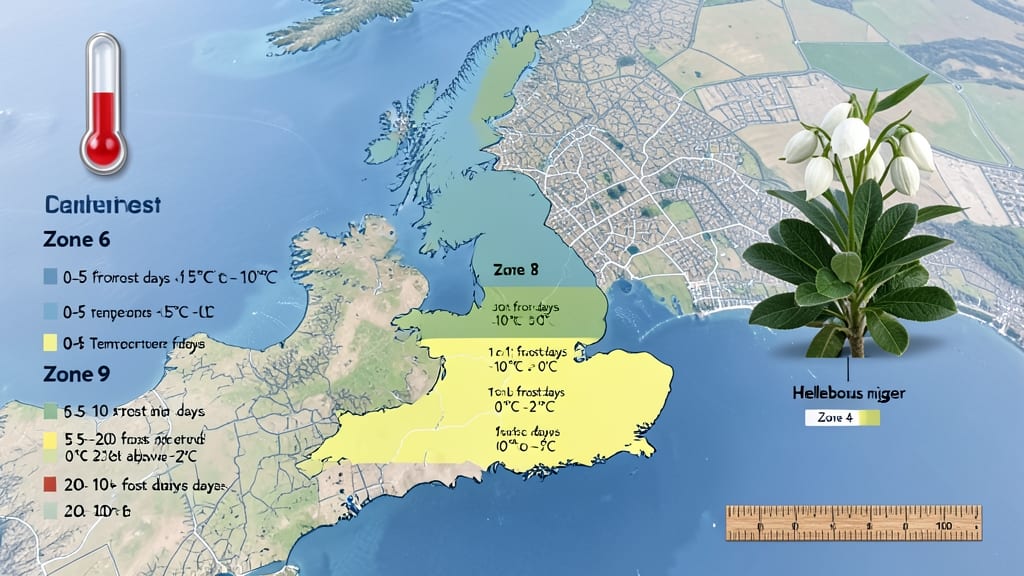
UK garden zones determine which plants thrive in your area by mapping average winter temperatures across zones 1 (coldest) to 10 (mildest). Knowing your zone helps select frost-resistant plants and plan seasonal planting for success.
These zones are based on the lowest winter temperatures your region experiences, which directly impacts plant survival.
For example, zone 1 (like parts of Scotland) can't support subtropical plants, while zone 9 (southern England) can grow citrus trees year-round. 🌱 The Royal Horticultural Society (RHS) and Met Office provide free postcode lookups to identify your exact zone, though microclimates—like a sunny south-facing wall—can sometimes shift your effective zone by half a level.
What makes this system useful is how it aligns with plant hardiness ratings. If you're buying perennials or shrubs, check their RHS rating (e.g., "H7" for hardy to -15°C) to match it with your zone.
Even a small zone difference can mean the difference between a thriving garden and failed plantings.
💡 In This Article
- How UK Garden Zones Work: Temperature Ranges and Plant Hardiness
- Finding Your UK Garden Zone: Postcode Tools and Practical Adjustments
How UK garden zones work: temperature ranges and plant hardiness
The UK's garden zone system is built on minimum winter temperatures, measured in degrees Celsius, which determine how cold your region gets during the harshest months. Zone 1 (coldest) experiences temperatures as low as -15°C or below, while zone 10 (mildest) rarely drops below 0°C.
These zones are calculated based on the average of the coldest five winter days over a 30-year period, giving gardeners a reliable benchmark for plant survival.
What makes this system practical is its alignment with plant hardiness ratings. The Royal Horticultural Society (RHS) uses a H1-H10 scale that mirrors the zone system, where H1 represents plants hardy to -25°C (like Siberian larch) and H10 covers tender species needing 5°C+ protection (such as bougainvillea).
For example, a zone 8 garden can safely grow H7-rated plants like lavender, while zone 3 might struggle with even H5-rated perennials like Russian sage without winter protection.
Microclimates add another layer of complexity. A sheltered south-facing wall can raise your effective zone by 0.5-1 level due to radiant heat, while a frost pocket in a valley might drop temperatures by 2-3°C compared to surrounding areas.
This is why gardeners in zone 6 might successfully grow H6-rated plants in sunny spots but lose them in shaded corners. 🌡️ Understanding these variations helps explain why some gardens flourish with plants rated just outside their official zone.
The UK system differs from the USDA zones in key ways. While USDA zones use annual minimum temperatures, UK zones focus on winter extremes—critical for plants that need to survive prolonged cold snaps.
For instance, a USDA zone 7b (which ranges from -6.7°C to -3.9°C) might roughly correspond to UK zone 6 (-10°C to -7°C), but the UK system accounts for shorter but more intense cold periods common in British winters.
Here's how the zones break down in practice:
- Zones 1-3: Only the hardiest plants survive (H1-H3), like Hellebores or Siberian pea shrub. Frost damage is common year-round.
- Zones 4-6: Classic temperate plants thrive (H4-H6), including apple trees and hydrangeas, with occasional winter protection needed.
- Zones 7-9: Subtropical plants like olives and figs (H7-H9) can grow outdoors, though severe winters may require wrapping.
- Zone 10: Only the mildest corners of the UK (Cornwall, Isles of Scilly) support H10 plants like citrus trees year-round.
The beauty of this system is how it translates scientific data into actionable gardening advice. When you know your zone, you can confidently select plants that match your climate—whether that's frost-resistant Hellebores in zone 3 or bougainvillea in zone 9—without the trial-and-error of guessing. 🌿