
Tools
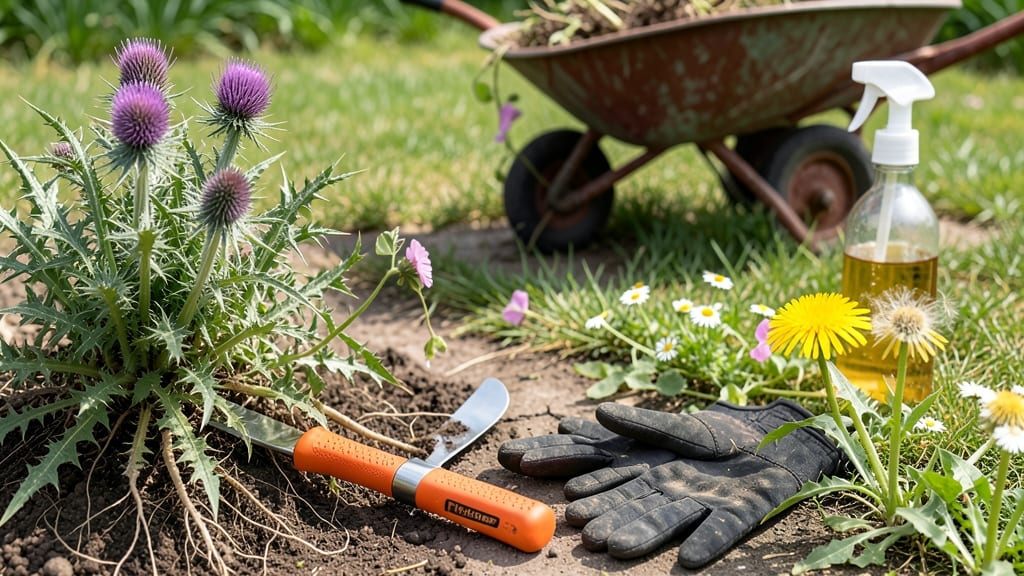
Dealing with garden weeds in the UK requires understanding the region's damp climate and nutrient-rich soils, which create ideal conditions for persistent species like bindweed and creeping buttercup. The best approach combines early manual removal, targeted herbicides for tough perennials, and mulching to prevent regrowth.
UK gardens face unique weed challenges because the frequent rainfall and mild winters give invasive species a head start. 🌱 Many common weeds here—like dock and nettles—spread aggressively through underground runners, making them harder to eradicate than annual weeds.
I've found that vinegar-based sprays work best for broadleaf types, while a simple hand fork can help uproot deep-rooted perennials without damaging nearby plants.
What sets UK weed control apart is the need for seasonal timing. For example, bindweed thrives in summer heat but becomes more vulnerable when soil temperatures drop. Mulching with straw or cardboard blocks sunlight, which is often more effective than chemical treatments for preventing new growth.
The key is consistency—weeds that seem minor today can quickly take over if left unchecked.
💡 In This Article
- How UK Climate and Soil Fuel Common Weed Growth
- UK-Specific Weed Removal Tools and Organic Solutions
How UK climate and soil fuel common weed growth
The UK's mild, maritime climate creates the perfect storm for weed proliferation. Annual rainfall averages 1,150mm across the country, keeping soil consistently moist—ideal for seeds to germinate quickly. This is why weeds like ground elder and creeping buttercup dominate gardens, as their shallow roots absorb water efficiently.
The cool, damp summers (average 15-20°C) also slow down microbial activity in the soil, meaning organic matter decomposes slower and weeds get more nutrients.
Soil pH plays a crucial role too. Most UK garden soils are slightly acidic (pH 5.5-7.0), which favors weeds like dock and nettles that thrive in these conditions. These weeds also outcompete desirable plants by growing faster and shading them out.
Their life cycles are perfectly adapted to British seasons: many perennials like bindweed store energy underground during winter, then burst into growth as soon as soil temperatures rise above 10°C in spring—often weeks before gardeners even notice.
What makes UK weeds particularly stubborn is their reproductive strategy. For example, creeping buttercup spreads via underground rhizomes that can grow 10cm per year, while dandelions produce up to 20,000 seeds per plant that remain viable for years.
The combination of high humidity and mild winters means these seeds don't dry out or freeze, giving weeds a constant head start. Even native plants struggle to compete against this relentless growth pattern, which is why UK gardeners often see weeds return stronger after each season.
Seasonal variations also create opportunities for weeds. In autumn, fallen leaves create a natural mulch that protects weed seeds from frost, allowing them to germinate in spring. Meanwhile, winter rainfall washes nutrients into the topsoil, giving early spring weeds like chickweed an instant nutrient boost.
This is why many gardeners notice weed growth spiking in March-April, before their own plants have even started growing.
One often overlooked factor is how UK soil composition changes with weather. Heavy clay soils in the north retain moisture longer, creating anaerobic conditions that suffocate beneficial microbes but not weeds like ground elder, which thrive in these conditions.
In contrast, sandy soils in the south drain quickly, but their low nutrient retention makes weeds like horsetail more aggressive as they compete for limited resources.
Understanding these ecological factors helps explain why traditional weed control methods often fail. For instance, simply pulling weeds without removing the roots lets them regrow from fragments. The UK's climate and soil conditions mean weeds have evolved sophisticated survival strategies that require targeted, consistent approaches to manage effectively.