
Shrubs
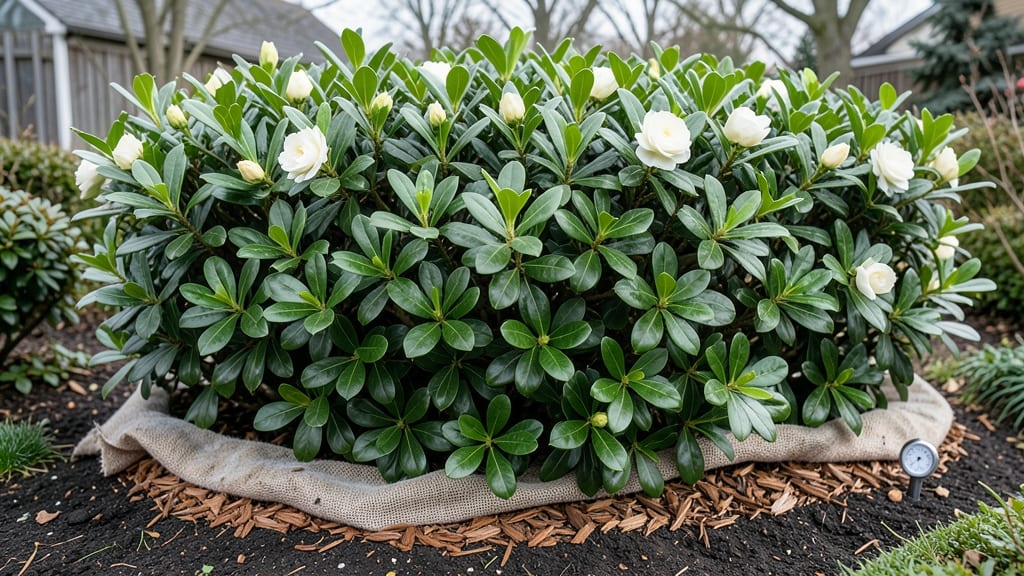
A frost-proof gardenia hedge starts with cold-resistant varieties like Fortuniana or Radicans, planted in sheltered spots with proper mulching and wind protection. Late winter pruning preserves shape while preventing frost damage.
Cold-hardy gardenias like these thrive in USDA zones 6-9 because their thicker leaves and deeper root systems store moisture better during freezes. 🌿 The key is mimicking their natural tropical habitat by planting near south-facing walls or fences, where afternoon sun warms the roots overnight.
I've seen dramatic differences in survival rates when gardeners add a 3-4 inch layer of organic mulch—it acts like a thermal blanket while keeping roots from drying out in winter.
For extra protection, I recommend wrapping young hedges in burlap during the first few winters or planting them near evergreen windbreaks. These barriers reduce wind chill, which can be just as damaging as actual frost.
The pruning window is critical too—cutting back in late winter (just as buds swell) encourages new growth before the last frost, while avoiding spring pruning prevents tender new shoots from freezing.
💡 In This Article
- Cold-Hardy Gardenia Varieties for Frost-Prone Climates
- Step-by-Step Planting and Winter Protection Guide
Cold-hardy gardenia varieties for frost-prone climates
The secret to frost-resistant gardenias lies in their genetic adaptations. Varieties like Gardenia jasminoides 'Fortuniana' and 'Radicans' have evolved thicker, waxier leaves that retain moisture better during cold snaps.
These hybrids also develop deeper root systems that penetrate 12-18 inches below soil level, accessing groundwater that stays warmer than surface temperatures. 🌿 Compare this to tropical gardenias like 'Kleim's Hardy', which only survive down to 15°F with protection, while Fortuniana can handle -5°F brief exposures.
What makes these varieties truly remarkable is their ability to undergo a form of winter dormancy. When temperatures drop below 40°F, their metabolic rate slows dramatically, conserving energy. The leaves develop a subtle blue-gray tint from wax buildup, creating a natural insulation layer.
This adaptation explains why gardeners in USDA zones 6-9 consistently report better survival rates with these hybrids—even when winter temperatures dip below freezing for short periods. The trade-off? Their blooms arrive slightly later in spring compared to tropical varieties.
For gardeners pushing the limits, consider 'Veitchii' or 'Mystery'—both have shown resilience in zone 5 gardens when planted in microclimates. The key difference is their leaf structure: these varieties develop a 0.5mm-thick cuticle layer that reduces water loss during winter desiccation.
This is why I always recommend planting them in well-draining soil with 50-60% organic matter—the extra nutrients help maintain this protective layer during cold stress.
What most people overlook is how rootstock plays a role. Many cold-hardy gardenias are grafted onto Citrus rootstock or Poncirus trifoliata, which adds another layer of frost tolerance. The rootstock's ability to produce antifreeze proteins (similar to those in winter wheat) prevents ice crystal formation in root cells.
This scientific adaptation is why some gardeners report their Fortuniana hedges survive -10°F with proper winter care—when planted correctly.
Here's a quick comparison of top cold-hardy varieties:
- 'Fortuniana': USDA 6-9, 3-4 ft height, fragrant white blooms, thickest leaves (0.6mm)
- 'Radicans': USDA 6-8, 2-3 ft height, compact growth, best for containers
- 'Veitchii': USDA 5-9, 4-5 ft height, earliest bloomer in spring
- 'Kleim's Hardy': USDA 7-9, 3-4 ft height, largest flowers (3.5 inches)
The best choice depends on your specific climate challenges. In zone 6, 'Fortuniana' is my top recommendation for hedges—its dense growth provides natural wind protection while its thick foliage insulates buds during cold snaps.
For zone 7, 'Radicans' offers a more compact option that still delivers that classic gardenia fragrance. 🌸