
Lawn
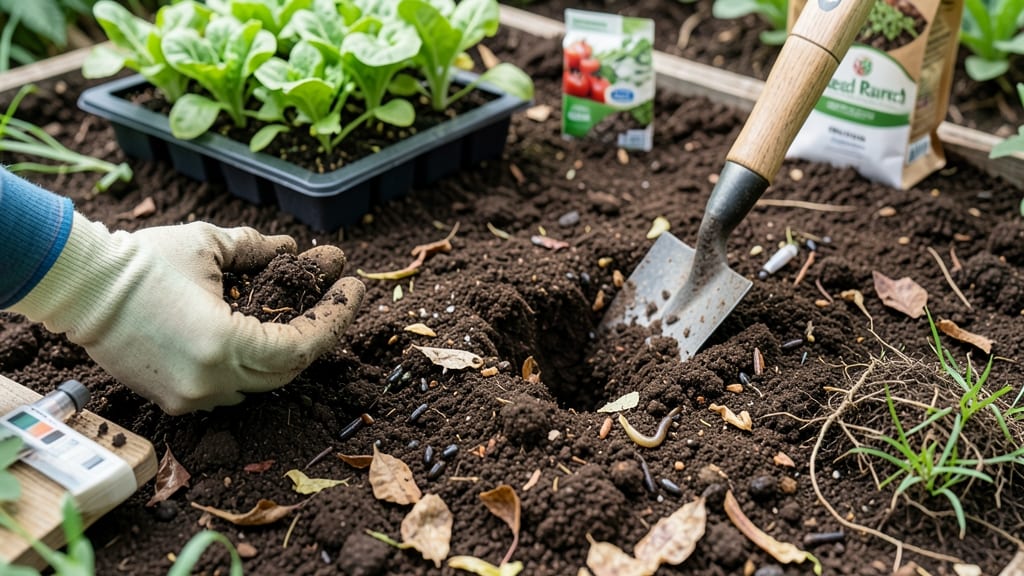
To evaluate Sod Company Seed Ranch soil for veggie gardens, check the pH (ideal 6.0-7.0), organic matter (3-5% minimum), and nutrient balance—especially nitrogen, phosphorus, and potassium—before planting. Use a soil test kit or lab analysis for accurate results.
Before planting vegetables in Seed Ranch soil, you're not just checking dirt—you're assessing the foundation for your entire garden's health. 🌱 The right pH ensures nutrients are available, while organic matter improves moisture retention and root growth.
I've seen gardens thrive when soil tests reveal balanced NPK levels, but even small deficiencies can stunt plant development. For example, a low nitrogen reading might explain why your lettuce stays small, while high phosphorus could lead to lush but weak stems.
Testing gives you the data to make precise amendments, whether that means adding compost or adjusting fertilizer ratios.
Don't stop at the basics—micronutrients like iron and zinc play critical roles too. 💫 Many gardeners overlook these until plants show yellowing leaves or poor flowering. The good news? Seed Ranch soil often has a good base, but knowing exactly what's missing lets you tailor your approach.
For instance, if your test shows low calcium, a quick application of crushed eggshells can prevent blossom-end rot in tomatoes.
💡 In This Article
- Key Soil Tests for Veggie Garden Success
- Preparing Seed Ranch Soil for Vegetable Planting
Key soil tests for veggie garden success
The pH scale measures how acidic or alkaline your soil is, and vegetables thrive in a narrow range of 6.0-7.0. At this level, essential nutrients like nitrogen, phosphorus, and potassium become soluble and accessible to plant roots.
For example, tomatoes prefer slightly acidic soil around 6.2-6.8, while carrots do best in neutral soil near 6.5-7.0. The reason?
Extreme pH levels lock nutrients away—calcium becomes unavailable in acidic soil, while magnesium binds tightly in alkaline conditions. 🌱 This is why a soil test reveals whether your Seed Ranch soil needs lime to raise pH or sulfur to lower it.
Organic matter acts like a sponge, holding 3-5 times its weight in water while providing slow-release nutrients. Seed Ranch soil typically contains 2-4% organic matter naturally, but vegetable gardens often need 3-5% for optimal growth. Think of it as the soil's "battery"—the higher the percentage, the longer nutrients stay available.
A simple test involves mixing soil with hydrogen peroxide; vigorous bubbling indicates low organic matter, while minimal reaction suggests healthy levels. Without enough organic matter, roots struggle to absorb water during dry spells, and nutrients leach away quickly after rain.
Nutrient balance—particularly nitrogen (N), phosphorus (P), and potassium (K)—directly impacts plant vigor. Nitrogen fuels leafy growth, phosphorus promotes root development and flowering, and potassium strengthens stems and disease resistance.
A soil test might show your Seed Ranch soil has high potassium but low phosphorus, which explains why your peppers produce lots of leaves but few fruits.
Micronutrients like iron and zinc often get overlooked, yet they're critical: iron deficiency causes yellowing between leaf veins (chlorosis), while zinc deficiency stunts growth. These elements work best when pH is balanced—iron becomes unavailable in alkaline soil, while manganese binds tightly in acidic conditions.
Interpreting test results requires understanding what each number means. For instance, a medium phosphorus level (30-60 ppm) suggests your soil can support moderate plant growth, but heavy feeders like corn may need additional phosphate fertilizer.
Similarly, a high nitrogen reading (100+ ppm) could lead to excessive leafy growth at the expense of fruit production.
The key is matching amendments to your specific crop needs—broccoli thrives with more nitrogen early on, while tomatoes benefit from balanced NPK ratios throughout their growth cycle. 💫 This precision is what separates a thriving garden from a struggling one.
Don't forget about soil texture—the balance of sand, silt, and clay affects drainage and aeration. Seed Ranch soil often has a loamy texture (equal parts sand, silt, and clay), which is ideal for vegetables because it drains well but retains moisture.
However, heavy clay soils can become compacted, restricting root growth, while sandy soils dry out too quickly. A simple jar test—filling a jar with soil and water, then observing how layers settle—reveals your soil's composition.
Amending with compost improves clay soils by adding organic matter, while sand helps loosen heavy soils for better root penetration.
Advanced gardeners often test for additional factors like cation exchange capacity (CEC), which measures how well soil holds onto nutrients. A high CEC (10-30 meq/100g) means your soil can store more nutrients for plant uptake, while low CEC indicates nutrients will wash away quickly.
This is particularly important in Seed Ranch soil, where seasonal rains can leach essential minerals. Understanding these nuances lets you make targeted improvements—adding gypsum to clay soils, for example, can improve structure without altering pH, while peat moss helps sandy soils retain moisture and nutrients. 🔥