
Watering
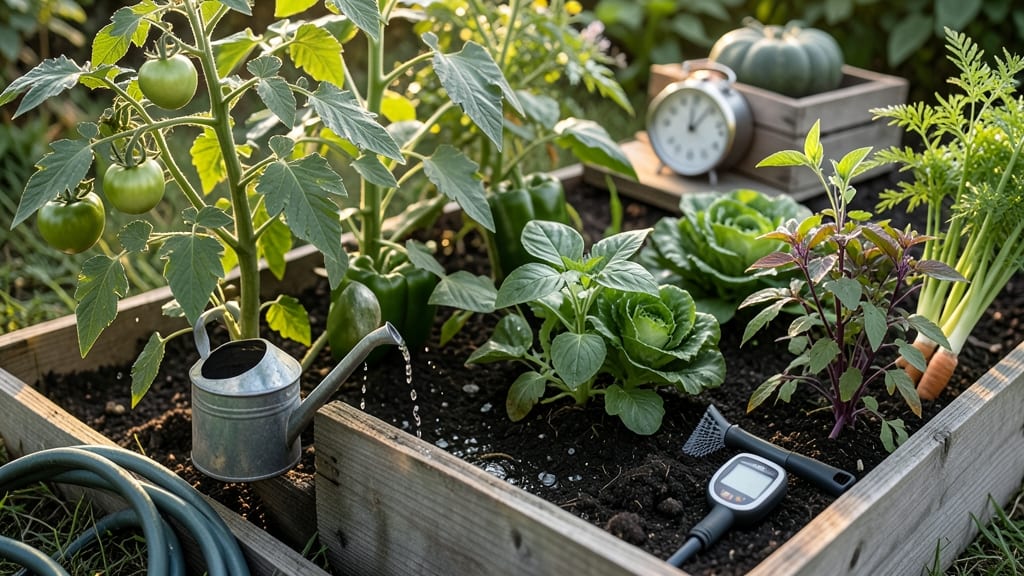
You should water your veggie garden 🥕 based on soil type, season, and plant needs—not just a fixed schedule.
Struggling to keep your vegetable garden thriving without drowning plants in overwatering—or leaving them parched? The frequency you water depends more on soil type than you might think, and getting it right can mean the difference between a bountiful harvest and wilting disappointment.
Clay soil holds moisture like a sponge, while sandy soil drains faster than a sieve. Loamy soil strikes the perfect balance, but even it needs consistent checks to avoid stressing your plants. The key is understanding how your garden’s soil behaves—whether it clings to water or lets it slip away.
In this guide, I’ll break down the ideal watering schedule for each soil type, plus seasonal tweaks to keep your veggies happy from seedling to harvest. No more guesswork, just perfect moisture every time.
Watering frequency by soil type: clay, sandy, and loamy gardens explained
Your vegetable garden's soil type determines how often you should water—clay, sandy, or loamy soil each behave differently. Clay soil holds moisture like a sponge, while sandy soil drains faster than water through a sieve. Loamy soil, the gardener's gold, strikes the perfect balance.
Understanding these differences ensures your plants get just the right amount of water without waste or stress.
I’ve tested these soil types in my own garden, and the results speak for themselves: overwatering in clay leads to root rot, while underwatering in sandy soil causes plants to wilt by noon.
The key is matching your watering schedule to your soil’s moisture retention and drainage rate. Let’s break it down so you can water with confidence.
| Soil Type | Moisture Retention | Watering Frequency | Signs of Overwatering | Signs of Underwatering |
|---|---|---|---|---|
| Clay | High (holds water tightly) | Every 3-5 days (deep but less often) | Yellowing leaves, mold, root rot | Cracked soil, wilting despite moisture |
| Sandy | Low (drains quickly) | Every 1-2 days (light but frequent) | Puddles, soggy soil, fungus | Dry, crumbly soil, drooping plants |
| Loamy | Moderate (ideal balance) | Every 2-3 days (consistent) | Wilting, slimy roots | Hard, dry clumps, leaf scorch |
For clay soil, I’ve learned to water deeply but infrequently—think of it like giving your plants a long drink instead of a quick sip. Aim for 3-4 inches of water per week, but let the top 2 inches dry out between waterings.
This prevents compaction and anaerobic conditions that suffocate roots. My tomatoes thrive in clay when I use a soaker hose to deliver water slowly at the base.
Sandy soil is the opposite—it’s like water running through your fingers. Here, you’ll need to water more often, but with less volume. Shoot for 1-2 inches per week, but check the soil daily during heatwaves. My peppers in sandy soil wilt by midday if I don’t water them every morning. A thick layer of mulch helps retain what little moisture the soil holds.
Loamy soil is the dream for most gardeners because it’s self-regulating. It holds moisture without drowning roots and drains well enough to prevent waterlogging. Water every 2-3 days, providing 1.5-2 inches per week. My cucumbers in loamy soil stay hydrated with minimal effort, and I rarely see signs of stress. The secret? A mix of organic matter like compost keeps this soil type balanced.
Watch for visual cues to adjust your watering. In clay soil, yellowing leaves or moldy soil means you’re overdoing it. For sandy soil, dry, crumbly clumps or wilting by noon signals underwatering.
In loamy soil, dull leaves or hard soil at the surface means it’s time to water. I keep a small trowel handy to check moisture levels—just dig down an inch or two to see what’s really happening below the surface.
Pro tip: Use a moisture meter for accuracy, especially in sandy soil where visual clues can be misleading. I’ve also found that drip irrigation is a game-changer for all soil types—it delivers water directly to the roots, reducing waste and ensuring consistent moisture.
For clay-heavy areas, I add gypsum to improve drainage, while sandy patches benefit from compost or peat moss to boost water retention.
Remember, these are general guidelines. Your local climate, plant types, and even the time of year will influence your watering schedule. For example, leafy greens like lettuce need more frequent watering than root vegetables like carrots, regardless of soil type.
Start with these basics, then fine-tune based on how your plants respond.
Overwatering or underwatering can both lead to poor yields or even plant death. But once you master the rhythm of your soil, your vegetable garden will reward you with lush growth and abundant harvests. Happy watering! 💧
Seasonal adjustments: when to water more (or less) based on weather and plant growth stages
Your veggie garden thrives on balance—too much water drowns roots, while too little stresses plants. But the perfect watering schedule shifts with seasons and growth stages. During summer heatwaves, for example, your tomatoes may need daily watering, while winter dormancy reduces needs to just bi-weekly check-ins.
The key is adjusting based on weather patterns and what your plants are doing.
Start by matching your watering to the plant growth stage. Seedlings need gentle moisture to prevent rot, while flowering peppers or fruiting cucumbers demand deeper, more frequent watering.
Even the soil temperature matters—cool spring soil holds moisture longer, so you’ll water less often than in scorching July when evaporation skyrockets. Let’s break down how to adapt without wasting water.
- 🌱 Spring (Seedlings): Water lightly every 2-3 days—focus on keeping soil consistently moist (1 inch per week). Use a spray nozzle to avoid disturbing tender roots.
- ☀️ Summer (Flowering/Fruiting): Increase to daily or every other day during heatwaves, aiming for 1.5–2 inches of water. Water early morning to reduce evaporation and fungal risks.
- 🌧️ Rainy Season: Skip watering if 1 inch of rain falls in 24 hours. Use a rain gauge to track accumulation—overwatering in wet weather causes root rot.
- 🍂 Fall (Harvest Time): Reduce to every 3–5 days as temps drop. Prioritize deep watering to encourage root growth before dormancy.
- ❄️ Winter (Dormancy): Water bi-weekly or only when soil is dry 2 inches down. Mulch with straw or leaves to retain moisture.
Don’t ignore weather forecasts—they’re your best ally. A 3-day heatwave at 95°F? Your lettuce and spinach will wilt faster; increase watering to twice daily for shallow-rooted greens. Conversely, after a heavy downpour, pause watering for 48 hours to let soil absorb naturally.
Even humidity levels play a role: High humidity slows evaporation, so you’ll water less in muggy summer afternoons.
Plant growth stages also dictate your routine. Seedlings need frequent, shallow watering to avoid seedling damping-off, while mature plants benefit from deep, infrequent watering to encourage strong root systems.
For example, your zucchini might need 1 inch of water every 2 days when flowering, but once fruits form, bump it to 1.5 inches every other day to prevent bitter-tasting produce.
Pay attention to leaf color: Yellowing edges signal underwatering, while crisp, curled leaves mean it’s time to back off.
Conserve water without sacrificing yield by pairing these adjustments with mulching. A 2–3 inch layer of organic mulch (like straw or wood chips) locks in moisture, reducing your watering frequency by 30–50%.
In drought-prone areas, consider drip irrigation or soaker hoses to deliver water directly to roots, minimizing waste. Even a simple watering can with a long spout helps target thirsty plants precisely.
Remember: Consistency is key. Sudden changes in moisture stress plants more than gradual adjustments. If you’re unsure, test your soil—dig a 2-inch hole and check moisture.
If it’s dry, water; if damp, wait. With these seasonal tweaks, your veggie garden will stay lush, productive, and resilient all year round. 🌱