
Blooming
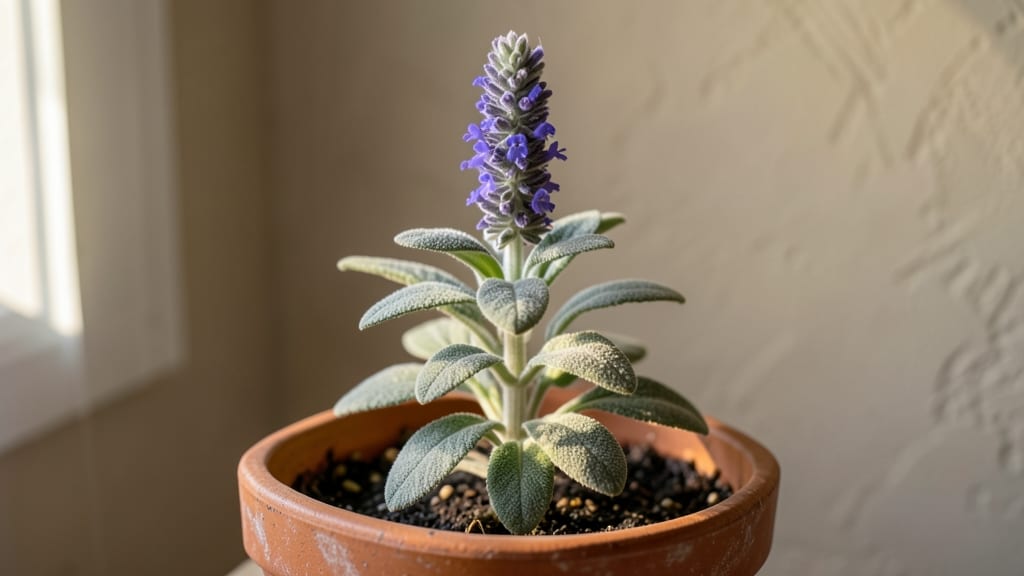
Garden sage does bloom, producing small, tubular purple or white flowers in late spring or summer, though its foliage is the primary reason gardeners grow it. Pruning spent blooms encourages bushier growth and may stimulate more flowers in some varieties like 'Purpurascens' or 'Berggarten.'
While the aromatic leaves are what most gardeners love, sage plants do produce delicate blooms that add unexpected beauty to your garden. 🌸 These flowers typically appear after the foliage has fully matured, often in late spring through summer, though some varieties like 'Tricolor' may bloom later.
The blooms attract pollinators like bees and butterflies, making your garden more vibrant while also supporting local ecosystems. Interestingly, the flowering process draws energy from the plant, which is why many gardeners prioritize leaf production over flower stimulation unless they're specifically growing sage for its ornamental value.
What's fascinating is how different sage varieties respond to care practices. For example, the 'Berggarten' variety is known for its prolific blooming when given proper sunlight and well-draining soil. Meanwhile, 'Purpurascens' produces striking purple flowers that can last for weeks if deadheaded regularly.
The key to encouraging more blooms lies in understanding your specific variety's needs and adjusting your care routine accordingly.
💡 In This Article
- Why Garden Sage Flowers Appear Late in the Season
- Pruning and Care Tips to Stimulate Sage Blooms
Why garden sage flowers appear late in the season
Garden sage follows a botanical growth pattern where foliage development takes priority over flowering. This occurs because the plant allocates most of its energy to producing aromatic leaves during its first growing season, storing nutrients in its woody stems.
The delayed blooming—typically appearing in late spring or early summer—reflects this energy conservation strategy. 🌿 For example, common garden sage (Salvia officinalis) often waits until it's established before devoting resources to flowers, which usually emerge after the leaves have fully matured.
The flowering process is triggered by specific environmental factors, primarily temperature and daylight hours. Sage requires consistent exposure to 6-8 hours of direct sunlight daily to initiate blooming, as the increased light stimulates photosynthesis and energy production.
Once temperatures stabilize between 60-75°F, the plant shifts focus from leaf growth to flower development. This explains why northern climates may see later blooming compared to warmer regions. Varieties like 'Berggarten' bloom more reliably because they've been selectively bred to respond more predictably to these conditions.
This delayed flowering serves an evolutionary purpose: protecting the plant's reproductive structures from early-season frosts or droughts. The small, tubular purple or white flowers (measuring about 0.5-1 inch long) are designed to attract pollinators like bees and hummingbirds, but only when environmental conditions are optimal.
The plant's survival strategy means gardeners must be patient—rushing the process through excessive pruning or fertilization can actually reduce flowering by disrupting this natural energy balance.
Interestingly, different sage species exhibit varying blooming patterns. For instance, clary sage (Salvia sclarea) produces showy white or purple flowers earlier in the season, while purple sage (Salvia officinalis 'Purpurascens') may wait until midsummer for its deep violet blooms.
This variation occurs because each species has adapted to different ecological niches, with some prioritizing early reproduction while others focus on late-season pollinator support. The key takeaway is that garden sage's flowering schedule is deeply tied to its growth cycle and environmental cues.
What most gardeners don't realize is that the plant's flowering phase actually competes with leaf production for nutrients. When sage blooms, it diverts up to 30% of its photosynthetic energy toward flower development, which can temporarily reduce leaf vigor.
This is why professional herb growers often remove flower buds to maintain leaf quality for culinary use. However, for ornamental varieties, allowing flowers to develop can enhance the plant's aesthetic appeal and attract beneficial insects to your garden ecosystem.
To encourage more reliable blooming, focus on creating optimal growing conditions: well-draining soil with a pH of 6.0-7.0, consistent moisture (but not soggy), and protection from strong winds that can stress the plant.
Mulching with organic matter helps regulate soil temperature, which can be particularly beneficial in regions with temperature fluctuations. Remember, the plant's natural timing is a delicate balance—interfering too much can actually reduce the very blooms you're trying to encourage. 🌸