
Pests
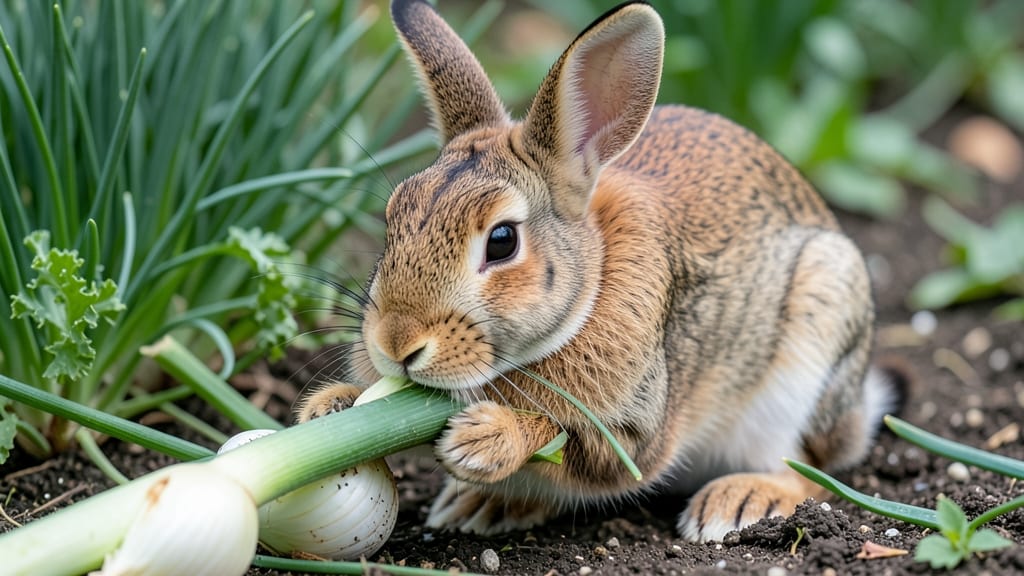
Rabbits do eat onions in gardens, but this is highly dangerous as onions contain thiosulfate compounds that cause hemolytic anemia, leading to red blood cell destruction and potential death. Avoid planting onions or onion-family crops near rabbit habitats or vegetable patches.
Onions and their relatives—garlic, leeks, and chives—are part of the allium family, which rabbits find irresistible. 🌱 The problem isn't just that they'll nibble; it's that these plants contain compounds that trigger fatal blood disorders in rabbits within hours.
Even a single bite can cause weakness, collapse, or death, so gardeners with free-roaming rabbits must treat these plants as toxic hazards.
If you love growing onions but also want to protect your bunnies, consider raised beds with secure fencing or opt for rabbit-safe alternatives like cilantro, parsley, or leafy greens. Companion planting with strong-smelling herbs like mint or lavender can also help deter rabbits naturally.
💡 In This Article
- Why Onions Are Deadly to Rabbits: Toxic Compounds Explained
- Rabbit-Friendly Garden Alternatives to Onions
Why onions are deadly to rabbits: toxic compounds explained
The danger of onions for rabbits lies in their thiosulfate compounds, which belong to a family of sulfur-based chemicals called organosulfur compounds.
When rabbits ingest even small amounts of onion—about 5 grams per kilogram of body weight—these compounds trigger the destruction of red blood cells in a process called hemolytic anemia.
For a 5-pound rabbit, that's roughly one-quarter of a small onion, though symptoms can appear after much smaller exposures.
These toxic compounds work by interfering with the rabbit's hemoglobin, the protein in red blood cells that carries oxygen. The thiosulfates bind to hemoglobin, forming a compound called methemoglobin, which can't transport oxygen effectively.
This causes the rabbit's gums to turn pale or grayish, a critical early warning sign. 🔥 Within hours, affected rabbits may show labored breathing, lethargy, and dark urine—a sign of kidney strain as the body tries to flush out damaged cells. The process is irreversible without immediate veterinary intervention.
What makes onions particularly insidious is that rabbits often don't show immediate symptoms after consuming them. The compounds can remain dormant in the body for 1-2 days before triggering a rapid decline. This delayed reaction means gardeners might not realize their rabbit has been exposed until it's too late.
Even dried onion powder or cooked onions retain their toxicity, so no form is safe for rabbits to ingest.
For comparison, humans can tolerate onions because our bodies process thiosulfates differently. Our livers can detoxify small amounts, and we lack the rabbit's extreme sensitivity to these compounds. However, rabbits' digestive systems are far more delicate, with a gut microbiome optimized for fiber-rich plants—not sulfur-heavy alliums.
This biological mismatch is why even a single onion leaf can be lethal for a rabbit.
If you suspect your rabbit has eaten onion, watch for these key symptoms: pale gums, loss of appetite, swollen lymph nodes, or dark red urine. Immediate veterinary care is essential, as treatment may involve blood transfusions or supportive care to manage the anemia.
Prevention, however, is always the best approach—keeping onions completely out of reach is the only safe option.
Interestingly, rabbits' natural diet consists of grasses, clovers, and leafy greens, none of which contain these toxic sulfur compounds. Their bodies are perfectly adapted to process these foods, but the allium family represents a dangerous exception.
This is why gardeners must treat onions with the same caution as poisonous plants like foxglove or oleander.