
Light Requirements
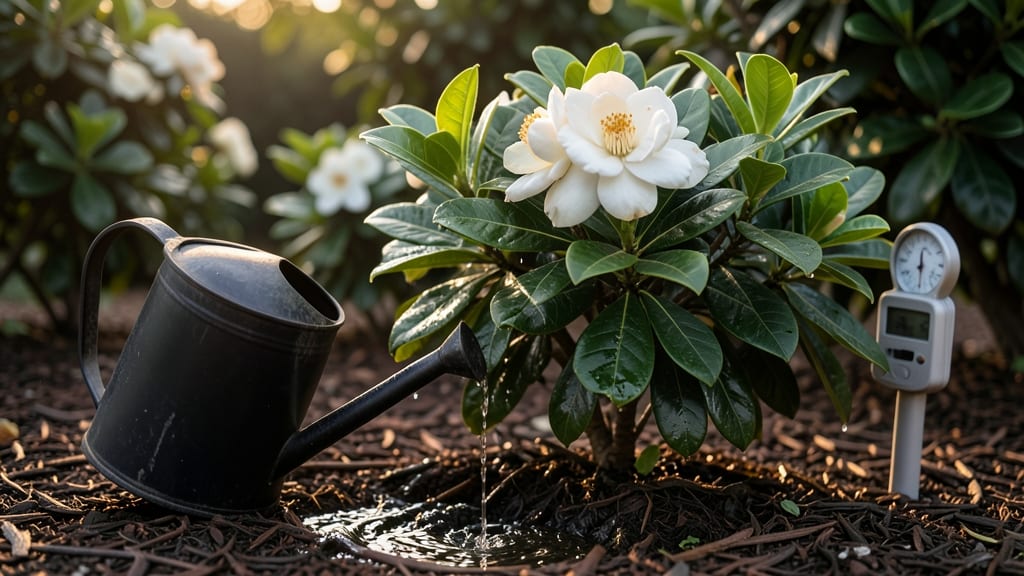
Do gardenias need a lot of water to fuel their fragrant blooms and glossy leaves? The truth is more nuanced than you might think.
Picture this: your gardenias are thriving in Zone 6, their dark green leaves glistening with health, but you’re left wondering if you’re drowning them or letting them thirst. The answer lies in understanding their love for moist soil—not soggy, not bone-dry, but just right.
Too much water leads to root rot, while too little causes buds to drop before they open. The key is keeping the soil evenly damp, especially during spring and summer when growth is most active.
In humid climates, you might water every 2-3 days, while drier areas could need daily checks.
Here’s what you’ll discover: how to read your gardenia’s thirst cues, adjust for seasonal shifts, and avoid the most common watering mistakes that turn lush plants into sad, wilted shrubs.
How much water do gardenias need for optimal growth?
Gardenias thrive when their watering routine mimics their natural tropical habitat—consistent moisture without soggy soil. The common misconception that gardenias need "a lot of water" often leads to overwatering, which causes root rot and leaf drop.
In reality, they prefer even moisture with proper drainage, not constant saturation. Let’s break down the science-backed watering formula for these fragrant shrubs.
Your gardenias’ water needs depend on three key factors: soil type, climate, and season. Sandy soil drains quickly, requiring daily checks for moisture, while clay holds water longer, needing less frequent watering.
Humid regions like Florida demand less water than dry climates like Arizona. Understanding these variables prevents both underwatering (drooping leaves) and overwatering (yellow foliage).
Here’s the truth about gardenia watering needs in a quick-reference table:
For container-grown gardenias, the watering game changes dramatically. Potted plants dry out 3x faster than in-ground shrubs due to limited root space. Check soil moisture daily in summer and water whenever the top inch feels dry.
A self-watering pot with a moisture meter can save your gardenia from thirst stress or root suffocation.
Signs of underwatering include crispy leaf edges, bud drop, and a dull green color. Overwatering, however, shows as yellow leaves, mushy stems, and a sour smell at the soil surface.
The key is to water deeply but infrequently, encouraging roots to grow downward in search of moisture. This habit makes gardenias more resilient during dry spells.
In humid climates, gardenias often need less water because atmospheric moisture reduces evaporation. I once grew gardenias in Charleston, SC, and cut watering to every 4-5 days in summer—still keeping blooms vibrant. In arid regions, morning watering becomes even more critical to prevent evaporation before roots can absorb moisture.
Mulching is your secret weapon for consistent moisture. A 3-inch layer of organic mulch (like pine straw or shredded bark) locks in humidity, reduces water loss, and keeps roots cool.
Reapply mulch annually, but avoid piling it against the stem to prevent rot. This simple step can cut watering needs by 30% during peak summer heat.
Let’s address the biggest myth: gardenias don’t need "a lot of water"—they need consistent, even moisture. The confusion stems from their tropical origins, where rainfall is frequent but never overwhelming.
Think of your gardenia’s watering routine like a spa day: long, relaxing showers (deep watering) followed by a dry period (letting soil settle). This balance keeps roots healthy and blooms abundant.
Pro tip: Group gardenias with other moisture-loving plants like azaleas or camellias to create a microclimate that retains humidity. This natural cluster reduces your workload and mimics their native forest-floor habitat. Just ensure all plants share similar watering needs to avoid competition for resources.
🌸
Watering mistakes that kill gardenias (and how to fix them)
Gardenias thrive in consistent moisture, but their delicate roots are easily stressed by watering errors. The most common mistake? Assuming they need constant soaking like tropical plants. In reality, gardenias prefer evenly moist soil without waterlogged roots.
Overwatering causes root rot, while underwatering leads to bud drop and yellowing leaves—both signs your plant is screaming for help.
I’ve seen gardeners drown their gardenias in heavy clay soil, thinking more water equals happier blooms. But poor drainage is the real villain here. Without proper airflow, roots suffocate, and your fragrant shrub turns into a sad, wilted mess.
The fix? Amend your soil with organic matter like compost or perlite to create a well-draining environment while retaining moisture.
Overwatering is the #1 killer of gardenias. These tropical shrubs prefer consistent moisture (like a wrung-out sponge), not soggy soil. Check soil moisture by sticking your finger 2 inches deep—if it’s dry, water deeply. If it’s damp, wait. Yellow leaves or mushy stems? You’re overdoing it!
Fix it: Let the top 1-2 inches of soil dry between waterings. Use a moisture meter for precision, especially in containers where roots dry out faster.
Another silent killer? Inconsistent watering schedules. Gardenias hate boom-or-bust cycles—like soaking them one day and forgetting for a week. This causes bud drop and stunted growth. My trick? Set a weekly reminder to check soil moisture, especially in hot climates where evaporation speeds up.
Mulch around the base to lock in moisture and protect roots from temperature swings.
If your gardenia’s leaves are turning yellow with brown edges, it’s likely overwatered. But if they’re crispy and curling, it’s underwatered. Both issues stem from the same root problem: improper soil conditions.
Test your soil’s drainage by filling a container with water—if it drains slower than 10 minutes, amend it with sand or peat moss. Aim for soil that drains in 5-10 minutes while holding moisture.
For container-grown gardenias, the stakes are even higher. Pots dry out 3x faster than in-ground plants, so I water mine every 1-2 days in summer, using room-temperature water to avoid shocking roots.
Pro tip: Use a self-watering pot or bury a terracotta pot near the base to regulate moisture. Empty saucers after watering—root rot starts here.
Finally, adjust your routine by season. In summer, gardenias may need daily watering if temperatures hit 90°F+, while winter calls for bi-weekly watering as growth slows. Watch for buds forming—this is your cue to increase water slightly to support blooming.
With these fixes, your gardenia will reward you with year-round fragrance and glossy leaves.