
Pests
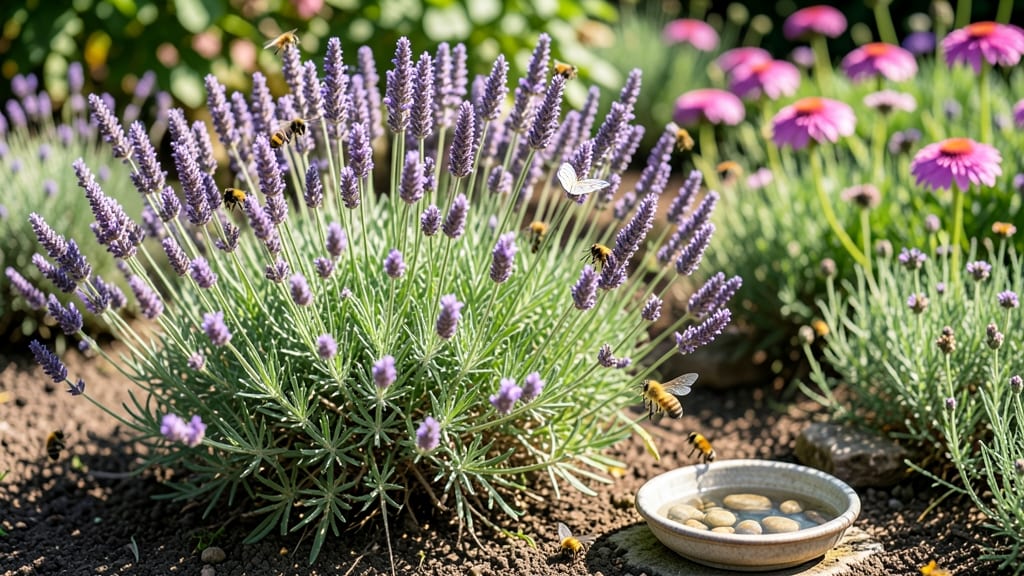
Creating a thriving garden for bees means planting native flowers, providing fresh water, and avoiding pesticides. Bee-friendly species like lavender, sunflowers, and borage offer continuous nectar and pollen, helping pollinate your garden while strengthening local ecosystems.
Bees are nature's most efficient pollinators, and their presence in your garden directly impacts fruit set, seed production, and overall plant health. 🌸 Native plants are key because they've evolved alongside local bee species, offering the right nutrients and floral structures they need.
For example, sunflowers provide abundant pollen, while lavender attracts bees with its strong fragrance. Even a small garden can become a buzzing hub if you include a variety of blooms that flower at different times—early spring, summer, and fall—to keep bees fed year-round.
Beyond flowers, bees need reliable water sources. A simple shallow dish with pebbles for landing spots works wonders, and placing it near flowering plants makes it even more effective. Avoiding chemical pesticides is another critical step—many commercial products harm bees' navigation systems and reduce their lifespan.
Instead, opt for organic solutions like neem oil or companion planting with herbs like basil, which naturally repel pests without threatening pollinators.
💡 In This Article
- Why Native Plants Are Essential for Garden Bees
- DIY Bee-Friendly Garden Setup Guide
Why native plants are essential for garden bees
Native plants have evolved alongside local bee species over thousands of years, creating a perfect match in terms of nectar composition and flower structure. For example, eastern black swallowtail butterflies and bumblebees rely on native milkweed for its deep, tubular flowers that perfectly accommodate their long proboscises.
Non-native plants often lack these co-evolutionary adaptations, offering little nutritional value or accessible pollen. A study from the University of California found that gardens with 70% native plants supported 50% more bee species than those with mostly non-native species.
The timing of blooms is equally critical—bees need continuous food sources from early spring through late fall. Native plants like wild bergamot bloom from June to September, while serviceberry provides early spring nectar before many non-native flowers even emerge.
This seasonal diversity ensures bees aren't left without resources during critical periods. The scent compounds in native flowers also contain specific chemical signals that attract bees from greater distances, unlike many ornamental plants that produce weak or artificial fragrances.
Native plants support pollination efficiency through specialized relationships. For instance, squash bees are nearly 100% dependent on native gourd family flowers for reproduction, while honeybees can adapt to some non-native species but with reduced effectiveness.
The pollen from native plants contains higher protein and lipid content, which directly impacts bee health and colony growth rates. When you plant natives, you're not just feeding bees—you're providing them with the exact nutrients their bodies need to thrive and reproduce.
Ecological benefits extend beyond individual bee species. Native plant gardens create "pollinator corridors" that connect fragmented habitats, allowing bees to travel safely between food sources. A 30-foot-wide strip of native wildflowers can increase pollination rates by up to 300% compared to conventional lawns.
The diversity also helps prevent disease spread—when bees visit many different plant species, pathogens have fewer opportunities to concentrate in single populations.
Consider the case of blueberry bushes, which rely almost entirely on native bumblebees for pollination. Non-native honeybees can't access the deep flowers, leading to poor fruit set.
By planting native shrubs like spicebush or winterberry, you create a self-sustaining ecosystem where bees and plants mutually support each other's survival. The result? Healthier crops, more abundant wildlife, and a garden that functions as a true ecosystem rather than a decorative landscape.
What most gardeners don't realize is how quickly bees learn to recognize native plants. After just 3-4 visits to a particular native flower, bees develop strong preferences and will return consistently.
This behavioral adaptation means your garden becomes a reliable food source year after year, unlike non-native plants that may bloom spectacularly one season but offer little long-term value.
The scent memory of bees is so powerful that they can detect native flower aromas from up to 3 miles away in optimal conditions.