
Advice
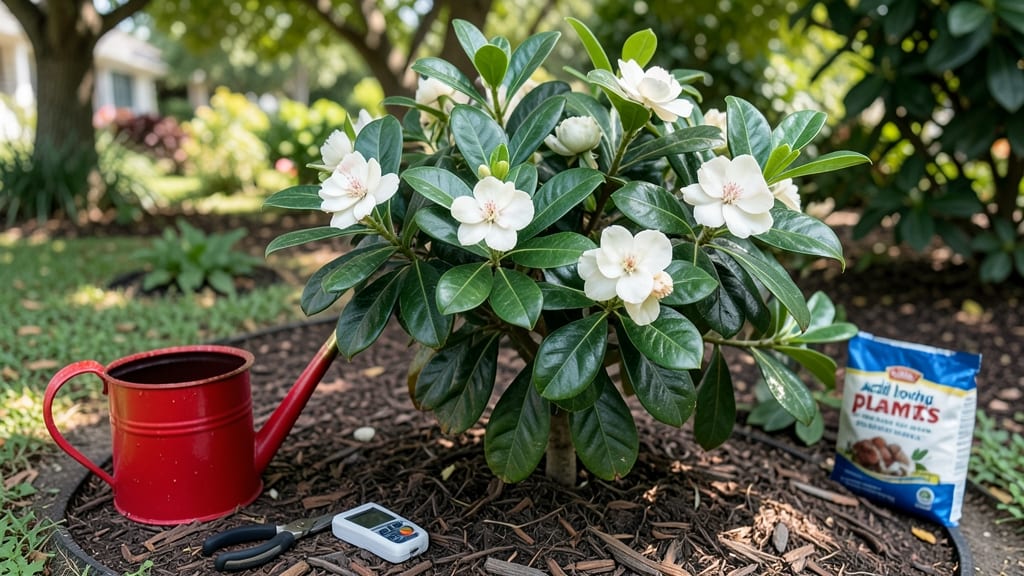
Taking care of gardenias isn't hard when you focus on their core needs: acidic, well-draining soil, partial shade, and balanced moisture. These plants reward patience with fragrant blooms, making them manageable even for new gardeners.
Gardenias might seem fussy at first glance, but their care requirements are actually quite straightforward once you understand their preferences. 🌿 The key is creating the right environment—think of them as tropical divas that love humidity and gentle conditions.
Unlike drought-tolerant succulents, gardenias need consistent moisture but hate soggy roots, so good drainage is non-negotiable. I've found that using a mix of peat moss and perlite creates the perfect airy medium they crave, while maintaining that acidic soil pH keeps their roots happy and blooms abundant.
What often trips up beginners is the light balance—too much direct sun can scorch their delicate leaves, while insufficient light leads to sparse flowering. The ideal spot gets morning sun and afternoon shade, mimicking their natural understory habitat. And don't forget humidity!
If your home's air feels dry, try placing the pot on a tray of pebbles with water or using a humidifier nearby—this simple trick can make all the difference in keeping those glossy leaves and fragrant blooms coming.
💡 In This Article
- Gardenia Care Essentials: Soil, Light, and Water
- Troubleshooting Common Gardenia Growing Mistakes
Gardenia care essentials: soil, light, and water
Gardenias thrive because their care mimics their native tropical rainforest conditions. The soil's acidity (pH 5.0–6.5) is critical—this range prevents nutrient deficiencies that cause yellowing leaves. In nature, gardenias grow in humus-rich, well-draining soil that holds moisture without becoming waterlogged.
You can replicate this by mixing 1 part peat moss with 1 part perlite and 1 part pine bark fines, creating a medium that retains 30-40% moisture while preventing root suffocation. 🌱 The peat moss also helps maintain that essential acidity, while perlite adds the necessary air pockets for oxygen flow to the roots.
Light requirements are equally precise—too much direct sun causes leaf scorch, while insufficient light leads to weak stems and sparse blooms. Gardenias prefer bright, indirect light, ideally receiving 4-6 hours of morning sun followed by afternoon shade.
Think of their natural habitat: they grow under taller trees where sunlight filters through leaves. In containers, east-facing windows provide perfect light, while south-facing windows may require sheer curtains to diffuse intensity.
The trade-off is worth it, though: plants in ideal light conditions can produce 20-30 blooms per season, compared to just 5-10 in low-light situations.
Watering gardenias requires a delicate balance—too little causes dehydration (visible as crispy leaf edges), while too much leads to root rot. The key is maintaining consistent soil moisture without letting water pool at the bottom.
I recommend the "finger test": insert your finger 1-2 inches into the soil—if it feels dry, water thoroughly until it drains from the bottom.
Then, wait until the top 1/3 of soil feels dry before watering again. 💧 During summer months, you might water every 2-3 days, while winter care reduces this to once a week. Always use room-temperature water to avoid shocking the roots with temperature changes.
The humidity factor is often overlooked but makes a dramatic difference. Gardenias hail from tropical regions where humidity hovers around 60-80%, while most homes maintain 30-50%. To compensate, place your gardenia on a tray filled with pebbles and water, ensuring the pot sits above the waterline.
Alternatively, group plants together or use a humidifier nearby—this simple adjustment can double your bloom production. The glossy leaves you see on healthy gardenias are a direct result of proper humidity levels maintaining their cellular turgor pressure.
Seasonal adjustments are equally important. In spring and summer, when growth is most active, feed your gardenia with a balanced, acidic fertilizer (10-10-10 or 20-20-20) diluted to half strength every 4-6 weeks. The key is to never let the soil dry out completely between feedings.
In fall and winter, reduce fertilizing to every 8-12 weeks as the plant enters its dormant phase. This seasonal rhythm mirrors nature's cycle and prevents the stress that leads to bud drop—a common issue for gardeners who over-fertilize during cooler months.
What most people don't realize is how these factors interact. For example, acidic soil enhances nutrient uptake, which directly affects bloom production. Similarly, proper light intensity triggers photosynthesis more efficiently, while consistent moisture ensures nutrients are transported throughout the plant.
When all three elements—soil, light, and water—work together, you create the perfect environment for gardenias to flourish. The result? Lush foliage, abundant blooms, and that signature intoxicating fragrance that makes them worth every bit of care. 🌸