
Planting
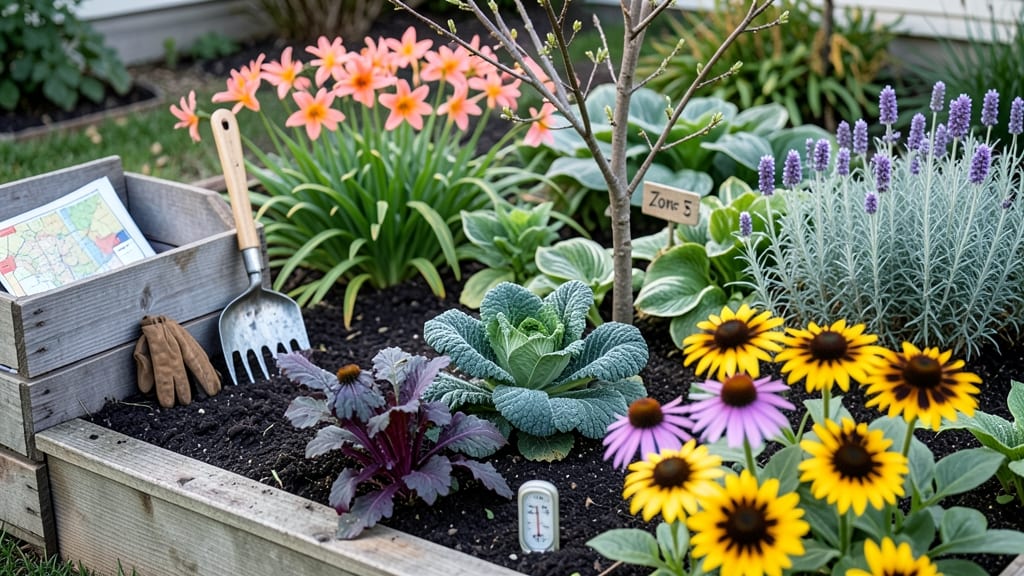
For successful zone 5 gardening, focus on cold-resistant plants like coneflowers, hostas, and spring bulbs, and plan around your frost dates—typically mid-April for last spring frost and mid-October for first fall frost. Use microclimates, such as south-facing walls, to shield tender plants like tomatoes and peppers.
Zone 5 spans regions with average minimum winter temperatures between -20°F and -10°F, shaping which plants thrive there. 🌱 Cold-hardy perennials like lavender and Russian sage not only survive but often bloom more prolifically in these conditions.
The key to extending your growing season lies in understanding your specific microclimates—areas near buildings or slopes can stay warmer, while low spots may freeze earlier.
I've found that adding 3-4 inches of mulch around plants in fall can protect roots from extreme cold, while row covers bought in early spring can shield young seedlings from late frosts.
Timing is everything in Zone 5. Start cool-season crops like spinach and peas in early spring, but wait until after the last frost (usually late May) for warm-season plants like beans and cucumbers. Frost cloths are my go-to for protecting tender seedlings when nighttime temperatures dip unexpectedly.
Even experienced gardeners often adjust planting dates based on local weather patterns—what works in western Zone 5 (like Omaha) may differ from eastern areas (like Buffalo).
💡 In This Article
- Understanding Zone 5 Climate and Plant Hardiness
- Seasonal Zone 5 Gardening Calendar: When to Plant and Harvest
Understanding Zone 5 climate and plant hardiness
Zone 5's defining feature is its -20°F to -10°F winter minimum temperatures, which creates a unique balance for gardeners. This range explains why certain plants thrive here: their cellular structures contain antifreeze proteins that prevent ice crystal formation in their tissues.
For example, coneflowers (Echinacea) can survive these temps because their deep roots insulate the crown, while hostas develop thick, waxy leaves that resist cold damage.
The USDA Plant Hardiness Zone Map helps identify these boundaries, but remember—it's based on 30-year averages, so your actual last frost might vary by 1-2 weeks either way.
Microclimates are where Zone 5 gardening gets creative. A south-facing wall can create a 5-10°F warmer microclimate than the open garden, allowing you to grow zucchini or basil that wouldn't survive elsewhere.
I've seen gardeners use black plastic mulch to raise soil temps by 10-15°F in spring, while windbreaks made of evergreen shrubs reduce drying winds that stress plants.
Even soil type matters—sandy soils warm up faster in spring, while clay holds moisture longer, creating different planting windows for the same plants in neighboring spots.
The key to selecting plants lies in their hardiness ratings. A plant rated for Zone 5 will typically survive your winters, but one rated for Zone 6 might struggle with extended cold snaps below -15°F.
For example, Russian sage (Perovskia) thrives here because its woody stems contain compounds that prevent freezing, while daylilies (Hemerocallis) can regrow from their rhizomes even after severe cold. The secret is matching plant hardiness to your specific microclimate—what works in a sheltered corner may fail in an exposed bed.
Temperature isn't the only factor—day length plays a role too. Zone 5's shorter summer days (compared to southern zones) affect flowering times. Plants like black-eyed Susans bloom later here because they need longer daylight periods to trigger flowering.
This is why some gardeners use grow lights for seedlings to simulate longer days. The interplay between temperature, day length, and soil conditions creates the perfect storm for Zone 5's unique gardening opportunities.
Don't overlook the spring thaw period, which can be just as critical as winter cold. When temperatures fluctuate between 32°F and 50°F for multiple days, plants can experience freeze-thaw damage that weakens them.
This is why I always plant cool-season crops like lettuce in early spring but wait until after May 15th (after the average last frost) for warm-season plants. The transition period between seasons often determines whether your garden succeeds or struggles.
For those wanting to push boundaries, cold frames or low tunnels can extend growing seasons by 4-6 weeks in both directions. These structures trap heat during the day and release it slowly at night, creating a 10-15°F warmer environment than outside.
I've seen gardeners grow spinach in October and radishes in March using these methods, proving that Zone 5's limitations are more about timing than capability.
The beauty of Zone 5 gardening lies in its resilience. Plants that might struggle in milder climates often develop stronger root systems here, making them more drought-tolerant. This is why native plants like purple coneflower often perform better than exotic varieties—they've evolved to thrive in these exact conditions.
Understanding these natural advantages lets you create a garden that's not just productive, but also self-sustaining and beautiful. 🌿