
Picking
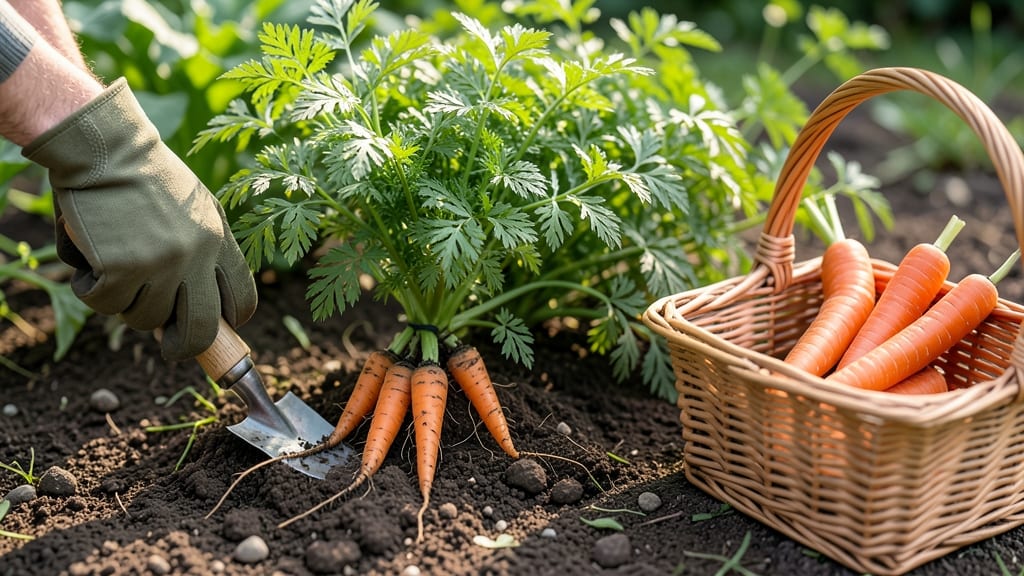
To pick carrots in your garden at the perfect moment means snagging sweet, crisp roots before they turn tough and bitter — and the timing is all about color, size, and a few simple checks.
Picture this: you’re kneeling in the soil, brush in hand, and you spot a deep orange carrot peeking through the dirt, its leaves standing tall and vibrant. That’s your cue — but wait too long, and you’ll end up with a woody, stringy mess.
The difference between a perfect harvest and a disappointing one often comes down to knowing exactly when to pull those 🥕 beauties.
Most gardeners wait until the tops reach 6–8 inches and the roots are about ¾ to 1 inch in diameter, but soil conditions, variety, and even the time of year can shift that window. Too early, and you’ll have undersized roots; too late, and you’ll regret it.
Below, I’ll walk you through the visual cues, soil tests, and seasonal tweaks to ensure you’re harvesting at peak flavor every time.
Ready to go from guessing to knowing? You’ll learn how to read your carrots like a pro, avoid common mistakes that ruin the harvest, and even troubleshoot if your soil or weather throws a curveball. No more second-guessing — just perfect, homegrown 🥕 every time.


Carrot color and size guide for optimal harvest timing
Harvesting carrots at the right time ensures sweet, crisp roots packed with flavor. The key lies in watching for color intensity and root size, which vary by variety. For example, orange carrots like 'Nantes' develop a deep hue, while purple varieties like 'Purple Haze' darken noticeably when ready.
Soil conditions also play a crucial role—dry spells can stunt growth, while overwatering may dilute flavor.
Most gardeners aim for carrots to reach 3/4 to 1 inch in diameter, though short-rooted varieties like 'Paris Market' mature at just 2 inches long. Long-rooted types, such as 'Danvers,' can grow up to 8 inches but are best harvested earlier for tenderness.
Pay attention to the foliage height too—when tops reach 6 to 8 inches, the roots below are likely ready.
| Variety Type | Ideal Size | Color Cues | Days to Harvest |
|---|---|---|---|
| Short-Rooted (e.g., 'Paris Market') | 2–3 inches | Deep orange or purple | 50–60 days |
| Standard (e.g., 'Danvers') | 6–8 inches | Vibrant orange or red | 70–80 days |
| Long-Rooted (e.g., 'Chantenay') | 8–12 inches | Golden or deep purple | 80–90 days |
| Rainbow (e.g., 'Rainbow Mix') | 3–6 inches | Orange, purple, yellow | 60–75 days |
Soil composition affects harvest timing significantly. Loose, stone-free soil allows roots to grow straight and reach maturity faster. In dense or rocky soil, carrots may develop forked shapes or stunted growth, delaying harvest by 10–14 days.
Amend your soil with compost or sand before planting to improve texture and speed up growth.
Color is your best indicator of ripeness. Orange varieties should develop a rich, uniform hue without green shoulders—a sign of overmaturity. Purple carrots darken to a deep violet, while yellow types like 'Yellowstone' turn a golden shade.
If the skin feels firm and taut, it’s time to harvest; if it’s soft or cracked, the carrots may have been in the ground too long.
Don’t rely solely on days-to-maturity labels, as climate and soil temperature can shift timing. In cool weather (below 60°F), carrots grow slower and may need 10–15 extra days to reach harvest size. Conversely, warm soil (above 70°F) accelerates growth, so check for readiness 2–3 weeks early in hot summers.
For baby carrots, harvest when roots are 1/2 to 3/4 inch thick, typically at 40–50 days. These tender, sweet carrots are perfect for salads or quick cooking. If you wait too long, roots can become woody and pithy, losing their crisp texture.
Regularly thinning seedlings also encourages faster growth—leave 2–3 inches between plants to avoid competition.
One of my favorite tricks is the finger-pressure test. Gently squeeze a carrot’s top near the soil line—if it feels firm but slightly yielding, it’s ready. A hard, unyielding top means it needs more time, while a mushy feel signals it’s past its prime.
Pair this with a visual check of the foliage color: vibrant green leaves indicate healthy growth, while yellowing suggests stress or overripeness.
Seasonal timing matters too. Spring-planted carrots often mature faster due to cooler temperatures, while fall crops may take longer as days shorten. In my garden, I’ve found that late summer harvests (September–October) yield the sweetest carrots, as cooler nights boost sugar content.
Always harvest before the first hard frost, which can damage roots and foliage.
Pro tip: Use a hand trowel or garden fork to gently loosen soil around carrots before pulling. This prevents damage to the roots.
Store freshly harvested carrots in moist sand or a perforated bag in the fridge for up to 3 weeks, or preserve them by curing and storing in a cool, dark place for long-term use.
How to test carrot tenderness before harvesting (3 simple methods)
Harvesting carrots at the right moment ensures sweet, tender roots instead of tough, fibrous ones. The key lies in testing their readiness using simple but effective methods.
I’ve found that combining visual cues with hands-on tests gives the most accurate results. Let’s explore three foolproof techniques that work in any garden setting.
First, consider your local climate—cool seasons slow growth, while warm weather can rush maturity. In USDA Zone 6a, for example, spring carrots may take 70-80 days to reach peak tenderness, while fall crops often mature faster due to longer daylight.
Adjust your timing based on your area’s frost dates and average temperatures.
- Soil Probing Method: Gently loosen soil around the plant with your fingers or a small trowel. Look for roots that are 3/4 to 1 inch thick and have developed a deep color (orange, purple, or yellow). If roots are smaller than a pencil diameter, wait 5-7 more days.
- Leaf Inspection: Check the top foliage—ready carrots have 6-8 inch tall leaves with a healthy, vibrant appearance. Yellowing or wilting leaves signal overmaturity, while stunted growth means they need more time. Pinch off a few outer leaves to encourage root development.
- Finger-Pressure Test: Gently squeeze the exposed shoulder of the carrot (where the root meets the stem). It should yield slightly like a ripe peach. If it feels rock-hard, wait longer; if it’s mushy, harvest immediately to avoid splitting.
For short-day varieties like Paris Market, harvest when roots reach 2-3 inches—they’re sweeter when smaller. Longer varieties like Danvers can wait until they’re 1-1.5 inches thick. Always harvest on a cool, cloudy day to prevent stress on the roots.
One common mistake I’ve seen is relying solely on days-to-maturity labels. Instead, combine these tests for accuracy. For example, if your carrots passed the soil probe test but failed the leaf inspection, they may need 3-5 more days of sunlight. Adjust your watering too—consistent moisture prevents woody texture.
Pro tip: Use a small hand fork to carefully lift one carrot for testing. This minimizes damage to neighboring plants. If the soil is loose and stone-free (as it should be for carrots), you’ll have an easier time checking without disturbing the entire patch.
Once you master these methods, you’ll never guess again—just harvest with confidence for homegrown carrots at their peak. 🥕