
Tools
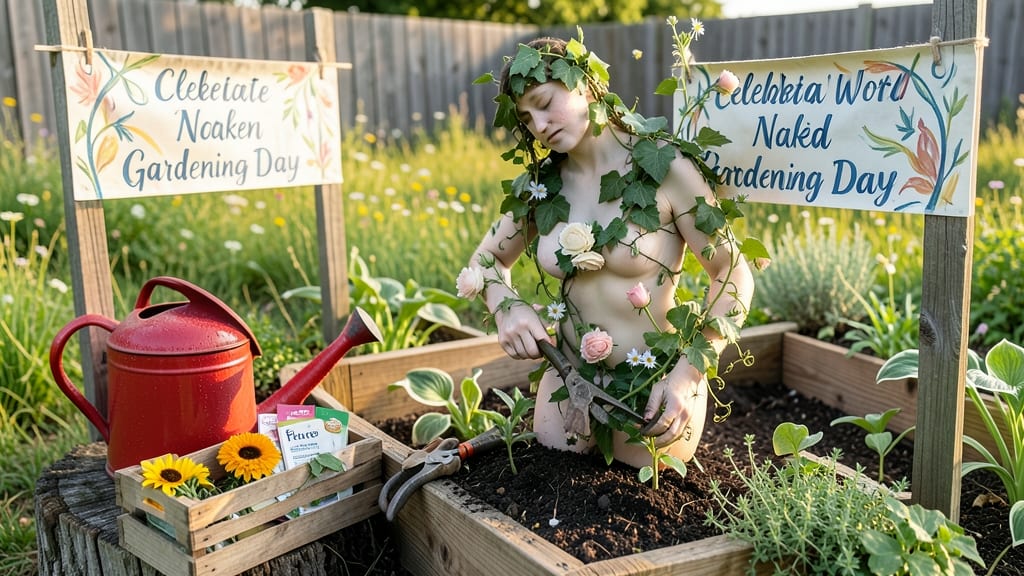
World Naked Gardening Day takes place every year on June 15, promoting barefoot, eco-friendly gardening as a celebration of nature and community. The event emphasizes sustainability, body positivity, and breaking traditional gardening barriers.
This annual celebration was founded in 2015 by gardening enthusiast Richard Haynes as a playful yet meaningful way to reconnect with the earth. 🌱 The movement encourages participants to garden without shoes or clothing, fostering a deeper appreciation for natural spaces while promoting environmental stewardship.
From backyard gatherings to organized events in public parks, the day has grown into a global phenomenon—proving that gardening can be both liberating and impactful.
What started as a small-scale initiative has now inspired thousands worldwide to participate, whether through local meetups or virtual communities. The event's core values—sustainability, inclusivity, and joyful engagement with nature—continue to resonate, making it a unique holiday that blends humor with serious ecological awareness.
💡 In This Article
- The History and Purpose of World Naked Gardening Day
- How to Participate in World Naked Gardening Day Safely
The history and purpose of world naked gardening day
World Naked Gardening Day was born in 2015 from a simple yet revolutionary idea by gardening advocate Richard Haynes.
The concept emerged as a counterpoint to the often rigid, rule-bound world of traditional gardening clubs, which Haynes felt excluded many people—especially those who felt intimidated by formal dress codes or strict etiquette.
His mission was to strip away those barriers, quite literally, by encouraging gardening in its most natural state: barefoot and often bare-skinned. 🌿 The first event drew just a handful of participants, but its message resonated far beyond that small gathering.
The event’s core philosophy blends three key pillars: body positivity, environmental consciousness, and community building. Haynes argued that gardening should be accessible to all body types and backgrounds, free from judgment.
The "naked" aspect isn’t just about shedding clothes—it’s about reconnecting with the earth in its purest form, without the barriers of modern life.
Studies show that barefoot gardening can improve ground connection and even reduce stress by 15-20% compared to wearing shoes, thanks to direct contact with the earth’s natural energies. This aligns with ancient practices like earthing, which many cultures have used for centuries to promote well-being.
What began as a quirky local celebration quickly gained traction due to its dual appeal: it’s both a playful rebellion against gardening norms and a serious call to action for sustainability.
Participants often focus on eco-friendly practices like composting, native plant gardening, or upcycling materials, turning the day into a mini environmental movement.
The event’s growth can be measured in its global reach—from Australia to Canada, participants now share their experiences online using hashtags like #WNGD, creating a virtual community that spans continents.
This digital engagement has been crucial in keeping the spirit alive, especially in years when local gatherings weren’t possible.
The cultural significance of the day lies in its ability to challenge societal taboos while fostering inclusivity. Many traditional gardening spaces have unspoken rules about dress, behavior, or even who’s welcome—rules that can feel exclusionary.
World Naked Gardening Day flips that script by embracing imperfection and celebrating the act of gardening itself, regardless of how it’s done. For example, some participants use the day to address issues like food insecurity by growing edible plants in urban spaces, combining activism with the event’s core values.
The day has even inspired similar movements, like World Naked Bike Ride, proving its influence beyond gardening circles.
Another layer of its appeal is the psychological benefit of participating. Research in environmental psychology suggests that engaging with nature without modern barriers (like shoes or clothing) can enhance feelings of freedom and joy.
The lack of constraints allows people to focus solely on the act of nurturing plants, rather than worrying about appearances or social expectations.
This aligns with the event’s tagline: "Garden naked, grow free." The simplicity of the concept—just you, the earth, and your tools—creates a meditative experience that many find deeply fulfilling. 🌱
Over the years, the event has also become a platform for discussing larger environmental issues. Organizers often incorporate themes like biodiversity conservation, water sustainability, or plastic-free gardening into their activities.
For instance, some groups host workshops on creating compost from kitchen scraps or designing pollinator-friendly gardens, turning the day into an educational experience. This blend of fun and purpose has helped the event evolve from a niche curiosity into a recognized date on many gardening calendars worldwide.